
Unbiased headlines. Facts, not spin.
Unbiased Headlines is an independently owned news organization. We bring you the facts, not opinions, written fresh from 110+ named sources. Sources linked so you can verify it yourself.
 politics
Major Story (7/10)
Event date: September 8, 2026 ·
politics
Major Story (7/10)
Event date: September 8, 2026 ·
UK Rabbis Split Over Settlement Sanctions as Ben-Gvir Drags the Falklands Into the Fight
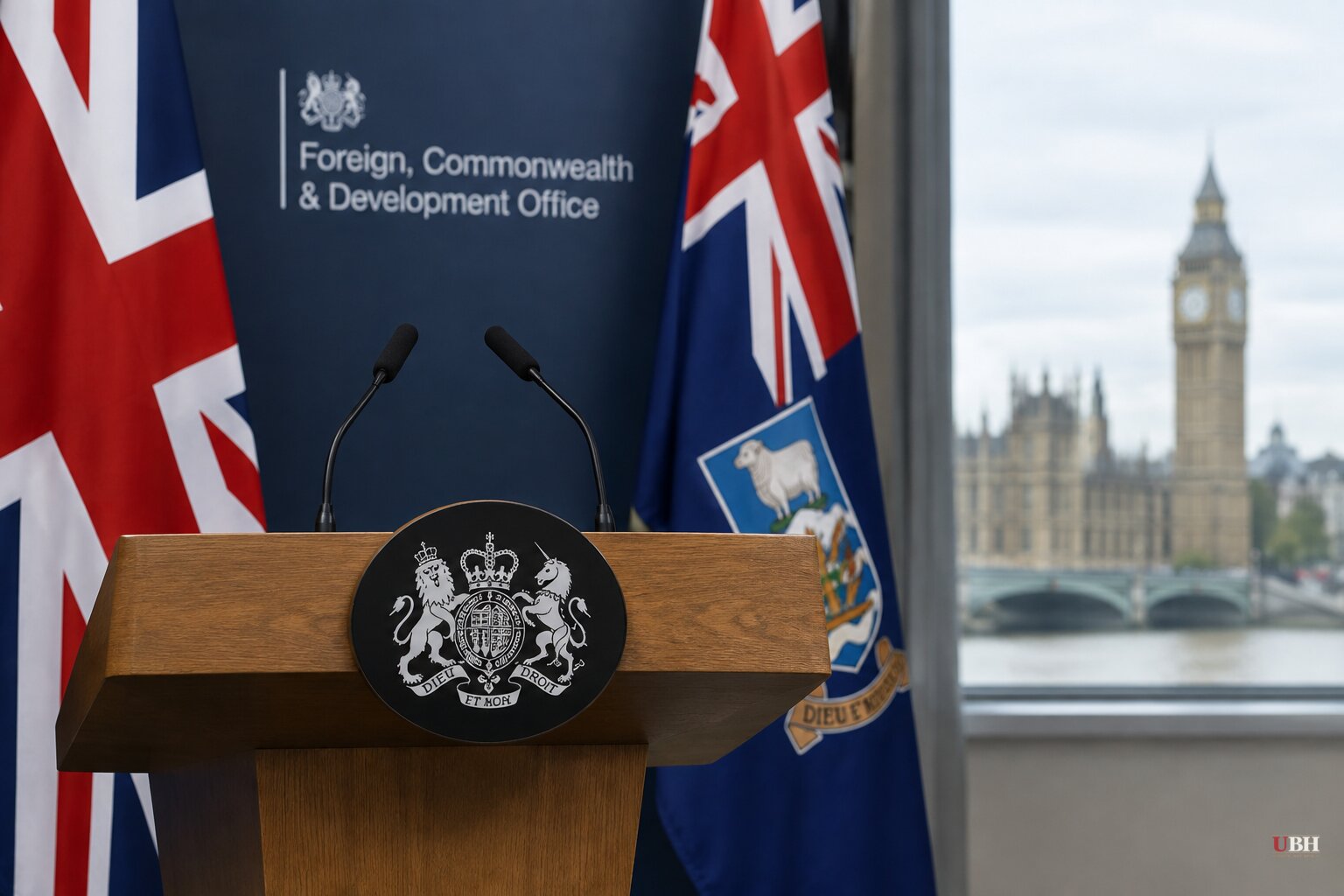
Since Ed Miliband told the House of Commons on Tuesday, September 8 that Britain would ban trade in goods from Israeli settlements, the diplomatic mess has spread well beyond London and Jerusalem. British rabbis are now publicly split. Israel's national security minister has picked a fight over the Falkland Islands. And a new Axios report, via Ynet News, shows President Trump privately raised no objection to the sanctions even as his own ambassador threatened Britain with retaliation.
Start with the rabbis. The UK's chief rabbi, Sir Ephraim Mirvis, called the sanctions a "dark day for British Jews" and warned they could embolden people who "use hatred as a weapon against Jews," according to the Guardian. The Board of Deputies of British Jews and the Jewish Leadership Council also condemned the move.
Mirvis is warning that a government policy aimed at Israeli settlements risks getting weaponized against ordinary British Jews who have nothing to do with West Bank settlement expansion, and that critics of Israel could use the sanctions as cover for antisemitism. That's a serious, good-faith concern.
But other senior rabbis, mostly from the progressive wing, came out the other way. Rabbi Jonathan Wittenberg of Masorti Judaism told the Guardian he was in the Palestinian village of Umm al-Khair, watching the aftermath of settler violence, while Miliband delivered his speech. "We cannot stay silent," Wittenberg said. Rabbi Alexandra Wright of London's Liberal Jewish Synagogue said the sanctions reflect "the UK's commitment to a two-state solution," and Rabbi Jeremy Gordon of New London Synagogue backed the measures outright. The split shows the British Jewish community itself is divided, not united behind either Mirvis or the sanctions' backers.
Ben-Gvir brings up the Falklands
Separately, Israel's far-right National Security Minister Itamar Ben-Gvir posted in Spanish on X that Israel should recognize the Falkland Islands as Argentine territory "under occupation," which he said Britain "violently stole from the Argentine people," according to Politico Europe. Ben-Gvir and Finance Minister Bezalel Smotrich had already called Monday night for Israel to sanction Britain and expel its ambassador over the Falklands, per Middle East Eye.
The UK has controlled the islands since retaking them after Argentina's 1982 invasion; the roughly 3,600 residents overwhelmingly back British rule. The Falklands have nothing to do with West Bank settlements. Ben-Gvir's move looks like retaliatory pressure, not policy, and it lands awkwardly given that Trump said last week he wouldn't back Britain if Argentina invaded the islands, according to Middle East Eye.
Herzog calls it a "grave miscalculation"
Israeli President Isaac Herzog, speaking at a Jerusalem ceremony, called the sanctions a "grave miscalculation, a decision that will fall on the wrong side of history," his office told Politico Europe. Foreign Minister Gideon Saar called Miliband's remarks "outrageous lies" and accused the Labour government of "systematically working against Israel," per Courthouse News Service, ahead of Israel's own Knesset election scheduled for late October.
Trump didn't object, Axios reports
Axios reported, per Ynet News, that Trump raised no objection when British Prime Minister Keir Starmer briefed him by phone Monday before the announcement. Two sources familiar with the call told Axios Trump didn't try to talk Starmer out of it. U.S. officials also told their British counterparts that Washington shares some of London's concerns about Prime Minister Benjamin Netanyahu's West Bank policies, even while not backing the specific sanctions, according to the same report.
U.S. Ambassador to Israel Mike Huckabee issued a public warning to the BBC that the sanctions amount to "discrimination against the Jewish people," and suggested that states like Florida could retaliate. Florida Republican Congressman Randy Fine went further, warning on X that a Florida law he authored would bar any British company that complies with the boycott from doing business with state or local government in Florida, including permits and tax collection. "Florida is one of Britain's largest trading partners," Fine wrote. "Their vanity project in support of Muslim terror could cost them billions of dollars."
The sitting president reportedly voiced no objection in a private call, while his own ambassador and a sitting congressman were publicly threatening retaliation within 24 hours of each other. The White House has not issued a public statement addressing that discrepancy.
Meanwhile the sanctions themselves remain mostly symbolic for now. Goods from Israeli settlements make up a small share of overall Israel-UK trade, according to CBS News, and Miliband's own measures aren't expected to be fully in place for six to nine months, per CBS. Al Jazeera cited King's College London lecturer Tahani Mustafa calling the step "modest," pointing out that the settler population has grown from about 260,000 to more than 700,000 since the 1993 Oslo Accords, according to Palestinian Bureau of Statistics figures cited by Al Jazeera.
The open questions: whether Florida's law actually gets triggered against any specific British company, whether Trump addresses the sanctions publicly before his expected meeting with Starmer at the U.N. General Assembly later this month, and whether the six-to-nine-month rollout Miliband promised survives that long without being watered down.
Sources used for this briefing
8 links from 8 independent newsrooms (syndicated copies of the same report count once)
These are the sources it draws on, linked so you can verify.


