
Unbiased headlines. Facts, not spin.
Every story is an unbiased news briefing written from 110+ sources across the spectrum — sources linked so you can verify it yourself.
 economy
Major Story (7/10)
August 3, 2026 at 01:09 AM
economy
Major Story (7/10)
August 3, 2026 at 01:09 AM
50,000 Crossed Into Spain's Ceuta in 24 Hours. 57 Are Dead. Most Have Already Gone Back.
What Happened, By the Numbers
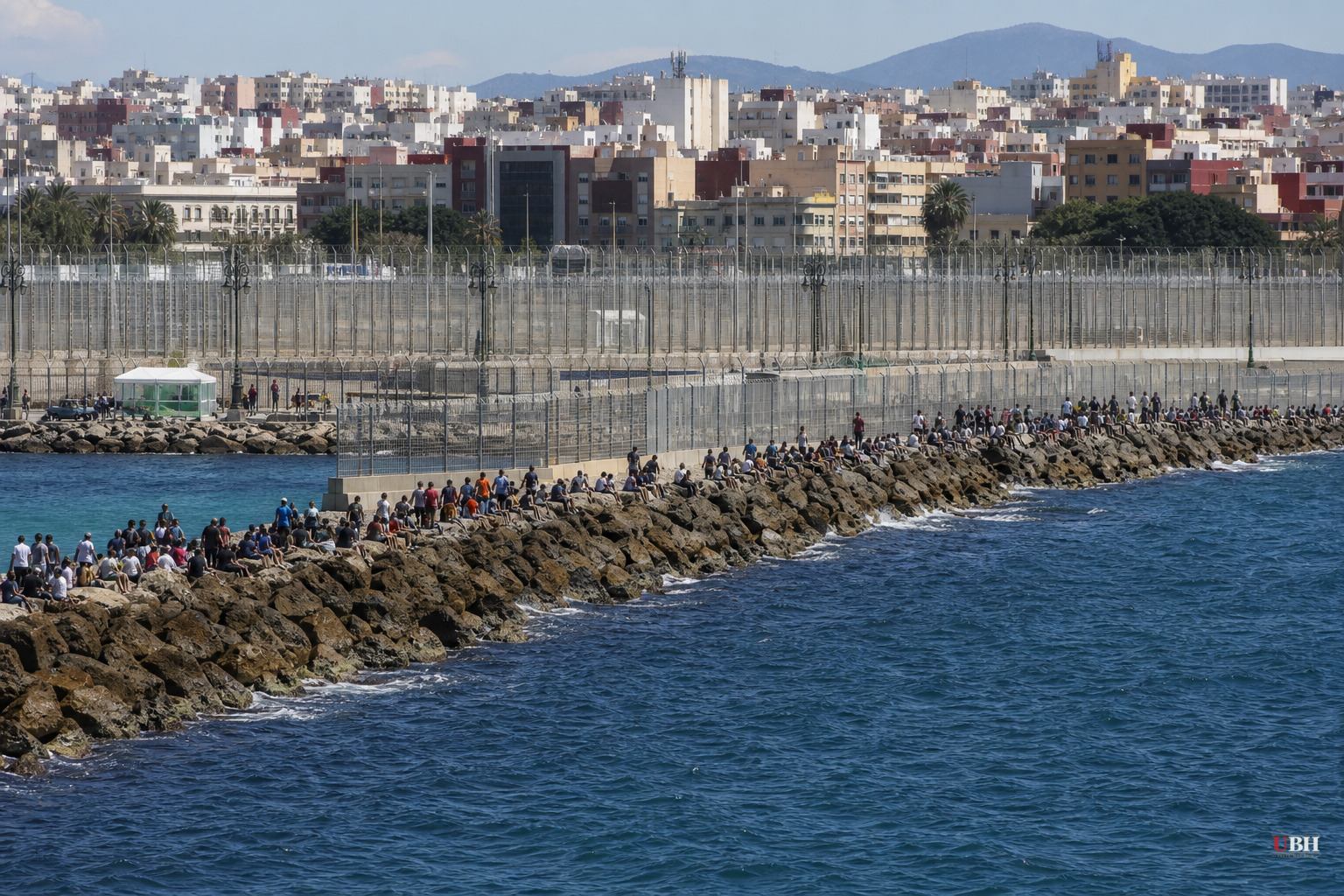
Since crowds began swarming the Tarajal breakwater on the morning of Thursday, July 30, Spain's Interior Ministry has put the total at around 50,000 people crossing illegally from Morocco into the enclave of Ceuta within roughly 24 hours, according to CP24 and Brussels Signal. Ceuta's president, Juan Jesús Vivas, gave a higher figure of 60,000 after meeting Prime Minister Pedro Sánchez in the city on July 31, per Brussels Signal.
For comparison, Ceuta has about 84,000 residents. Almost 3,000 people had entered illegally in all of 2026 through July 15, according to the ministry's own figures cited by Brussels Signal. Whatever the precise count, this was not a gradual trend. It was a single-day surge of a size the enclave has never absorbed before.
At least 57 bodies were recovered on the Spanish side, according to a Spanish government representative in Ceuta cited by CP24, with officials warning there could be more on the Moroccan side. Some drowned; others were crushed climbing the breakwater that holds the border fence. Brussels Signal cited a lower initial figure of 34 deaths from Spanish authorities before the toll rose.
By 6 p.m. local time on Friday, July 31, the Interior Ministry said 48,300 of the roughly 50,000 who crossed had returned to Morocco, according to CP24 and AFP. Zeteo's newsletter rounds that up to describe "at least 80%" having gone back voluntarily.
Who's Calling It What
The word "invasion" is doing a lot of work here, and not just on the American right.
Jucil, the largest Civil Guard professional association in Spain, called the crossing an "orchestrated invasion" and demanded the interior minister's resignation, arguing the enclave's roughly 550 officers were overwhelmed, according to Brussels Signal. The police union Jupol said Morocco's government had exploited "a window of opportunity" to use migratory pressure as "political blackmail." Those are Spanish law enforcement unions, not American commentators.
Gabriel Rufián, spokesman for the Catalan left-wing party Esquerra Republicana, said Morocco was "blackmailing Spain once again" and called for a cross-party state pact, Brussels Signal reported. Ceuta's local assembly, including its Socialist members, unanimously asked the national government to declare a security emergency and deploy the military.
Sánchez's own government rejected calling it a national emergency, saying civil protection rules don't classify migratory flows as that kind of risk, according to Brussels Signal. Troops weren't ordered in until the evening of July 30, after most of the day's crossings had already happened. Sánchez, visiting the enclave with Interior Minister Fernando Grande-Marlaska, blamed "trafficking mafias" rather than the Moroccan state, and was jeered by residents as he left, per Brussels Signal. By Friday he called it an attack on Spain's "territorial integrity" deserving "resounding and energetic condemnation," according to the Daily Signal.
Defense Minister Margarita Robles said the networks organizing the crossings "would not go unpunished." Morocco's government said cooperation with Madrid remains intact and pointed the finger at the same trafficking networks, Brussels Signal reported.
The Political Fallout Spreads
Italy's Foreign Minister Antonio Tajani said Spain's amnesty for hundreds of thousands of unauthorized migrants earlier this year had "encouraged human trafficking." Spain summoned the Italian ambassador in protest, according to CP24.
President Trump told a cabinet meeting the Ceuta crossings "look like an invasion," CP24 reported, and according to Zeteo he suggested the surge could be used as a political talking point ahead of the midterms. Nigel Farage's Reform UK also invoked the episode.
Hundreds of anti-migrant protesters rallied outside Morocco's embassy in Madrid on Friday evening. AFP journalists on scene reported some demonstrators performing Nazi salutes, openly and without covering their faces, chanting "Spain, Christian and not Muslim!" Others carried a banner reading "remigration," a term used by European far-right movements for forced deportation.
That crowd is a real and separate fact from the underlying border event, and conflating the two would be dishonest in either direction. The presence of extremists at a protest doesn't erase the scale of what happened at the fence, and the scale of what happened at the fence doesn't excuse Nazi salutes in Madrid.
The Genuine Dispute
The actual disagreement centers on this: The Daily Signal and Brussels Signal, backed by two Spanish police unions and a Catalan left-wing spokesman, argue this looked coordinated. Moroccan auxiliary forces reportedly withdrew as crowds advanced, and Morocco has opened this border before, including an 8,000-person crossing in May 2021 after Spain admitted a Polisario Front leader for medical treatment. If Rabat eased enforcement deliberately, that's a real policy lever, not a conspiracy theory, and it's why Jupol called it "political blackmail."
Zeteo counters that no matter the number who crossed, the fact that a large majority returned within a day undercuts the "invasion" framing, and notes Ceuta's unusual legal status keeps people from proceeding into mainland Europe anyway.
Both facts are true simultaneously: tens of thousands crossed illegally in one day, and most left within 24 hours. Whether that pattern reflects a failed permanent settlement attempt or a deliberate short-term pressure campaign by Moroccan authorities is not resolved by any source here. No investigation has been announced, and no Spanish or Moroccan official has been charged with orchestrating anything.
What's confirmed: Spain has deployed its military to Ceuta, at least 57 people are dead, and Sánchez's government is now facing calls from his own coalition partners in Ceuta, plus opposition parties, plus two national police unions, to explain why troops didn't arrive until the crossings were already underway for most of the day.
Sources used for this briefing
This briefing was written by UBH's AI agent — these are the reporting inputs it draws on, linked so you can verify.


