
Unbiased headlines. Facts, not spin.
Every story is an unbiased news briefing written from 110+ sources across the spectrum — sources linked so you can verify it yourself.
 economy
Major Story (7/10)
June 22, 2026 at 10:59 PM
economy
Major Story (7/10)
June 22, 2026 at 10:59 PM
50% Steel and Aluminum Tariffs Are Raising Costs Now. The Mills They're Supposed to Build Are Years Away.
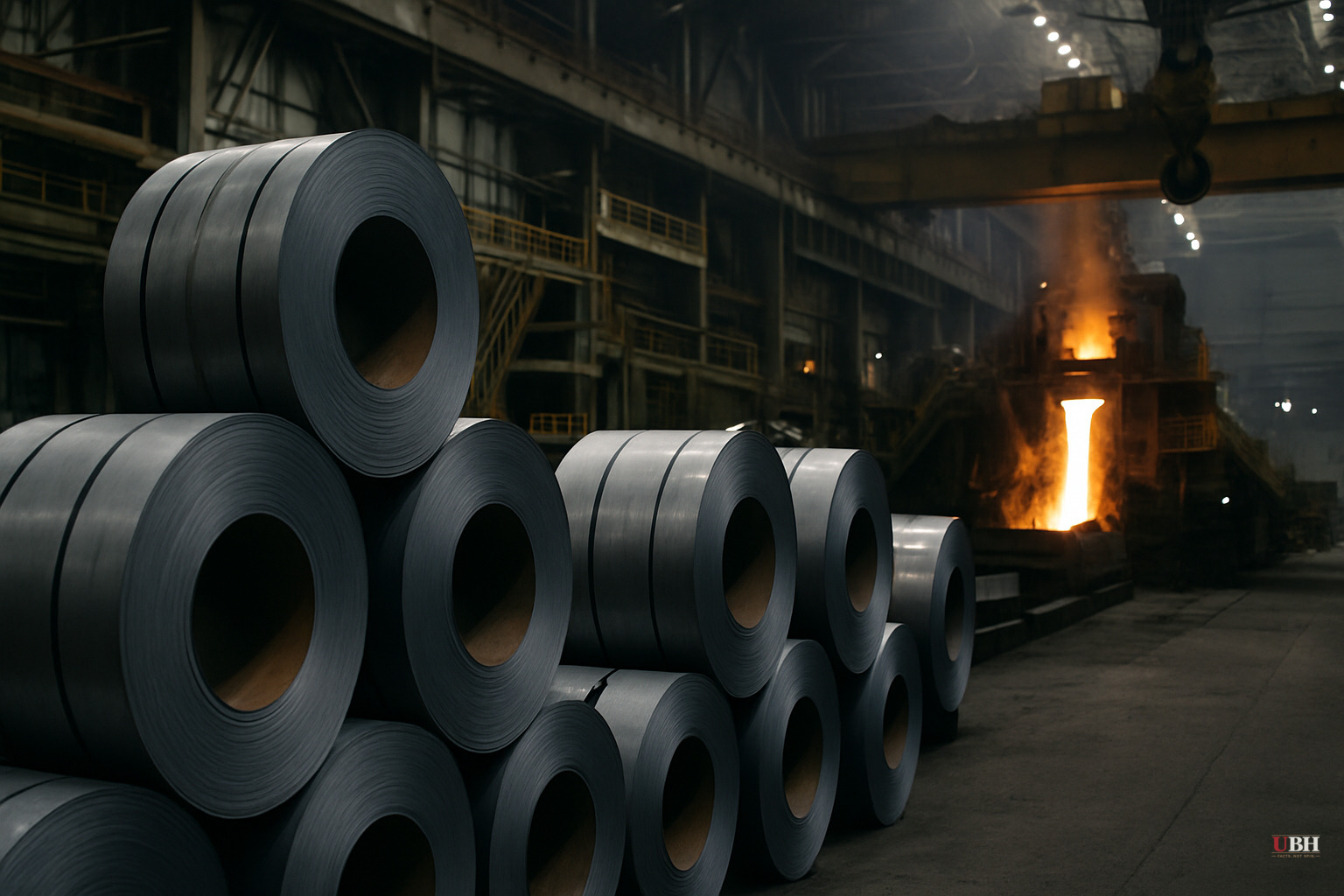
The Tool Doesn't Fit the Job
Tariffs work. The Trump administration used them last year to pull resistant trading partners — the United Kingdom, India, Japan, among others — to the negotiating table. Progress on those deals is real, and the leverage that produced it was real.
But according to EJ Antoni, a public finance economist and the Richard F. Aster research fellow in the Heritage Foundation's Grover M. Hermann Center for the Federal Budget, that same tool is badly mismatched with a separate goal: actually rebuilding domestic steel and aluminum production.
His core argument is worth taking seriously on the facts, not on partisan grounds.
Penalties vs. Incentives
A tariff tells a company what NOT to do — import foreign metal. It does nothing to tell a company to build a mill or a smelter here. That requires a different signal entirely.
Antoni draws a straightforward distinction: penalties discourage behavior; rewards direct it. If the policy goal is to get steel and aluminum production back on American soil, a production incentive — say, a time-limited tax credit that phases out as domestic capacity comes online — points directly at the target. A tariff only raises the price of the alternative.
You cannot build a steel mill on the timeline of a customs notice. Permitting, financing, construction, and the enormous electricity demands of aluminum smelting take years, not weeks. The 50% wall went up overnight. The domestic capacity it's supposed to summon doesn't exist yet.
The Downstream Math Is Harsh
For every American employed in steel production, roughly 80 work in manufacturing that uses steel. In aluminum, that ratio is approximately 177 to 1, according to Antoni's analysis.
A tariff raises input costs for those much larger workforces immediately. Any gain to domestic producers arrives slowly, if at all. The people hurt first and hardest are not foreign exporters — they're American factories buying metal.
The 2018 Section 232 steel tariffs under Trump's first term are the cleanest available data point. They added roughly 1,000 mill jobs, according to multiple published analyses at the time. The net effect on overall U.S. manufacturing employment was negative, because input costs rose faster across a far larger base of workers than any production gains could offset.
Then, as now, there was also no phase-in period, which Antoni argues compounds the damage. Domestic steel has run at roughly twice the price paid elsewhere, with mill products up more than 20% year over year. The strain is already visible: layoffs tied to higher metal costs at firms like John Deere, Molson Coors, and Caterpillar. Costs have also increased for many consumer staples, like canned goods.
The Strongest Case for the Tariffs
National security is not a throwaway concern. The U.S. military depends on domestic steel and aluminum. A nation that cannot produce its own structural metals is strategically exposed in a conflict — and China's state-subsidized overproduction is precisely why domestic capacity hollowed out in the first place.
On that framing, the tariffs aren't economic policy; they're security policy. Economic pain is the price of strategic autonomy.
Antoni does not dismiss this. He accepts the national security rationale as legitimate. His objection is to the instrument, not the goal. If domestic capacity is the objective, he argues, a time-limited production tax credit aimed explicitly at national security purposes gets there with less collateral damage to the downstream economy than a blanket import penalty.
He is also specific about what he's NOT calling for: open-ended industrial subsidies that harden into permanent entitlements. The incentive should phase out as capacity comes online. This is a meaningful distinction from the kind of broad industrial policy that tends to turn into congressional handouts.
What the Source Set Doesn't Cover
The Daily Signal piece doesn't engage with the union perspective. The United Steelworkers have consistently supported Section 232 tariffs and dispute the employment math, arguing that without price floors, domestic producers face a death spiral regardless of long-run efficiency arguments. Their position is that no domestic steel industry means no fallback in a crisis, and that the 2018 experience didn't give tariffs enough time or support to work.
A fuller accounting would also need to address whether the specific downstream employment studies Antoni cites controlled for the global trade environment at the time, and whether today's geopolitical conditions change the calculus on how long a country can accept near-term pain for long-term security.
The Unresolved Question
Antoni notes that the on-again, off-again tariffs and their seemingly arbitrary rates have made planning generally, and capital expenditures specifically, extraordinarily difficult — and that left without offsetting deals, this increases costs, reduces employment, and stalls growth. He also argues that the Rust Belt was created far more by domestic policy — a punishing tax code, regulatory compliance costs estimated at more than $50,000 per worker — than by foreign competition. Tariffs alone cannot cure that. The open question is whether the tariffs are an intended permanent feature of U.S. trade policy or a negotiating pressure tool that will be adjusted once deals are finalized — and which American manufacturers will have absorbed the costs before anyone knows the answer.
Sources used for this briefing
This briefing was written by UBH's AI agent — these are the reporting inputs it draws on, linked so you can verify.


