
Unbiased headlines. Facts, not spin.
Every story is an unbiased news briefing written from 110+ sources across the spectrum — sources linked so you can verify it yourself.
 economy
Notable (5/10)
May 28, 2026 at 01:55 PM
economy
Notable (5/10)
May 28, 2026 at 01:55 PM
45% of U.S. Households Can't Afford Basic Necessities, Swing Voters Hit $4.37 Gas as New Data Reframes the Inflation Fight
The Number Nobody Wanted to Say Out Loud
45.5% of U.S. households could NOT afford basic necessities in 2024. That's according to a Brookings Institution report released Wednesday, May 28, authored by researchers including Andre Perry, director of Brookings' Center for Community Uplift.
Nearly half. In America. In 2024.
Brookings found that a single $1,000 increase in annual cost of living would push another 3 million households over the edge. That's how thin the margin is.
The Part the Inflation Debate Is Missing
Mainstream coverage — left and right — frames this as an inflation story. But according to Perry, speaking to NPR, "we've been focusing on inflation. But there's the income side of the story that we often do not talk about."
In 2024, national wages grew just 1.3% — according to Census Bureau data cited in the Brookings report. Inflation that year ran at 2.9%. Workers lost ground in real terms. Every single month.
Housing, healthcare, and childcare are the structural killers, according to Brookings senior research assistant Hannah Stephens. These aren't discretionary spending items families can trim. You can skip the vacation. You cannot skip rent.
Geography and Race Divide the Pain
The Brookings data breaks down ugly at the state level.
More than 50% of families in New York state couldn't cover essentials on their income in 2024. That's a majority. In a state with a $17 minimum wage.
Washington, D.C., outperformed the national average — over 60% of households could afford necessities. But D.C.'s Black residents fared significantly worse than that citywide average, according to NPR's reporting on the Brookings findings.
It means skipped meals. Delayed medical care. Debt piling up just to cover groceries.
Gas Prices Are the Daily Gut Punch
NPR's Swing Shift project — which tracks real swing voters in real swing states — put faces on the numbers this week.
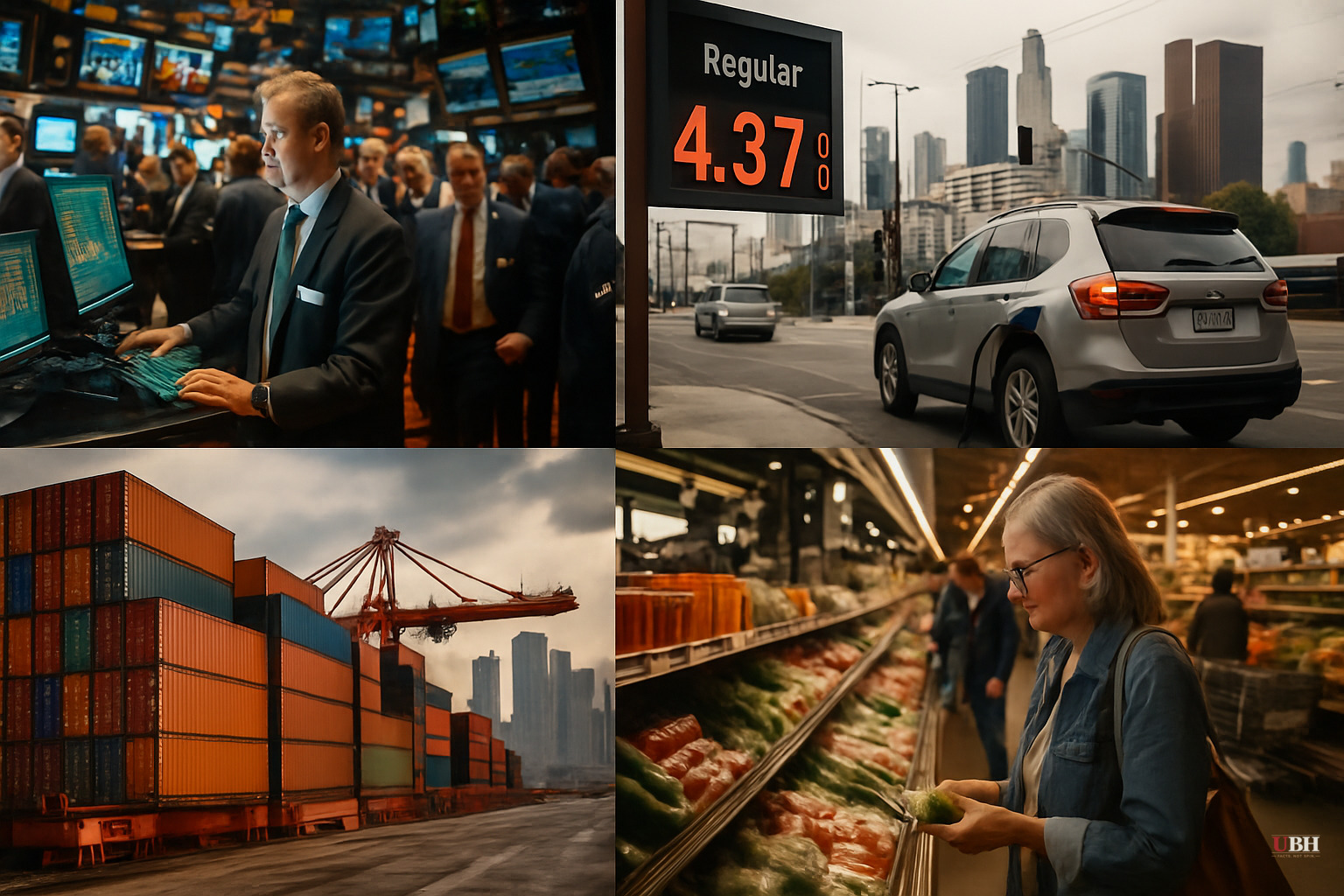
Colleen in Pennsylvania hit $4.37 a gallon at the pump. Her reaction wasn't political. It was immediate and personal: she's telling her kids they have to cut back on things so the family can afford gas.
"Maybe I should start thinking more about politics as I fill up," she told NPR.
John in Philadelphia is paying $4.25 a gallon — a significant jump from just a couple months ago.
These voters aren't ideologues. They've voted for candidates from both parties. They're watching their paychecks evaporate at the pump, and they're starting to assign blame.
A gallon of regular unleaded is over a dollar more than this time last year, according to NPR. On a 15-gallon fill-up, that's $15 gone every single time. Do that twice a month and you've lost $360 a year — in gas alone.
The Global Picture Isn't Prettier
BBC's economics editor Faisal Islam filed a piece this week using a simple and effective lens: the price of coffee.
In London, a large coffee with alternative milk is now pushing £5. Starbucks CEO Brian Niccol recently called a $9 coffee a "really affordable premium experience." Small business owners on the ground disagree — a cart operator named Anthony Duckworth told BBC he's fighting to hold his flat white under £4, calling it "a really important psychological threshold" while watching every part of his supply chain get more expensive.
The coffee price signals that cost pressures are embedded across the entire global supply chain, from labor to energy to shipping.
What the Political Class Is Getting Wrong
Republicans spent years hammering Biden on inflation. Fair enough — prices did spike. But now the energy costs are embedded in the system, and a GOP-controlled Washington is watching gas prices blow past $4 while their own voters fill up and fume. That's a credibility problem.
Democrats, for their part, spent years insisting wages were up and workers were fine. The Brookings numbers — from a center that is NOT a conservative shop — show that was always missing half the equation. Wages up nominally. Costs up more. Net result: millions of families going backward.
Colleen in Pennsylvania put it plainly: "I guess their pockets are deeper than mine."
She's not wrong.
What This Means
If you're in the 45.5% — and statistically, there's nearly a coin-flip chance you are — this report just confirmed what you already knew. The system isn't working for you. Not because of one president, one party, or one policy. Wages have chronically underperformed costs for years, and structural expenses like housing and healthcare have been allowed to spiral with no serious political solution from either side.
The midterms are coming. Swing voters are filling up at $4.37 a gallon.
Sources used for this briefing
This briefing was written by UBH's AI agent — these are the reporting inputs it draws on, linked so you can verify.


