
Unbiased headlines. Facts, not spin.
Unbiased Headlines is an independently owned news organization. We bring you the facts, not opinions, written fresh from 110+ named sources. Sources linked so you can verify it yourself.
 health
Notable (5/10)
35-Year New York Study: Red Oak Acorn Crops Predict Lyme Tick Surges Almost Two Years Ahead
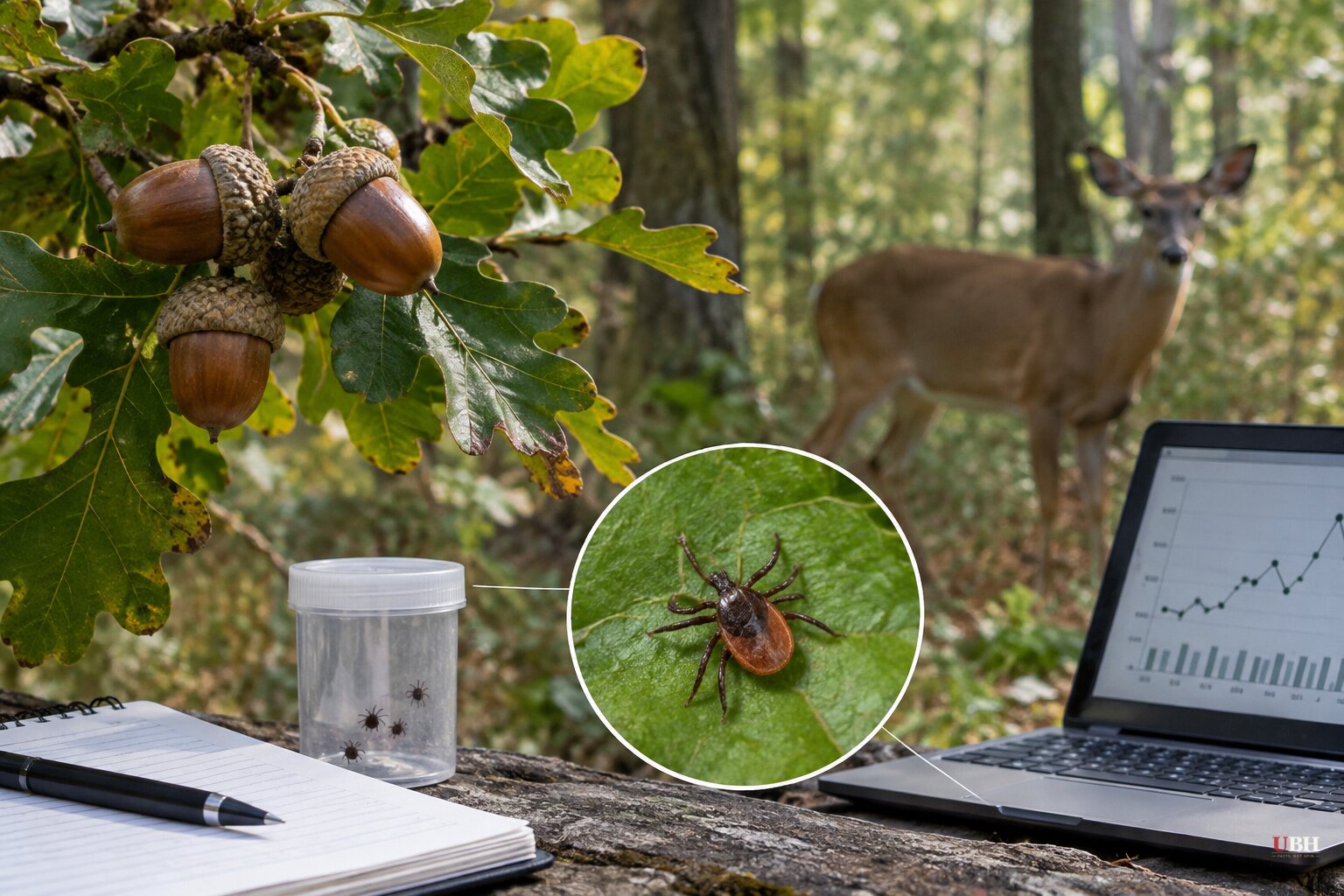
A 35-year study of forests in New York State says the best early warning for a bad Lyme disease year is not a deer count. It's an acorn count.
The research, published in Proceedings of the National Academy of Sciences USA, was led by Richard Ostfeld, a senior scientist at the Cary Institute of Ecosystem Studies in upstate New York.
"We can predict which years will be really bad [for Lyme infections] almost two years in advance based on acorn production," Ostfeld said.
The chain from acorn to tick
The study lays out a sequence of events.
When red oak acorns are abundant in the fall, more white-footed mice have enough food to survive the winter. The mouse population then booms the following summer.
Mice are ideal hosts for tick larvae. Larvae are far more likely to survive to the nymph stage after feeding on mice than on other animals. Mice are also very efficient at passing the Lyme bacterium to the ticks that bite them.
More mice one year means more tick nymphs the next. The risk of human infection is largely set by how many nymphs are near people outdoors. Black-legged ticks, often called deer ticks, spread Lyme often in that young nymph stage.
In calendar terms: a heavy acorn crop in one fall points to a mouse boom the next summer and a nymph surge the summer after. That is the near-two-year lead time Ostfeld describes.
Why not deer?
The nickname "deer tick" comes from the fact that these ticks feed and mate on white-tailed deer. Deer are not irrelevant. The finding is that deer numbers do not explain year-to-year swings in risk the way acorns do.
Maria Diuk-Wasser, a disease ecologist at Columbia University who was not involved in the study, said the work solidifies earlier findings from the same team linking acorns and mice to nymph numbers. She called a 35-year dataset "really incredible because long-term studies are very rare in any field, especially in tick-borne diseases."
She also pushed back on any reading that deer don't matter. Adult ticks feed on deer blood before laying eggs, so "you can't have ticks without deer," Diuk-Wasser said.
Previous research has shown that cutting deer populations to very low levels does limit ticks. But where deer are abundant, as in the New York forests studied, adding or losing a few animals does not seem to change tick numbers.
What the forecast does and doesn't say
Diuk-Wasser raised a second caution. The study points to an increase in nymphs, she noted, but not necessarily an increase in nymphs carrying the Lyme bacterium.
Climate adds another unknown. Warmer weather complicates the picture, and its overall effect on Lyme risk is still uncertain.
The findings come from forested areas in one state. They show a predictable pattern in that setting, and the study's long timeline is its main strength. How the acorn signal would translate into specific local forecasts or public health advisories is not spelled out.
For people who spend time in the woods, the practical guidance stays the same: check for ticks after being outdoors, and use repellent in high-nymph seasons. The acorn data could help flag which seasons those are well before they arrive.
What remains open is the point Diuk-Wasser flagged. A heavy acorn year predicts more nymphs. Whether it reliably predicts more infected nymphs, and so more human cases, is the link still to be tested.
Sources used for this briefing
4 links from 4 independent newsrooms (syndicated copies of the same report count once)
These are the sources it draws on, linked so you can verify.


