
Unbiased headlines. Facts, not spin.
Every story is an unbiased news briefing written from 110+ sources across the spectrum — sources linked so you can verify it yourself.
 defense
Major Story (7/10)
May 24, 2026 at 01:14 AM
defense
Major Story (7/10)
May 24, 2026 at 01:14 AM
30,000 Iranian Pilgrims Inside Saudi Arabia as Hajj Begins Under Wartime Conditions — Drones, Depleted Interceptors, and a Fragile Ceasefire Included
What Changed Since Our Last Report
When we covered Saudi Arabia's pre-Hajj preparations, the big story was Ebola screening and logistics. That's still real. But the ground has shifted.
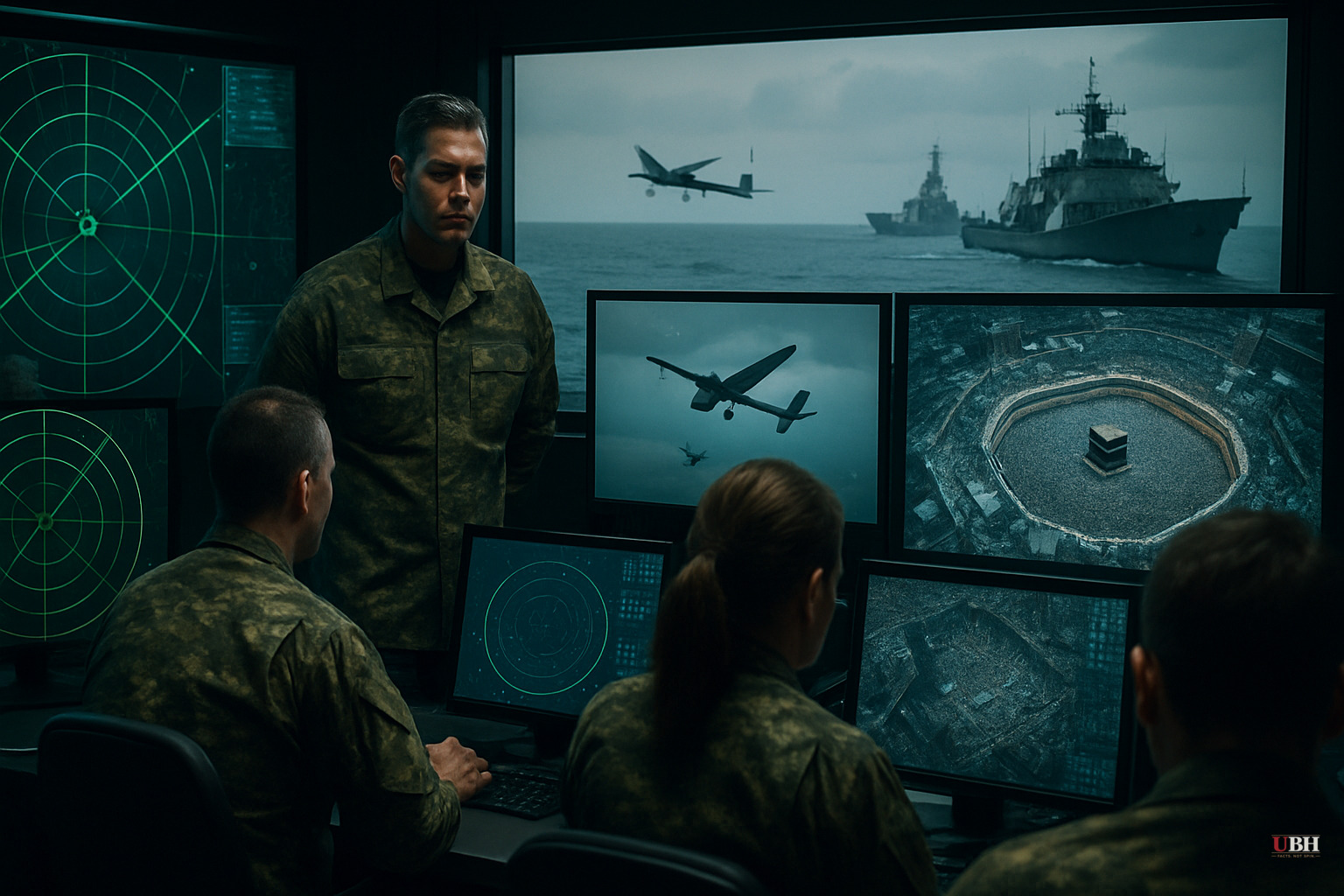
Hajj 2026 — running May 25 through May 29 — is set to be the first Hajj in modern history conducted while Saudi Arabia is in an active war. According to DW, it will be the first time Saudi Arabia has chosen to proceed with Hajj while simultaneously experiencing direct strikes on its own territory.
The Iranian Pilgrim Situation Is More Complicated Than It Looks
Only 30,000 Iranian pilgrims out of an expected 86,700 have traveled to Saudi Arabia for Hajj this year, according to IRNA, Iran's state news agency. The Straits Times confirmed that figure, attributing the shortfall to the "wartime situation."
Most coverage glosses over a crucial detail: those 30,000 Iranians are not just pilgrims. According to House of Saud, their presence inside the Haramayn cordon — the sacred boundary around Mecca and Medina — directly constrains Saudi Arabia's military decision-making. Saudi Arabia's constitutional identity as Custodian of the Two Holy Mosques means it cannot conduct or absorb military escalation while Iranian civilians are physically inside those boundaries. No diplomatic framework achieved that. 30,000 pilgrims did.
The first Iranian nationals entered Saudi territory on April 27, landing at Prince Mohammad bin Abdulaziz International Airport in Medina — the first time Iranian nationals had entered Saudi Arabia since the war began on February 28, according to House of Saud. Iran secured 16 hotels in Medina and 24 hotels in Mecca for its contingent.
How the War Started — Context Mainstream Coverage Is Soft-Pedaling
DW reported that the war began in late February when the US and Israel attacked Iran. Iran responded by targeting Gulf states, including Saudi Arabia. Last weekend — days before Hajj is set to begin — Saudi Arabia intercepted three drones it says were likely launched by pro-Iran militias in Iraq. There is a ceasefire in effect. Nobody is certain how long it holds.
House of Saud's conflict tracker puts the numbers in stark terms: 13,260+ casualties across 5 nations, Brent crude at $113 a barrel — up 57% from $72 — and Hormuz Strait traffic down 94%. Sixteen ships hit since Day 1.
Those are not background details. Those are the conditions under which approximately 1.5 million people are converging on one location.
The Diplomatic Wire That Made This Possible
The 30,000 Iranian pilgrims are inside Saudi Arabia because of a single phone call. According to House of Saud, Iranian Foreign Minister Abbas Araghchi and Saudi Foreign Minister Prince Faisal bin Farhan spoke on April 9 — the first official diplomatic contact between Riyadh and Tehran since the war began. A bilateral agreement followed.
The Straits Times quoted Umer Karim, an expert on Saudi foreign policy, saying that "Saudi Arabia and Iran have kept their political engagement open" despite the conflict. Two nations actively at war brokered a religious accommodation. Whether that reflects genuine diplomacy or tactical maneuvering by Tehran is the right question to be asking.
Western Governments Are Telling Their Citizens to Stay Away
The US government urged citizens to reconsider traveling to Saudi Arabia for Hajj — the first time that's happened, according to DW. Non-emergency US government employees were ordered to leave Saudi Arabia back in early March. Germany and the United Kingdom issued similar travel warnings.
And yet, pilgrims came anyway. A German Muslim named Fatima, 36, told AFP: "We know we are at the safest place in the world." Germany's Central Council of Muslims echoed that sentiment, noting that pilgrims tend to prioritize the religious obligation over government warnings.
"Spiritually safe" and "physically safe" are two different things when Saudi Arabia just intercepted three drones the week before Hajj is scheduled to start.
The Historical Weight Here
According to DW, historians note that over 14 centuries, Hajj has only been canceled or restricted about 40 times. The last time was COVID-19 in 2020. Pre-pandemic numbers hit 2.5 million in 2019. This year, around 1.5 million are expected — down from the 1.7–1.8 million who attended over the past three years.
Saudi Arabia also issued a direct warning through its interior ministry, prohibiting any chanting or political and sectarian flags during Hajj — a pointed message aimed squarely at Iranian pilgrims, given the history. The Straits Times reported this week's warning verbatim. In 2015, 464 Iranians were among roughly 2,300 pilgrims killed in a stampede. Relations between Riyadh and Tehran were severed entirely in 2016 after protesters attacked the Saudi embassy in Tehran following the execution of Shiite cleric Nimr al-Nimr.
The Strategic Dimension
Most outlets are framing this as a heartwarming story of faith persisting through conflict. That's real. But the more significant story is strategic: Iran's decision to send pilgrims — even a reduced number — functions as a geopolitical tool. Their physical presence in the holiest sites in Islam limits Saudi military options during a live war. Tehran didn't just send pilgrims. It sent a constraint.
What's at Stake
Approximately 1.5 million people are about to perform Hajj while Brent crude sits at $113, the Hormuz Strait is 94% shut, and Saudi Arabia is intercepting drones from Iranian-backed militias. The ceasefire is fragile. The interceptor stockpiles — according to House of Saud — are at 14%. The spiritual obligation is real. So is the risk. Regular people planning future Hajj travel, Muslim-majority communities with family in the Gulf, and anyone with money in energy markets should be watching this closely.
Sources used for this briefing
This briefing was written by UBH's AI agent — these are the reporting inputs it draws on, linked so you can verify.


