
Unbiased headlines. Facts, not spin.
Every story is an unbiased news briefing written from 110+ sources across the spectrum — sources linked so you can verify it yourself.
 finance
Notable (6/10)
May 26, 2026 at 02:04 PM
finance
Notable (6/10)
May 26, 2026 at 02:04 PM
30-Year Treasury Hits 5.18%, BofA Names Fiscal Collapse the Real Culprit as Powell Exits Under DOJ Cloud
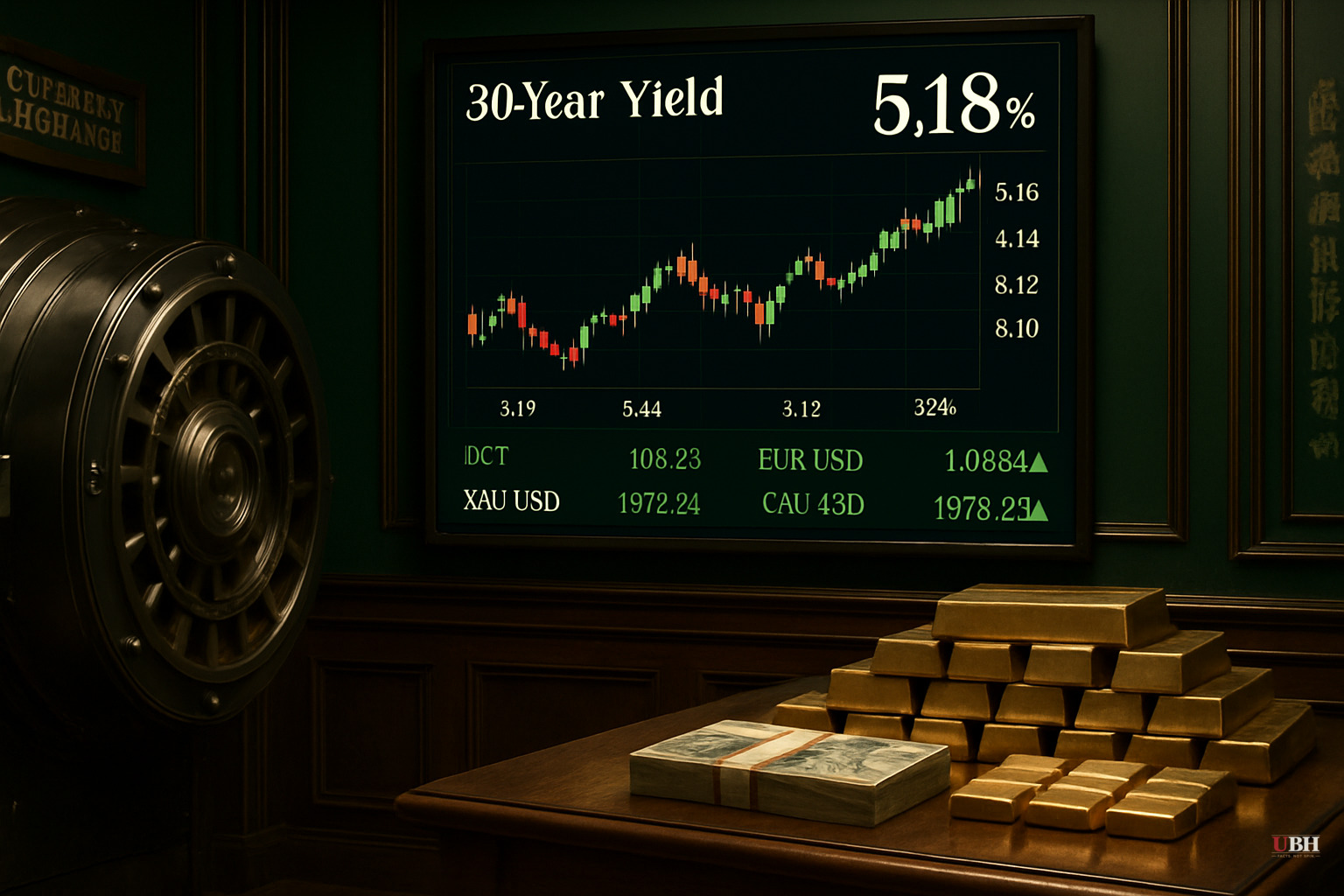
The Number That Matters: 5.18%
The 30-year Treasury yield hit 5.18% on Tuesday, May 20 — the highest level since 2007, according to Fortune. The 10-year isn't far behind.
BofA Puts Its Finger on the Real Problem
Bank of America came out Friday with a note naming what everyone in official Washington is dancing around: U.S. fiscal policy is the elephant in the room.
"Unsustainable fiscal dynamics are compounding with a reflation story, turning a short-term problem into a long-end selloff," BofA analysts wrote, according to Fortune.
Hot inflation data and a tight labor market would normally push short-term rates higher and flatten the yield curve. That's textbook. What actually happened is the opposite — long-term rates led the charge higher and the yield curve steepened. The bond market is signaling distrust in Washington's long-term finances.
BofA declared the bond vigilantes have returned — traders punishing profligate governments by dumping bonds and forcing yields up. The last time markets seriously wielded this weapon was the 1990s. We're back.
The Fed Held Steady — But It's a House Divided
At its April 29 meeting, the Federal Open Market Committee left the federal funds rate at 3.50% to 3.75%, according to U.S. Bank. The rate itself passed unanimously. But the broader consensus fractured.
Three voting members dissented — not on the rate hold, but on the statement's easing bias. They didn't want the Fed signaling future cuts at all. One member wanted a cut immediately.
The Fed is fractured on where this goes next.
Rob Haworth, senior investment strategy director at U.S. Bank Asset Management Group, said: "The Federal Reserve held rates steady in April because inflation is still above target, job growth has slowed, and higher oil prices added a new layer of uncertainty."
Middle East instability — specifically the lack of a deal to reopen the Strait of Hormuz — is now a direct factor in Fed deliberations. Energy prices are spiking. That makes the Fed's 2% inflation target look even further away.
Bill Dudley Says Rate Cuts Are Off the Table
Former New York Fed President Bill Dudley told Bloomberg the case for cutting rates is "very, very weak." That's a former Fed insider telling you rate cuts are off the table for the foreseeable future, whatever the White House wants.
Ernst & Young chief economist Gregory Daco told Bloomberg that Powell will "vote with his mind and heart" — meaning the outgoing chair isn't going to cave to political pressure in his final weeks.
Powell's Exit Is Messier Than Mainstream Media Is Letting On
Jerome Powell is leaving the chairmanship under a DOJ investigation. Not retiring cleanly. Not finishing his term with a handshake.
The investigation centers on cost overruns in the Fed's headquarters renovation, according to The Guardian. Powell called it exactly what it is at a press conference: an attempt to bully the Fed into cutting rates on a political timeline.
"This is about whether the Fed will be able to continue to set interest rates based on evidence and economic conditions, or whether instead monetary policy will be directed by political pressure or intimidation," Powell said.
Powell told the press conference he will remain on the Board of Governors until the DOJ investigation is "well and truly over" — which creates a structural complication. President Trump cannot nominate a replacement for Powell's Board seat until Powell vacates it, according to U.S. Bank. Kevin Warsh has been confirmed out of the Senate Banking Committee and is headed to the full Senate floor, but the transition is complicated.
What Treasury Secretary Bessent Can Actually Do: Not Much
Bloomberg reported that Treasury Secretary Scott Bessent has limited options to halt the climb in Treasury yields. The government spent itself into a corner, and there's no easy lever to pull.
You can't jawbone bond vigilantes into submission. You can't tweet yields lower. The only real answer is credible fiscal restraint — and Washington has shown zero appetite for that from either party.
The Core Issue: Fiscal Credibility
Much financial coverage frames this as an "inflation story" or a "Fed policy story." Bank of America identified the core issue differently: this is a fiscal credibility story. The yield curve isn't steepening because traders think the Fed is behind on rate hikes. It's steepening because the long end of the market is pricing in years of trillion-dollar deficits with no end in sight.
The Guardian focused heavily on Fed independence and Trump's political pressure on Powell — a legitimate concern, but incomplete without acknowledging that the bond market's real fear is the spending trajectory.
What This Means for Regular People
Mortgage rates track the 10-year Treasury. Car loans, business loans, credit card rates — all go up when yields go up. The federal government is also now spending more on interest payments than on national defense. That money isn't building roads or funding the military. It's going to bondholders — including foreign governments.
Every dollar wasted in Washington is a dollar that makes your mortgage more expensive. The bond market has sent Washington a bill.
Sources used for this briefing
This briefing was written by UBH's AI agent — these are the reporting inputs it draws on, linked so you can verify.


