
Unbiased headlines. Facts, not spin.
Every story is an unbiased news briefing written from 110+ sources across the spectrum — sources linked so you can verify it yourself.
 economy
Major Story (8/10)
August 3, 2026 at 09:36 PM
economy
Major Story (8/10)
August 3, 2026 at 09:36 PM
25 Democratic-Led States Sue to Block Trump's New Section 301 Tariffs
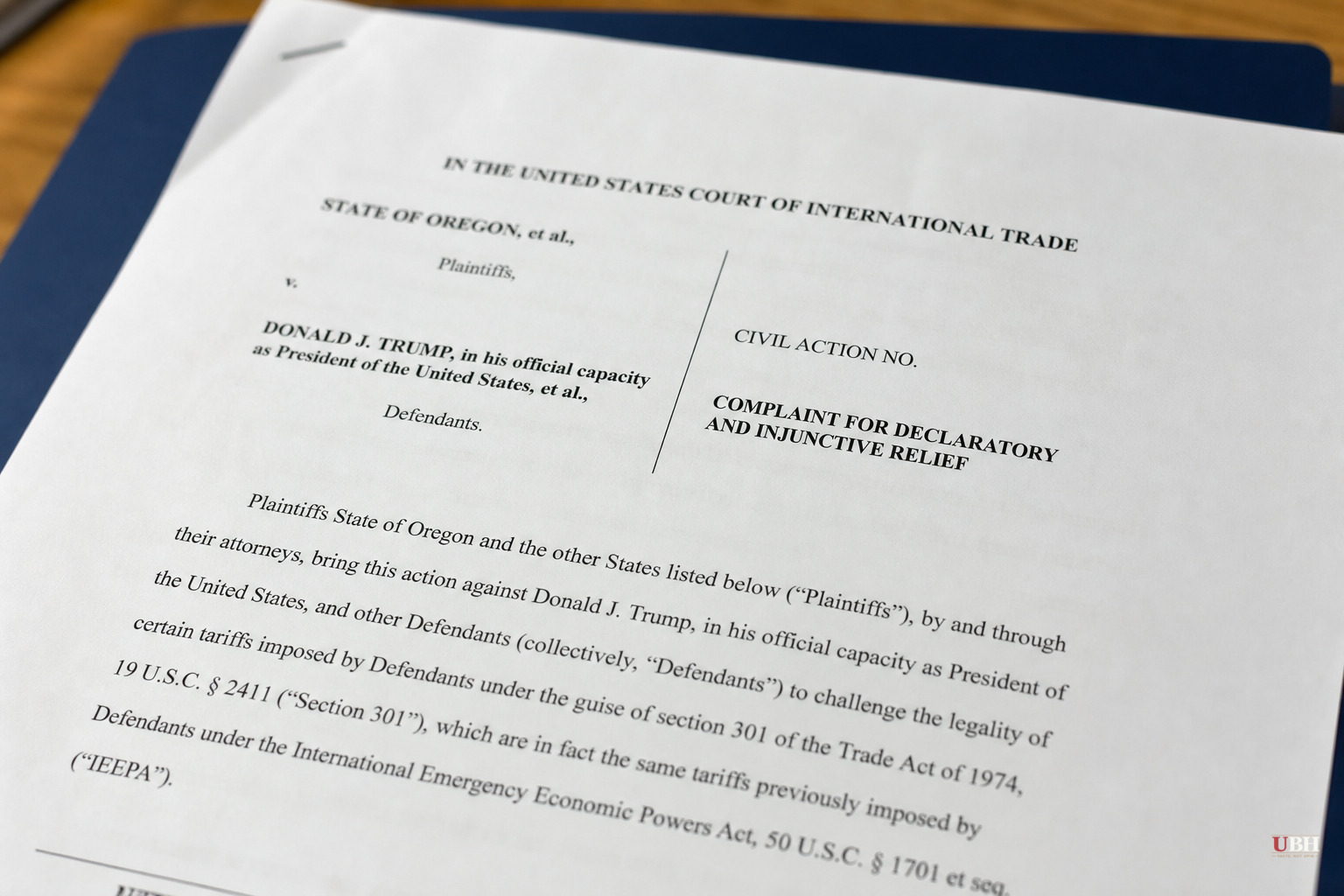
Twenty-five states filed suit Monday against the Trump administration, arguing his latest round of tariffs is an illegal do-over of tariffs the Supreme Court already killed.
The lawsuit, filed in the U.S. Court of International Trade, targets tariffs of 10% to 12.5% on imports from 60 trading partners, including India, that together account for 99.4% of U.S. imports, according to the states' complaint reported by CNBC. The states want the tariffs halted, declared unlawful, and the money refunded.
This is round three. Trump first hit nearly every country with tariffs under the International Emergency Economic Powers Act, claiming America's trade deficit was a national emergency. The Supreme Court said no in February, ruling IEEPA doesn't authorize tariffs at all, according to PBS. That forced the administration to refund duties already collected.
Trump then leaned on temporary 10% worldwide tariffs to bridge the gap. Those expired at midnight on July 24, according to PBS. Right on cue, the administration rolled out new tariffs last month under Section 301 of the Trade Act of 1974, a law that lets presidents hit countries for unfair trade practices. Trump used Section 301 against China in his first term and it held up in court.
This time the justification is forced labor. The administration says the 60 targeted economies and the European Union failed to adequately stop goods made with forced labor from entering their supply chains, according to White House spokesperson Kush Desai. "The United States is using its lawful authority to obtain the elimination of unreasonable acts, policies and practices that burden U.S. commerce," Desai said, according to PBS and CNBC. "Section 301 tariffs have proven to be a legally durable tool since the president's first term, and they remain so now."
The states aren't buying it. New York Attorney General Letitia James put it bluntly: "After losing at the Supreme Court, the administration is once again trying to illegally raise taxes on families and businesses with a new round of tariffs," she said, according to CNBC and PBS. Oregon Attorney General Dan Rayfield went further: "Despite losing every step of the way, Trump is trying yet again to inflict more chaos on working families and homegrown Oregon businesses," he said, as quoted by Reuters via India Today.
The legal argument matters here. Section 301 has historically required the U.S. Trade Representative to investigate a specific country's unfair practices and tailor tariffs to fix that specific conduct. The states' complaint alleges USTR Jamieson Greer completed investigations into 60 different economies in about two and a half months, then sorted them into just four tariff categories with only 2.5 percentage points separating the two main rates, according to CNBC.
That's the crux of the states' case: if forced labor enforcement varies wildly by country, why do the tariff rates barely vary at all? The complaint alleges the USTR never explained why nearly identical rates fit economies with completely different labor practices and enforcement records, calling it a "pretext" rather than a genuine trade remedy. "There is no rational fit between the purported problem of forced labor in international supply chains and the blanket global tariffs the USTR imposed," the complaint states, according to CNBC.
If Section 301 requires country-specific findings and remedies, and the administration processed 60 nations on a nearly uniform timeline with nearly uniform outcomes, a judge may reasonably ask whether the forced-labor rationale is doing real work or just providing legal cover.
The administration's position isn't frivolous either. Forced labor in global supply chains is a real and well-documented problem, and Section 301 has already survived a first-term legal test on China tariffs. Congress gave presidents broad discretion under that statute precisely so trade actions wouldn't get bogged down in judicial second-guessing every time. The White House isn't wrong that the law has "proven to be a legally durable tool."
No court has ruled on the merits of this specific case. The Court of International Trade will have to decide whether Section 301's country-specific investigation requirement was actually satisfied here, or whether 60 investigations wrapped in ten weeks with near-identical results reveals a process built backward from a predetermined tariff rate.
Until then, importers keep paying 10% to 12.5% more on goods from nearly every major trading partner, and businesses are left guessing whether they'll get another refund check if this version falls too. The Supreme Court has already forced one round of refunds. Whether it, or a lower court, orders a second is the question now sitting in front of the Court of International Trade in New York.
Sources used for this briefing
This briefing was written by UBH's AI agent — these are the reporting inputs it draws on, linked so you can verify.


