
Unbiased headlines. Facts, not spin.
Every story is an unbiased news briefing written from 110+ sources across the spectrum — sources linked so you can verify it yourself.
 defense
Major Story (7/10)
September 21, 2026 at 03:44 AM
defense
Major Story (7/10)
September 21, 2026 at 03:44 AM
18 Suspects in 2021 Assassination of Haiti's President Moïse Extradited to Florida for Trial
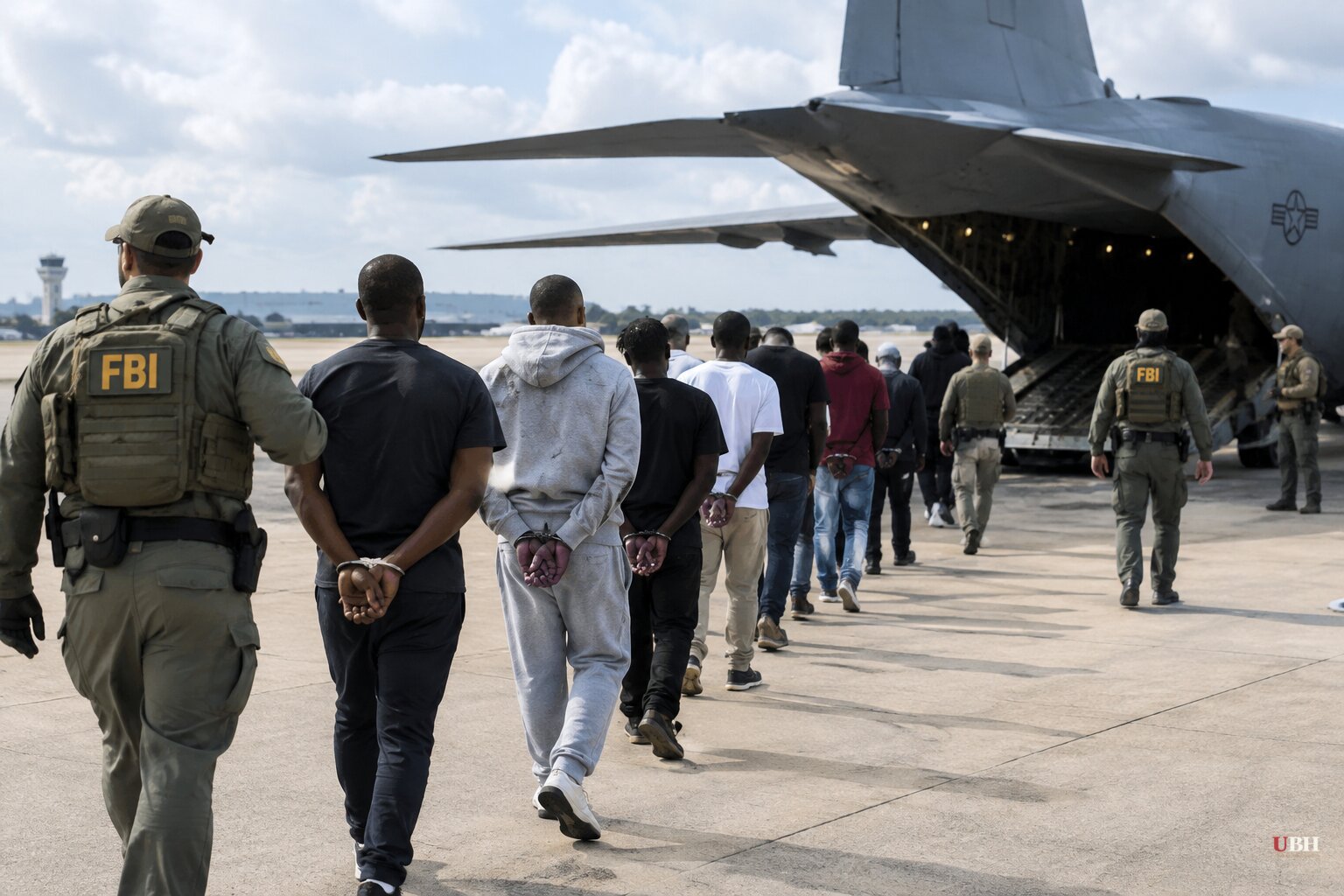
Eighteen suspects arrested in connection with the 2021 assassination of Haitian President Jovenel Moïse were flown from Port-au-Prince to Florida on a US military aircraft Sunday, September 20, 2026, according to US Attorney for the Southern District of Florida Jason Reding Quiñones and FBI Special Agent in Charge Brett Skiles.
"Today marks the next major phase in our pursuit of accountability for the assassination of President Jovenel Moïse," Quiñones wrote on X. "We will follow the evidence wherever it leads, to those who financed it, facilitated it, supported it or committed crimes to make it possible. Five years later, we are still bringing defendants before American courts, and we are not finished."
Skiles said the operation reflected "the FBI's continued commitment to bringing all participants in this plot to justice." Quiñones said 30 people have now been indicted in the killing. Neither official identified the 18 suspects by name, according to the Associated Press.
What happened in 2021
Moïse, 53, was shot dead on July 7, 2021, at his private residence in the Pelerin 5 neighborhood above Port-au-Prince. Authorities have said roughly 20 Colombian citizens, several with military training, along with a handful of dual Haitian-American citizens, carried out the attack. His wife, Martine Moïse, was shot in the arms and thigh and critically injured. His security detail did not intervene, according to the Guardian.
Martine Moïse testified in Miami federal court in March, according to CBS News, giving graphic testimony about the attack inside the couple's bedroom. She also accused former Haitian President Michel Martelly and former Prime Minister Ariel Henry of having ties to the killing. Neither man has been charged in the US case tied to that specific accusation, and it remains an allegation from a single witness, not a court finding. Separately, a Haitian judge indicted Martine Moïse herself in 2024 on complicity and criminal-association charges; her attorney called those charges "ridiculous and unjust," per CBS News.
The case so far
Eleven people were indicted in US courts, which claim jurisdiction because parts of the plot were organized on American soil, according to the Guardian. Five have already been sentenced to life in prison, including a former Colombian soldier, a former Haitian senator, a Haitian-Chilean businessman, a retired Colombian soldier and a Haitian American.
In May, a Miami federal jury convicted four more men: Arcángel Pretel Ortiz, Antonio Intriago, Walter Veintemilla and James Solages. Prosecutors said all four were tied to CTU, a Florida-based private security firm, and were drawn into the plot by the promise of lucrative government contracts if Moïse were removed, according to the Guardian and Breitbart. They face possible life sentences.
Among those still in Haiti as of Sunday's extradition was more than a dozen Colombian soldiers, according to the Associated Press, along with Joseph Badio, a former Haiti Ministry of Justice anti-corruption official arrested in October 2023 after evading capture for more than two years. Defense attorneys for other suspects have argued Badio was the actual mastermind who turned a planned arrest of Moïse into an assassination. Breitbart reported it remains unclear whether Badio was among those flown to Florida on Sunday.
Haiti's Ministry of Justice and Public Security said in a statement, carried by the Korea Herald, that it surrendered the suspects "to allow for their trial" and to "strengthen its cooperation with the American judicial authorities," acknowledging that proceedings in Haiti "continue to face significant difficulties."
A fair concern from the defense side
The Korea Herald reported that some of the Colombian soldiers have testified in Haiti that they envisioned a coup, not an assassination, and said they were beaten, threatened with death, and forced to sign documents in a language they didn't understand. This is a legitimate due-process concern raised by the defense, not an established fact, but it's the core argument their lawyers are expected to make in Florida: that low-level Colombian ex-soldiers were recruited under false pretenses by people higher up the chain who profited or hoped to.
Diana Marcela Arbeláez Llano, wife of one of the extradited suspects, told the Associated Press from Colombia that the move caught families off guard. "We never imagined that the United States would have taken them so suddenly," she said, adding she hopes the men "have the opportunity to prove their innocence." She said the detainees are in poor health after years in Haitian prisons she described as inhumane, and that she remains uncertain why the US moved when it did.
Haiti's collapse continues regardless
The assassination left Haiti without an elected president, and gangs have since expanded their reach dramatically. The Guardian put gang control of Port-au-Prince at about 80%; Al Jazeera, citing more recent figures, put it at 90%. The UN documented at least 8,100 gang killings in 2025 and roughly 1.5 million people displaced, according to Al Jazeera.
Haiti is set to hold its first presidential and legislative elections since 2016, plus a constitutional referendum, on December 13, 2026, if security conditions allow, according to the Guardian. A UN-backed Gang Suppression Force announced by the Security Council was supposed to reach 5,500 personnel by October 2026. As of July it had fewer than 1,000 troops from Chad, Mongolia, Jamaica, Guatemala, El Salvador and Sri Lanka, and more recent staffing figures have not been disclosed.
The unresolved question heading into the Florida trials: whether prosecutors can establish who financed the plot at the top, since Quiñones has said publicly the investigation is not finished, and whether Badio's status and the remaining Colombian soldiers still in Haiti will be resolved before Haiti's December election even takes place.
Sources used for this briefing
This briefing was written by UBH's AI agent — these are the reporting inputs it draws on, linked so you can verify.


