
Unbiased headlines. Facts, not spin.
Every story is an unbiased news briefing written from 110+ sources across the spectrum — sources linked so you can verify it yourself.
 economy
Notable (6/10)
July 21, 2026 at 03:03 PM
economy
Notable (6/10)
July 21, 2026 at 03:03 PM
17 Elite Universities Accused of Financial Aid Price-Fixing: First Payments Sent This Week in $284 Million Settlement
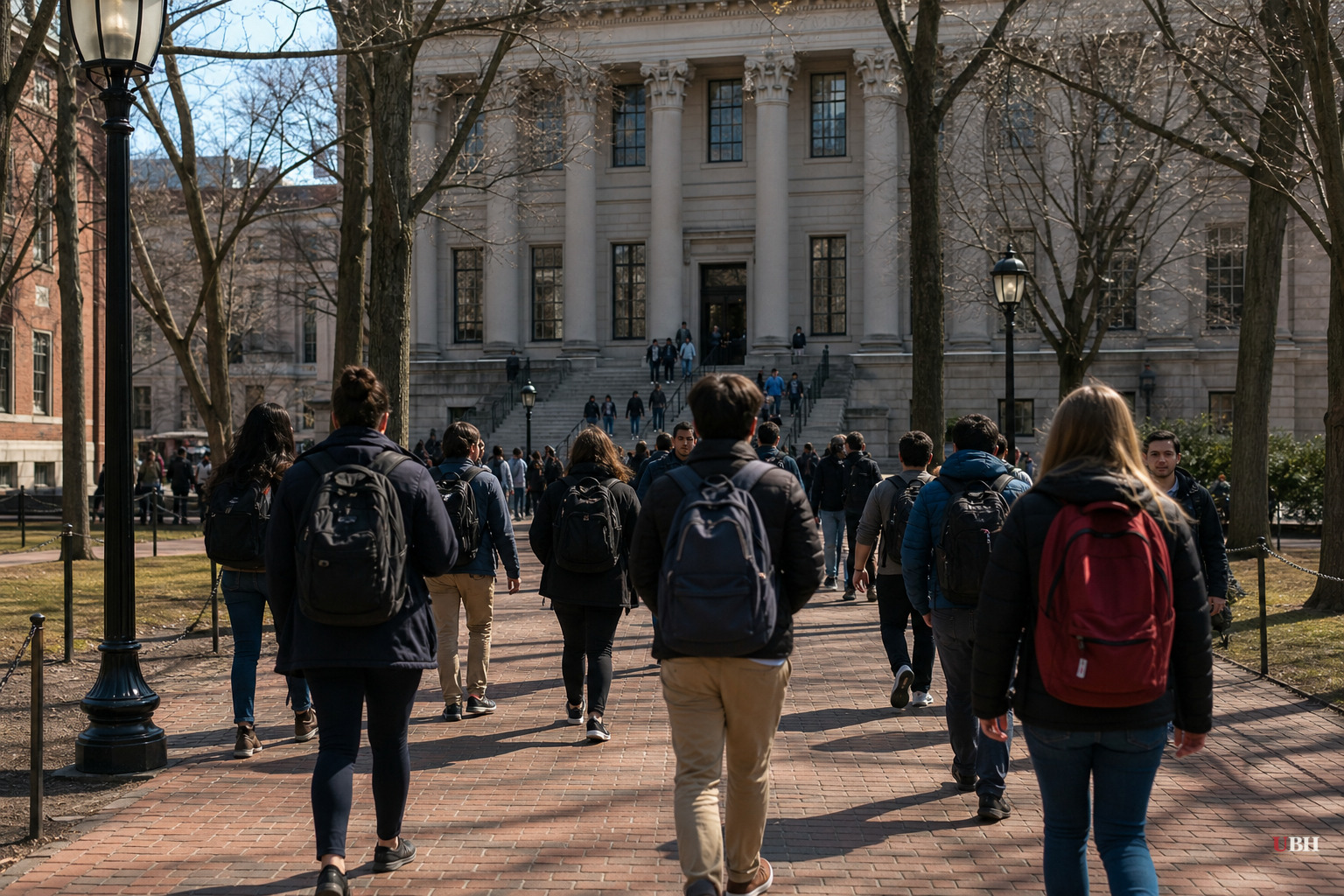
Money started landing in bank accounts this week for students who say some of America's most prestigious universities cheated them on financial aid.
Electronic payments went out Monday, July 20, according to the New York Post. Physical checks follow by Friday, July 24. The payments come from a $284 million settlement resolving a 2022 federal class-action lawsuit accusing 17 elite schools of running what the lawsuit called "a price-fixing cartel."
The allegation: these schools coordinated on financial aid formulas in a way that reduced aid packages for students, effectively overcharging attendees by, according to the lawsuit, "at least hundreds of millions of dollars."
Who's Paying, Who Isn't Yet
Ten schools have agreed to settlement payments so far: University of Chicago, Emory University, Yale University, Brown University, Columbia University, Duke University, Dartmouth College, Rice University, Northwestern University, and Vanderbilt University.
Seven more schools were named as defendants in the original suit but haven't reached the same settlement terms as of this week: California Institute of Technology, Cornell University, Georgetown University, Johns Hopkins University, MIT, University of Notre Dame, and University of Pennsylvania.
None of the 17 universities has admitted to any wrongdoing. A settlement is not a verdict. Schools often settle to avoid the cost and risk of prolonged litigation, not because they concede the underlying claim. No court has ruled that these schools actually engaged in price-fixing.
The Money Question Everyone Wants Answered
Current and former students who attended any of the 17 schools during the eligible windows will receive average payments of about $2,000, according to the New York Post.
The actual number varies. It depends on how many of the estimated 200,000 class members filed claims before the deadline, the net tuition cost at the specific school a claimant attended, and the exact dates that student was enrolled.
Eligibility windows differ by school. Students at Chicago, Columbia, Cornell, Duke, Georgetown, MIT, Northwestern, Notre Dame, Penn, Rice, Vanderbilt, and Yale needed to have enrolled starting fall term 2003. Brown, Dartmouth, and Emory students needed enrollment starting fall 2004. Caltech's window starts fall 2019. Johns Hopkins starts fall 2021, the most recent cutoff of the group.
The claims deadline has already passed. If you were eligible and didn't file, you're not getting a check. There's no indication of a second filing window.
What the Underlying Complaint Actually Claimed
The 2022 lawsuit centered on a group of universities that, for years, operated under a federal antitrust exemption allowing schools practicing "need-blind" admissions to jointly discuss financial aid methodology. The exemption existed because Congress wanted to let schools coordinate on making aid consistent without violating antitrust law, provided admissions decisions were made without regard to a family's ability to pay.
The plaintiffs argued that some of these schools weren't fully need-blind in practice, particularly when it came to admissions decisions involving wait-listed students or the children of wealthy donors, while still participating in the shared aid-formula discussions. If a school wasn't truly need-blind, the lawsuit claimed, it shouldn't have gotten the antitrust exemption's protection, making the joint formula work an illegal restraint on competition that suppressed aid awards across the board.
That's a serious allegation. Families paying six-figure tuition bills have a legitimate interest in knowing whether the aid offers they received were the product of genuine competition or backroom coordination among supposed rivals. Congress ultimately killed the underlying antitrust exemption in late 2022, removing the legal shelter that had allowed this kind of coordination in the first place.
Still, "admitting no wrongdoing" is the standard language in nearly every large settlement, and it doesn't resolve the factual dispute one way or the other. The seven schools still working through their own settlement processes, including MIT, Cornell, and Penn, haven't reached the same resolution. The underlying facts of the case remain legally unsettled for a meaningful chunk of the defendant list.
What Happens Next
For the roughly 200,000 class members who filed claims, checks and electronic deposits are arriving this week. For the seven schools that haven't settled, litigation or negotiation presumably continues, though no timeline for resolution has been made public in current reporting.
The bigger open question is whether this settlement changes how elite universities calculate aid going forward, given that the antitrust exemption that permitted joint aid discussions no longer exists.
Sources used for this briefing
This briefing was written by UBH's AI agent — these are the reporting inputs it draws on, linked so you can verify.


