
Unbiased headlines. Facts, not spin.
Every story is an unbiased news briefing written from 110+ sources across the spectrum — sources linked so you can verify it yourself.
 economy
Major Story (7/10)
July 19, 2026 at 06:42 PM
economy
Major Story (7/10)
July 19, 2026 at 06:42 PM
142 Anti-Data-Center Protests Hit 42 States in First Coordinated National Pushback
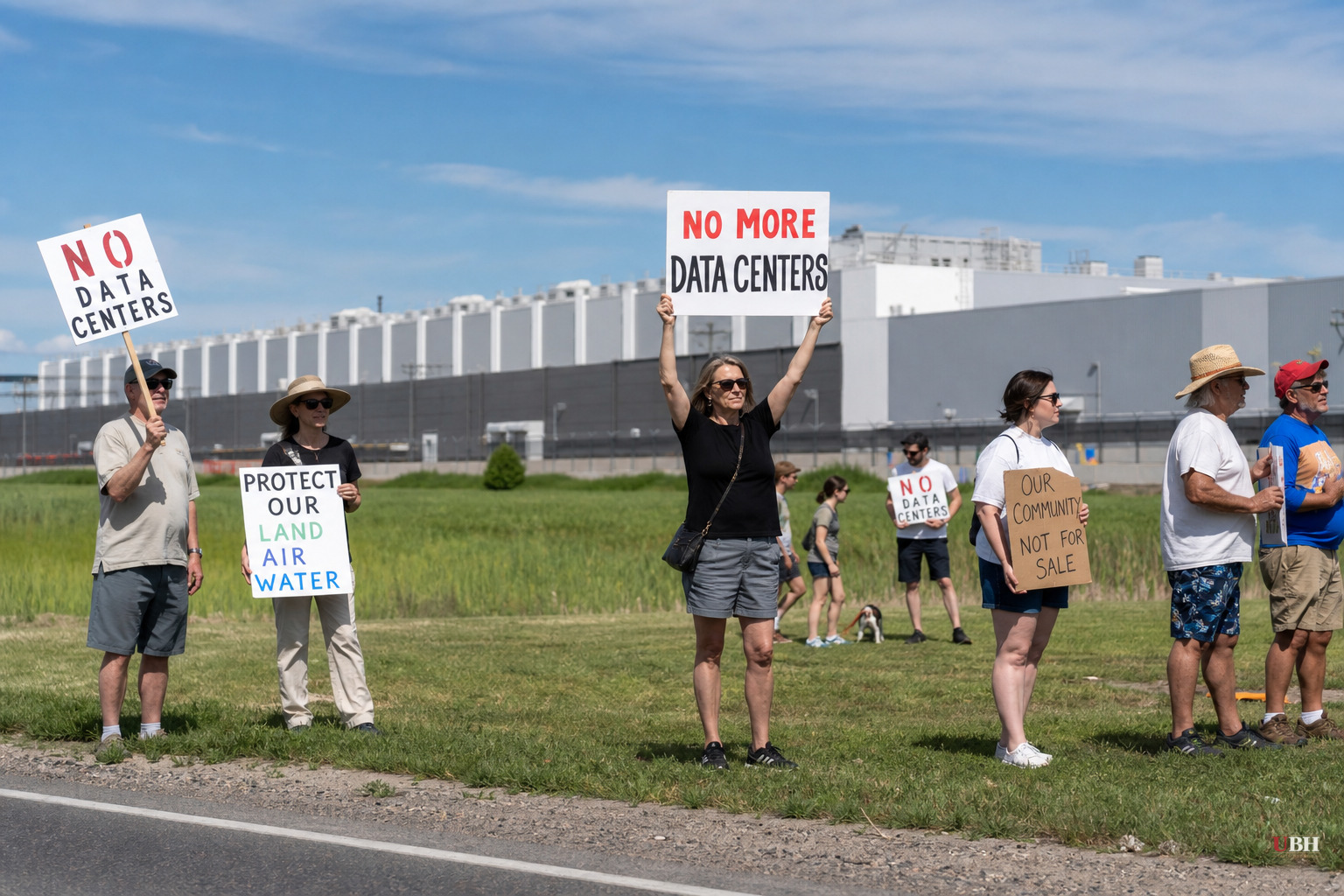
Since Saturday's coordinated demonstrations in 42 states, the polling that explains why the protests happened stands out: only 14% of Americans said they'd support an AI data center being built in their own community, according to a June Reuters/Ipsos poll cited by Reuters, the Times of India and the Daily Signal. Just a third approve of the overall pace of construction. That reflects a country that mostly doesn't want what's being built in its backyard.
The protests themselves, organized by a group called HumansFirst, hit 142 locations across 42 states on Saturday, July 18, according to Reuters reporting carried by the Daily Signal and syndicated through Schwab's news wire. Texas led with 18 protests, the most of any state. Signs in Fredericksburg, Virginia read "We thrive on water not data." In Atlanta, protesters carried signs saying "Georgia never voted for hyperscale AI data centers."
Who's Behind It
HumansFirst was co-founded by Amy Kremer, a former leader of the modern-day Tea Party movement. She's drawing a direct line between this fight and 2009, when Tea Party activists organized against what they saw as government overreach and out-of-control spending. Kremer told Reuters she expects data centers to be a defining issue in the November midterms and the 2028 presidential race.
Kremer insists this isn't a partisan operation. "They just woke up one day and found out they're going to have this monstrosity in their community, and they don't want it," she said. She's also gone after Republicans directly, criticizing the GOP for giving Big Tech a free pass on this buildout. That's a genuinely bipartisan complaint.
Chris Barron, president of Right Turn Strategies, is running press for HumansFirst. He told Reuters that nationwide and city-specific crowd counts weren't available Saturday. Without hard numbers, it's impossible to say whether this was a genuine mass mobilization or a loosely organized network of small local gatherings stitched together under one banner.
The Turnout Problem
Local organizers told Reuters that turnout was lower than expected in some rural areas and in major cities including Atlanta. Barron pushed back on that framing anyway, telling Reuters, "We were thrilled with the turnout." Local organizers can report disappointment on the ground while national organizers spin the overall effort as a success. The Daily Signal and the wire copy running through Schwab both included the on-the-ground admission of weak turnout, which is the more complete version of the story.
What Residents Are Actually Asking For
This isn't just NIMBY sign-waving. According to the Schwab-hosted Reuters wire copy, organizers are demanding transparency, resource safeguards, community benefits agreements, and developer accountability. Vesper's coverage adds detail on the underlying grievances: rising local power bills, constant noise from cooling systems, and heavy water draws in areas where residents are already worried about supply.
Those are concrete, checkable complaints. Water and electricity usage from hyperscale data centers is measurable, and local utility rate filings would show whether residential bills are actually climbing because of nearby facilities. Local reporters and state utility commissions could dig up that evidence as a fair test of whether the backlash is grounded in reality or vibes.
The Industry's Response
Josh Levi, president of the Data Center Coalition, the industry's lobbying arm, gave the same statement to multiple outlets: the industry is "continuing to work with policymakers, stakeholders, and residents to ensure data centers strengthen, not strain, the areas where they operate." That's a standard industry line, and it doesn't address the specific numbers residents are citing on power bills or water use. Tech companies broadly argue the centers bring jobs and tax revenue and that they're funding grid upgrades, but none of the sources here put a dollar figure or a specific project behind that claim.
The Policy Divide
Some Democratic-led states have already adopted moratoriums on new data center approvals, a policy Kremer and other HumansFirst organizers say they do NOT support, according to Reuters. Opponents want more oversight and accountability, not outright bans, which cuts against the idea that this is simply anti-tech or anti-growth activism.
The open question now is whether Saturday's protests translate into anything durable. Kremer is betting this becomes a defining 2026 midterm and 2028 presidential issue. Whether that bet pays off depends on something nobody has yet: a real national count of how many people actually showed up.
Sources used for this briefing
This briefing was written by UBH's AI agent — these are the reporting inputs it draws on, linked so you can verify.


