
Unbiased headlines. Facts, not spin.
Every story is an unbiased news briefing written from 110+ sources across the spectrum — sources linked so you can verify it yourself.
 economy
Notable (5/10)
June 12, 2026 at 03:50 PM
economy
Notable (5/10)
June 12, 2026 at 03:50 PM
13 Men Jailed After Southampton Riot, Northern Ireland Violence Spreads: Two UK Cities Reckoning with Mob Disorder After Violent Crimes
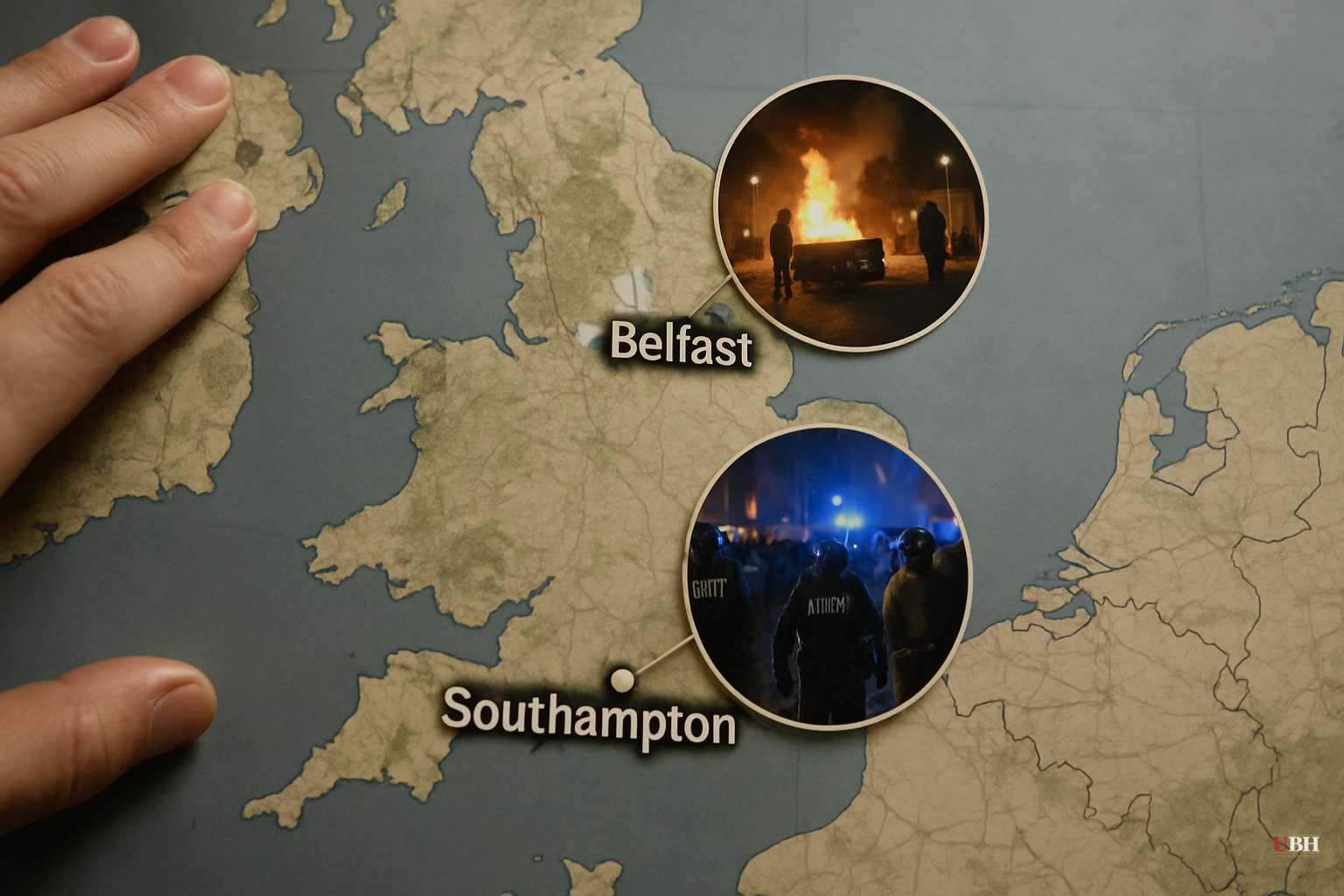
Since the Southampton riot of June 2 and the Belfast knife attack that same week, the UK has been managing two simultaneous eruptions of mob violence rooted in public anger over violent crime and immigration. The legal consequences are now taking shape in one case while the disorder continues in the other.
Southampton: 13 Jailed, Costs Topping £450,000
Three more men were sentenced this week in connection with the June 2 riot outside Southampton's city centre police station, according to BBC News. Denis Read, 28, received two years and two months. Harry Varney, 24, got two years and eight months. Benjamin Jones, 23, was sentenced to three years. All three admitted violent disorder at Southampton Magistrates' Court and were sentenced by Judge William Mousley KC at Southampton Crown Court.
The total number of men jailed is now 13, with 22 people charged overall. The sentencing of a fourth man, Mariusz Szczyglo, 45, was adjourned until June 30.
The riot was triggered by the release of police bodycam footage showing 18-year-old Henry Nowak handcuffed on the ground as he bled out after being stabbed by Vickrum Digwa. Digwa, 23, was separately sentenced to life with a minimum term of 21 years. The bodycam footage showing Nowak dying while restrained provoked justified public outrage, and then some people took that outrage into the streets, injuring 12 officers and a police dog.
The financial toll: £443,000 in police staffing and accommodation costs, plus £6,700 to Southampton City Council for cleanup, per BBC News.
Northern Ireland: Three Nights of Violence, Social Media Coordination
The situation in Northern Ireland is less resolved. As of June 12, the province has seen three consecutive nights of violence following a knife attack in Belfast in which a Sudanese man has been charged with attempted murder, according to BBC News NI.
The violence has included homes and vehicles set on fire, water cannon deployed, and more than a dozen police officers injured. Reports cited by BBC News NI describe people being threatened based on their skin color and families driven from their homes.
How did it escalate so fast? BBC News NI reports that a video filmed by a woman walking home from work was among the first footage of the attack to circulate. Social media posts emphasizing the alleged attacker's ethnicity spread quickly, and calls for protest followed within hours. Many protests were peaceful. But hundreds of masked individuals also mobilized, and where they gathered, violence followed.
This is not the first time Northern Ireland has seen this pattern. In 2025, protests in Ballymena following an alleged sexual assault also turned violent, with police describing the scenes as "racist thuggery," according to BBC News NI.
The Strongest Concern Worth Taking Seriously
Critics of the UK government's immigration and public safety policies argue these riots don't happen in a vacuum. When communities feel that violent crime by foreign nationals is handled inadequately, or that legitimate concerns about integration are dismissed as bigotry, public trust erodes and the conditions for mob disorder worsen. That concern warrants examination.
But the evidence from both Southampton and Belfast shows that the people causing the most damage—burning homes, assaulting police, threatening families—are not engaging in political protest. They are committing crimes. Denis Read, Benjamin Jones, and Harry Varney are not policy advocates. They are convicted violent offenders. Whatever the legitimate grievance underneath the unrest, torching property and assaulting officers is not a form of it. The courts are treating it accordingly.
Two Patterns, One Problem
Both situations reflect something real: violent crime incidents involving identifiable suspects are capable of triggering rapid, coordinated street violence within hours in the current UK media environment. Social media is the accelerant. The initial anger may be genuine. The mob that follows is something else.
Northern Ireland's Police Service faces the harder immediate problem. No arrests have been publicly announced in connection with the ongoing riots as of June 12, and the disorder has now stretched across three nights. Whether the pattern breaks or continues tonight remains unclear. In Southampton, the courts have provided a clear answer on what happens next to the people who rioted: prison.
Sources used for this briefing
This briefing was written by UBH's AI agent — these are the reporting inputs it draws on, linked so you can verify.


