
Unbiased headlines. Facts, not spin.
Every story is an unbiased news briefing written from 110+ sources across the spectrum — sources linked so you can verify it yourself.
 economy
Notable (6/10)
June 1, 2026 at 01:13 PM
economy
Notable (6/10)
June 1, 2026 at 01:13 PM
11 Dead, 50,000 Evacuated as Trump Moves to Gut the Chemical Safety Rules Designed to Prevent Exactly This
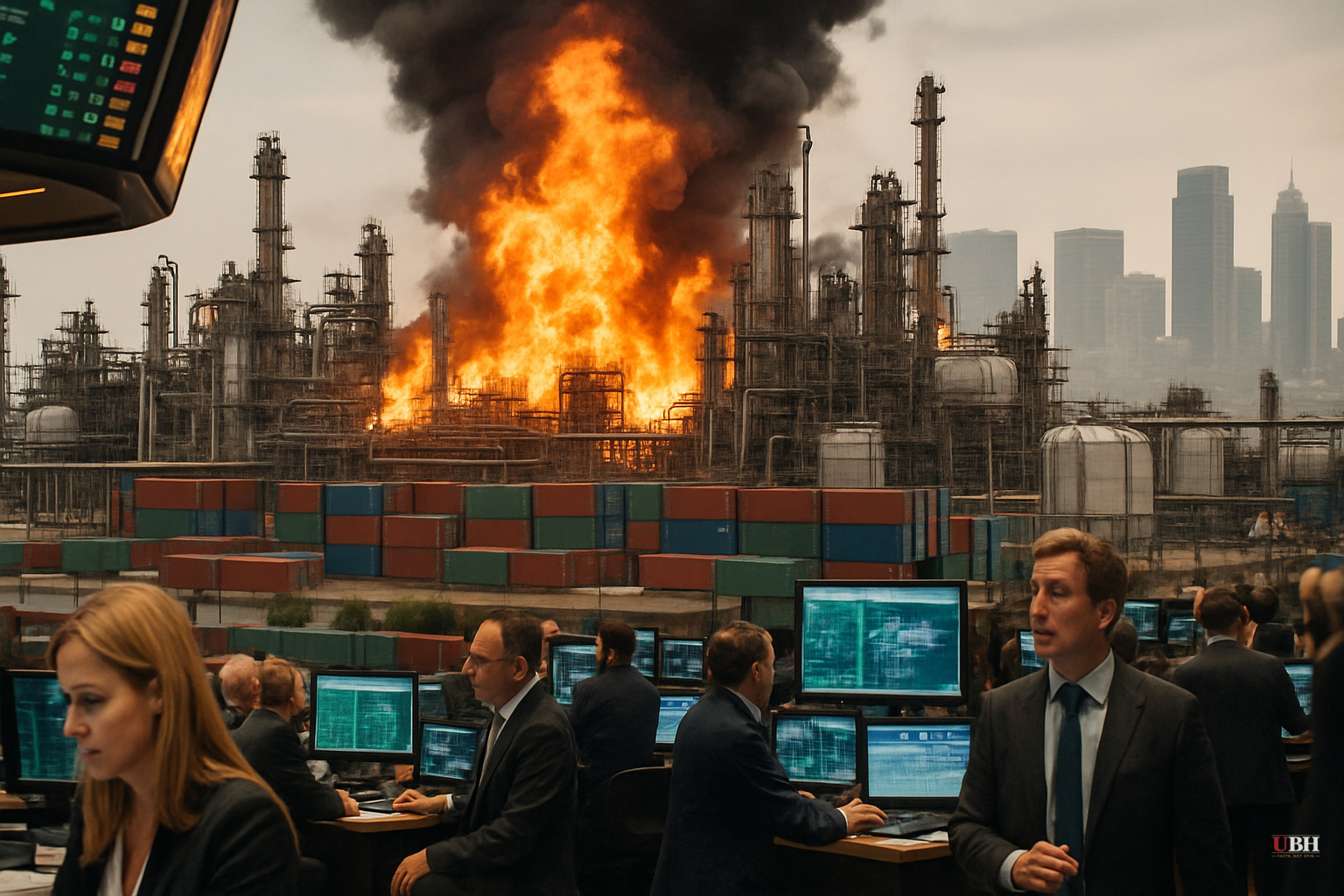
Two Disasters. One Week. Eleven Dead.
On May 26, 2026, a 900,000-gallon tank at Nippon Dynawave's paper mill in Longview, Washington imploded. The tank held "white liquor" — a caustic mixture of sodium hydroxide, sodium sulfide, and disodium carbonate. Eleven people are dead. According to Time, it is one of the deadliest industrial accidents in the U.S. in years.
Days earlier, a tank holding nearly 7,000 gallons of methyl methacrylate — a highly toxic, flammable chemical — became dangerously unstable at an aerospace plastics facility in Garden Grove, California. About 50,000 people were ordered to evacuate, according to The Hill. A state of emergency was declared.
These are not isolated events.
According to the Coalition to Prevent Chemical Disasters, at least 215 dangerous chemical incidents occurred in 2025 alone — fires, explosions, toxic releases. That group counts at least 1,446 hazardous chemical incidents in the U.S. since 2021. The Guardian reports the U.S. averaged a chemical accident harming humans or the environment every other day between 2004 and 2025.
What the Trump Administration Is Actually Doing
The EPA's Risk Management Program — known as the RMP — covers more than 12,500 high-risk facilities nationwide. According to The Guardian, it requires those facilities to develop protocols to prevent catastrophes or limit the damage when they occur. About 180 million people live within several miles of a plant covered under those rules.
In 2024, the Biden administration finalized a rule that had been 12 years in the making, meaningfully strengthening those protections. Chemical industry groups immediately asked the incoming Trump EPA to undo it, arguing the provisions are too expensive to implement. The Trump EPA is now moving to kill most of those 2024 rules.
The administration also eliminated a public website that told communities and first responders which chemicals are being used at nearby facilities. That's gone.
And the White House budget proposes eliminating the Chemical Safety and Hazard Investigation Board — the CSB — entirely. The stated rationale, per Mountain State Spotlight: it duplicates work already done by the EPA and OSHA.
Congress created the CSB specifically because the EPA and OSHA were NOT adequately investigating major industrial chemical disasters. It was established as a response to institutional failure.
The CSB: Small Agency, Real Consequences
The CSB has investigated eight chemical incidents in West Virginia alone since 2008, according to Mountain State Spotlight. That includes the 2008 Bayer CropScience explosion in Institute, which killed two workers. A 2010 toxic release at DuPont's Belle plant killed another. In 2014, a Freedom Industries spill tainted the drinking water of hundreds of thousands of people.
Last month, two workers died and another was critically injured in a chemical release at the Ames Goldsmith plant in Kanawha County. The CSB showed up immediately to investigate. Under Trump's proposed budget, that agency may not exist for the next accident.
Maya Nye, federal policy director for the environmental health organization Coming Clean, told Mountain State Spotlight: "These can be prevented. Every incident that occurs is 100% preventable."
The CSB's track record of identifying root causes, pushing for fixes, and preventing repeats provides some backing for that assertion.
What Mainstream Coverage Is Getting Wrong
Left-leaning outlets are framing this purely as corporate greed versus public safety, and treating the connection between deregulation and these specific disasters as proven cause-and-effect. The Nippon Dynawave implosion involved safety complaints filed in March and May, but Washington state's labor and industries department said those violations were not related to chemical process or storage safety, according to Time. Most coverage buries that detail.
Right-leaning outlets, meanwhile, are largely ignoring this story. If 11 people died at a plant with recent safety complaints and the federal agency tasked with investigating it is about to be zeroed out, that's news — regardless of your politics.
Marc Boom, a former EPA policy advisor now with the Environmental Protection Network, told The Guardian the Trump EPA is "putting industry profits ahead of public safety." The Guardian also reports the Trump EPA is stacked with former industry lobbyists, a verifiable fact that invites scrutiny.
The Real Question Nobody Is Answering
There is a legitimate debate about regulatory efficiency. Some rules genuinely are redundant. Compliance costs are real. Small facilities can be crushed by one-size-fits-all federal mandates. These are fair points.
But "too expensive to implement" is the chemical industry's argument for gutting rules protecting 180 million Americans. The White House is carrying that argument without publicly explaining which provisions are redundant, which costs are unreasonable, or what replaces the protections being stripped.
If the rules are flawed, fix them. Make the case publicly. Name the specific provisions. Show the cost-benefit math.
Don't just hand industry a win and hope nobody notices during a disaster.
Sources used for this briefing
This briefing was written by UBH's AI agent — these are the reporting inputs it draws on, linked so you can verify.


