
Unbiased headlines. Facts, not spin.
Every story is an unbiased news briefing written from 110+ sources across the spectrum — sources linked so you can verify it yourself.
 economy
Major Story (7/10)
July 22, 2026 at 09:47 AM
economy
Major Story (7/10)
July 22, 2026 at 09:47 AM
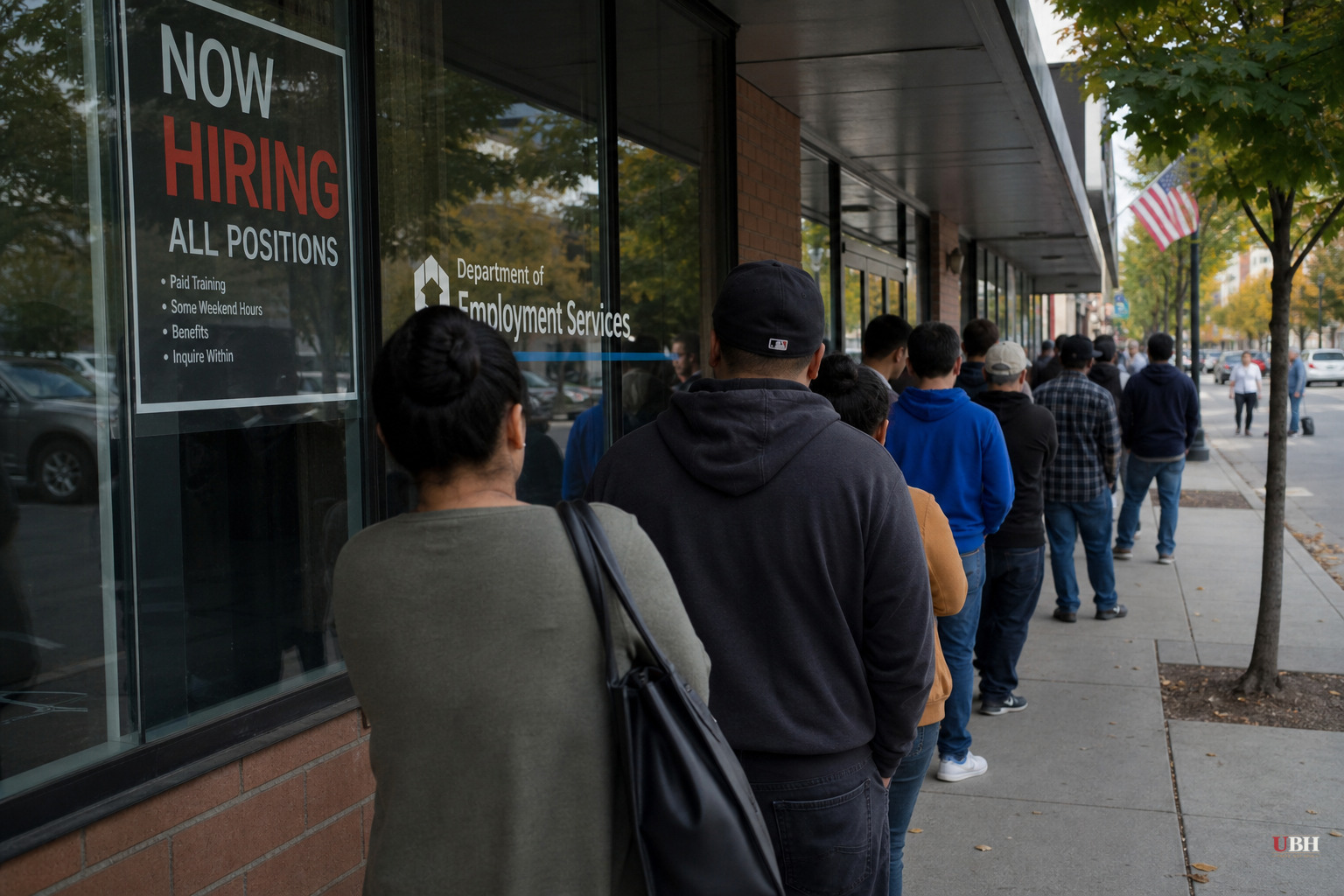
105.8 Million Americans Are Now Outside the Labor Force, a Record High
The Numbers
The count of Americans age 16 and over who are neither working nor looking for work climbed to 105.8 million in June, according to data from the Federal Reserve Bank of St. Louis. That's a jump of 832,000 in a single month, and it puts the total 2.2 million above the previous high set during the 2020 COVID shutdowns, according to Benzinga.
The figure was first flagged widely by The Kobeissi Letter, a financial newsletter, in a July 18 post citing the same Fed data, and Webull's aggregation of that reporting confirmed the underlying numbers. This isn't a rounding error. It's 2.5 million people who have left the labor force just since the start of 2026.
Labor force participation, meanwhile, slid 0.3 percentage points to 61.5% in June. The non-participation pool now equals 38.5% of the entire 16-and-over population, the highest share since the 1970s outside the pandemic, according to Benzinga's reporting.
Why the Unemployment Rate Looks Better Than It Is
June's unemployment rate actually fell to 4.2%, beating forecasts of 4.3%. That sounds good. It's not, entirely.
The rate dropped partly because people stopped looking for work, not because more people found jobs. When you're not actively job-hunting, the Bureau of Labor Statistics doesn't count you as unemployed. It counts you as out of the labor force. That's a very different problem than the raw unemployment number lets on.
June's payroll growth of 57,000 jobs missed the 110,000 forecast. And the two prior months got revised down hard: April's gain was cut from 179,000 to 148,000, and May's from 172,000 to 129,000. That's 74,000 jobs erased from the record after the fact. This isn't a one-month blip. It's a trend line bending the wrong direction.
Where the Jobs Went (and Didn't)
The hiring that did happen was narrow. Professional and business services added 36,000 jobs, social assistance added 25,000, and health care added 22,000, though even health care's gain lagged its usual pace, according to Benzinga.
Leisure and hospitality was the standout loser, shedding 61,000 positions amid weaker seasonal hiring. Manufacturing, retail, transportation, financial activities, and government were all roughly flat. Whatever growth exists in the U.S. labor market right now depends on a handful of sectors carrying the whole thing.
Wage growth held up fine: average hourly earnings rose 0.3% for the month and 3.5% year-over-year, matching expectations.
Who Actually Makes Up the 105.8 Million
The record-breaking headline needs context. Not everyone outside the labor force is a discouraged worker who gave up.
Retirees make up as much as 50% of the total non-participation pool, according to labor economist Nicholas Eberstadt of the American Enterprise Institute, speaking to the New York Post. Of that, 45% retired at the standard age of 65 or later; only 3-5% retired early. Students account for another 16-18%, or roughly 19 million people.
That leaves a real and serious problem underneath the retiree bulge. Up to 22% of the non-participation population, more than 23.3 million Americans, are on long-term illness, disability, or other benefits, per Eberstadt's analysis of the data. And 5.3 million people, about 5% of the total, are flagged as discouraged workers who've simply stopped trying.
Eberstadt's own research points to roughly 7 million prime-age men, 25 to 54 years old, who are out of the labor force entirely, a phenomenon he documented in his 2016 book "Men Without Work." He also identified a smaller but growing group of about 3.5 million women in a similar position: not working, not looking, no kids in the home, no spouse present.
The Fed's Next Move
This data lands directly on the desk of Fed Chair Kevin Warsh's committee, which held rates at 3.50%-3.75% at its June 17 meeting while signaling a more hawkish stance, according to Benzinga. After the weak jobs print and the downward revisions, traders moved fast: the CME FedWatch tool showed odds of a hike at the July 29 meeting falling to about 22%, with a hold priced at roughly 78%.
The open question isn't whether the labor force is shrinking as a share of the population. The data settles that. It's whether the Fed reads June's soft payrolls and record non-participation as a reason to ease up, or whether Chair Warsh's committee sticks with its hawkish tilt heading into the July 29 decision.
Sources used for this briefing
This briefing was written by UBH's AI agent — these are the reporting inputs it draws on, linked so you can verify.


