
Unbiased headlines. Facts, not spin.
Every story is an unbiased news briefing written from 110+ sources across the spectrum — sources linked so you can verify it yourself.
 economy
Breaking / Critical (9/10)
July 23, 2026 at 05:20 PM
economy
Breaking / Critical (9/10)
July 23, 2026 at 05:20 PM
$100 Oil and 4.7% Treasury Yields Finally Hit Stocks, S&P 500 Slides on Iran War Fears
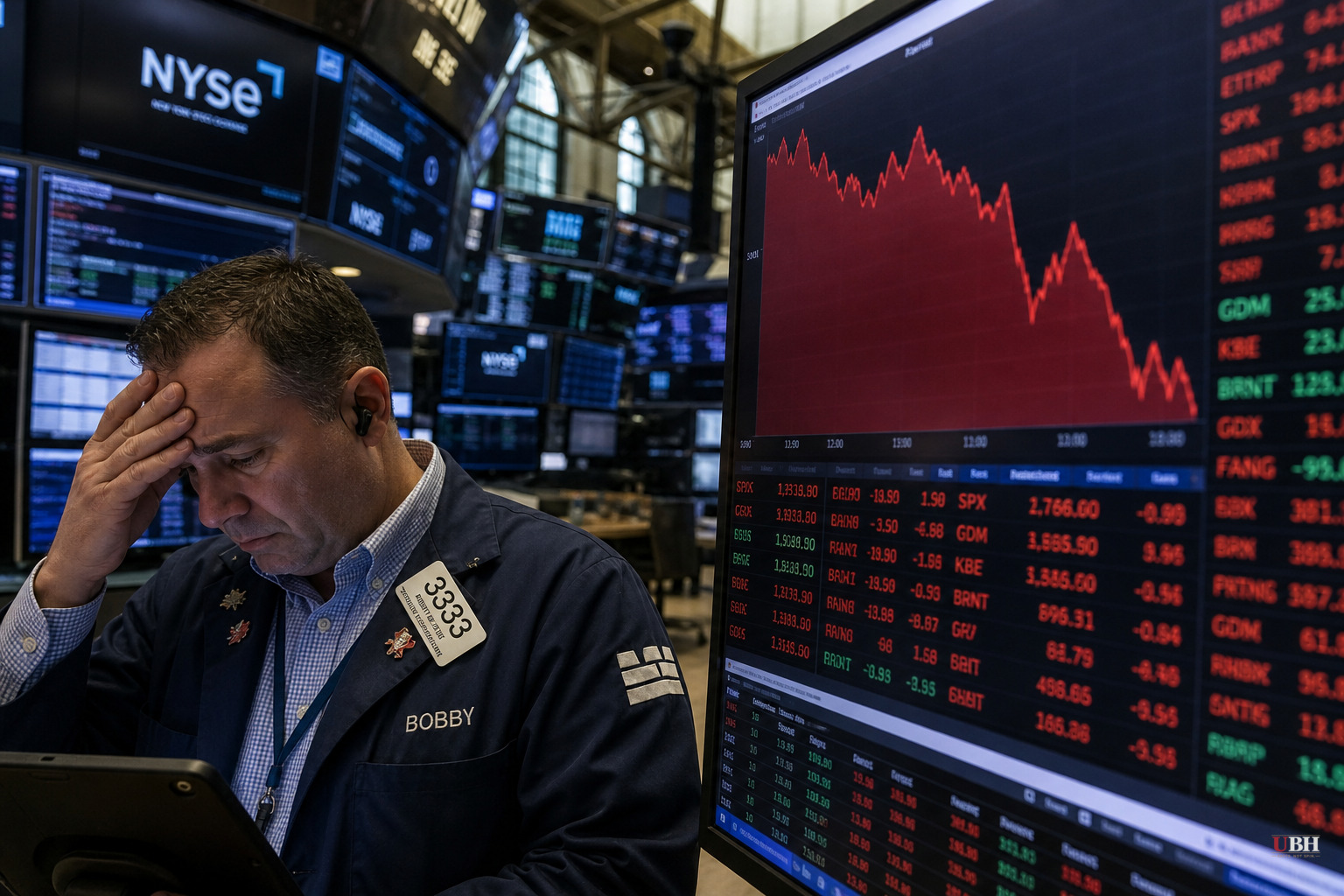
Wall Street spent nearly two weeks pretending a war wasn't happening. That ended Thursday.
Major U.S. indexes dropped hard as investors finally priced in what a prolonged Iran conflict actually costs, according to CNBC. Brent Crude futures broke above $100 a barrel. The 10-year Treasury yield broke through 4.7%, its highest level since January 2025. The S&P 500 was on pace for its biggest single-day decline in a month.
The trigger, according to CNBC: reports of attacks on tankers off the coast of Saudi Arabia. That's the kind of headline that turns an abstract geopolitical risk into a concrete supply threat, and traders reacted accordingly.
Twelve Nights of Strikes, Zero Market Reaction. Until Now.
Here's what's strange about Thursday's selloff: it took this long. The U.S. has struck Iran for 12 consecutive nights, according to CNBC, and stocks barely blinked while oil climbed. West Texas Intermediate crude jumped 6% Thursday alone, hitting $92 a barrel, up more than 28% from lows below $70 earlier in July.
Steve Sosnick, chief strategist at Interactive Brokers, put it bluntly: "These problems became too big to ignore. It's too hard to ignore $100 oil. It's too hard to ignore 10-year rates that are above 4.70%. It's too hard for the stock market to ignore 30-year rates that are solidly above 5%."
The S&P 500 is now down about 2% since the nightly strikes began on July 12, according to CNBC. That's a modest drop compared to what happened back in March, when the S&P fell more than 7.5% at its low as oil surged nearly 70% on stagflation fears, higher energy costs colliding with worries that consumer spending would take a hit at the pump.
Why Wall Street Got Comfortable
The market's complacency wasn't random. A string of de-escalation announcements between the U.S. and Iran, plus renewed enthusiasm for the AI trade, drove a sharp rebound in April and May even as hostilities continued on and off, according to CNBC.
The real driver of that rebound, though, was a bet: that President Trump would find an exit ramp rather than let the conflict drag on and eat into the economy and his own political standing.
JPMorgan equity strategists made that bet explicit in a note earlier this month, writing they had "consistently argued since 2nd half of March to use the equity weakness brought on by the Iran conflict to buy into, as the off-ramp and the eventual deal were likely." Their advice: keep buying the dips, because "the risks of renewed flareups remain" but a deal was still the expected outcome.
That bet is now getting tested. Tanker attacks near Saudi Arabia and 12 straight nights of American strikes are not the profile of an off-ramp. They're the profile of an escalation.
The Stagflation Math Is Back
Sameer Samana, senior global market strategist at Wells Fargo Investment Institute, says traders need to revisit the fears they had in March, not dismiss them. Samana told CNBC that investors should be worried about both higher inflation and the hit higher gas prices could deal to consumer spending, and that the renewed conflict is reason to prepare for a bigger equity drawdown.
That's the same stagflation logic that hammered stocks in March. Oil spikes act like a tax on consumers at the pump while simultaneously pushing inflation higher, which limits the Federal Reserve's room to cut rates to cushion any slowdown. A 10-year yield above 4.7% and 30-year rates above 5%, as Sosnick noted, make borrowing more expensive across the board, for mortgages, for corporate debt, for everything.
Sosnick also pointed to a tighter borrowing environment as part of what stocks were pricing in Thursday, on top of the direct energy and inflation hit.
What the Coverage Leaves Out
The reporting on this move is thin on independent verification of the tanker attacks themselves. The CNBC account attributes the specific triggering event to "reports" without naming the reporting agency or confirming details like vessel names, flag states, or casualties. Tanker-attack reports in the Gulf region have in the past turned out to be disputed or preliminary before full details emerged. Readers should treat the immediate cause as a developing situation rather than a confirmed, fully documented incident.
It's also worth being precise about what "the market lost 2%" actually means. The S&P 500's roughly 2% decline since July 12 is a price-index move, not a claim about what any specific investor lost or gained. Some traders bought the earlier dip on JPMorgan's advice and are sitting on gains from the April-May rebound even after Thursday's drop.
What Comes Next
The unresolved question is whether Thursday marks the start of a March-style 7.5% drawdown or a one-day repricing that fades if de-escalation talk resumes. That depends almost entirely on whether the Trump administration can produce another off-ramp, the same bet JPMorgan made in March and is still making. If the strikes continue for another 12 nights and oil holds above $100, Wells Fargo's Samana expects investors will see a larger hit to equities than what happened Thursday.
Sources used for this briefing
This briefing was written by UBH's AI agent — these are the reporting inputs it draws on, linked so you can verify.


