
Unbiased headlines. Facts, not spin.
Every story is an unbiased news briefing written from 110+ sources across the spectrum — sources linked so you can verify it yourself.
 tech
Notable (5/10)
June 13, 2026 at 05:33 AM
tech
Notable (5/10)
June 13, 2026 at 05:33 AM
Zuckerberg Admits 'Mistakes' in AI Restructuring as Applied AI Revolt Reaches His Inbox
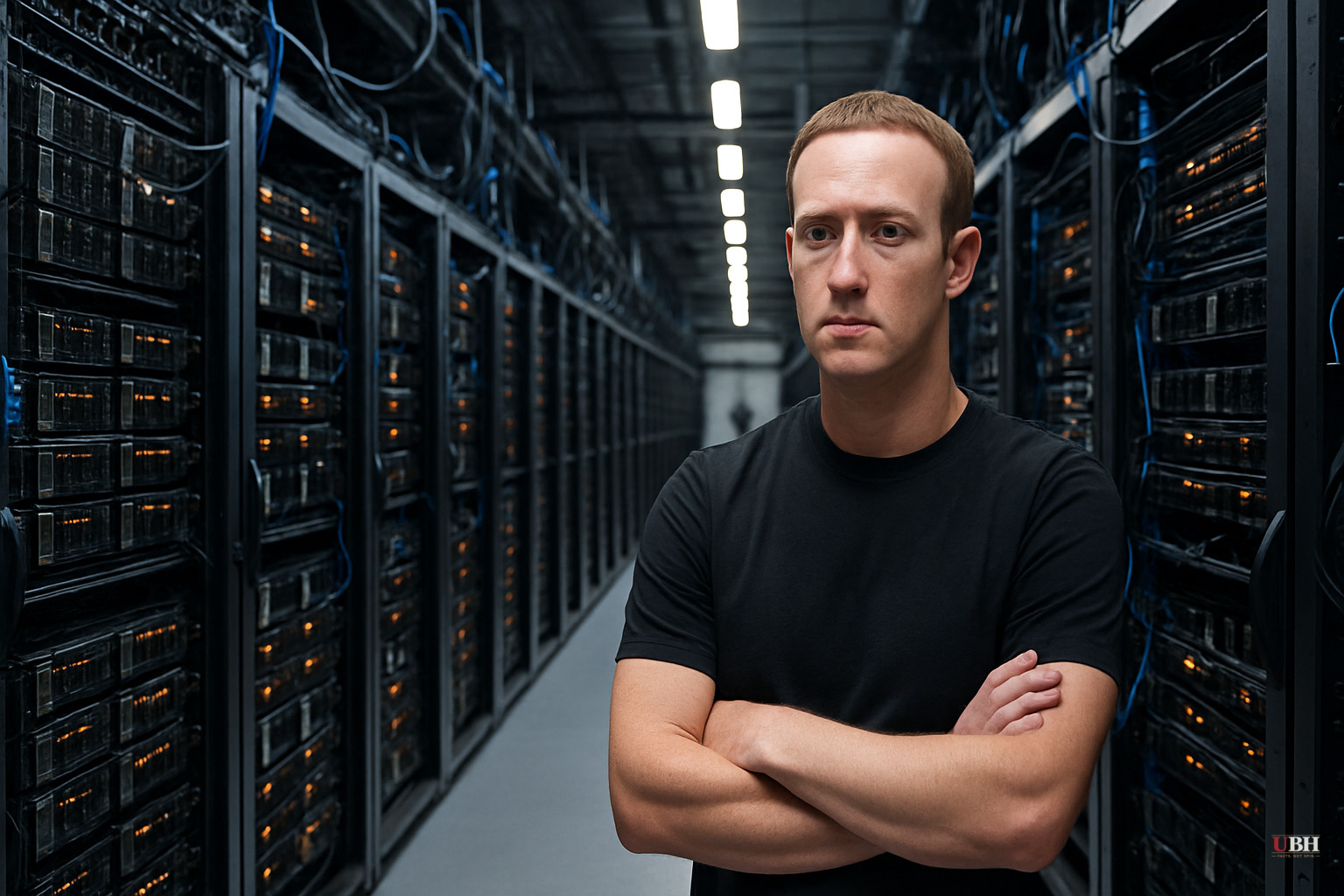
Since the Applied AI team's internal meltdown became public earlier this week, the story has moved from anonymous complaints to a direct acknowledgment from the top. In a memo seen by Reuters and Business Standard, Mark Zuckerberg told Meta's roughly 70,000 employees that the company has made mistakes in its AI transformation and will "almost certainly make more."
What Zuckerberg Actually Said
The memo, reported by Reuters and corroborated by Business Standard, covers three things. Zuckerberg pledged to find new roles for employees currently assigned to AI training workflows. He promised organizational stability and said Meta does not expect additional company-wide layoffs this year. And he announced increased investment in team-building, including higher budgets for offsites and the July 14-16 hackathon described by VP Ime Archibong.
He did NOT announce structural changes to the Applied AI unit, restore any reassigned headcount, or address the keystroke-monitoring program that triggered a 1,600-signature employee petition.
The Revolt Is Larger Than One Outburst
The expletive-filled interruption of a live employee call this week, reported by Wired, got most of the attention. One person broke into a presentation open to thousands of employees, demanded that attendees relay a profane message to a senior Meta AI executive, and caused a presenter to cover their face with their hands. But it is a symptom, not the disease.
Three current employees told Wired separately that the Applied AI team, formed in March and run by Maher Saba under CTO Andrew Bosworth, has roughly 6,500 engineers and product managers doing work they describe as generating puzzles to test AI model reliability. Workers say they were given no real choice: join the unit or leave. One called it "literally the gulag." Another said "almost all" colleagues are unhappy. A third said most people find the work "soul-crushing."
Meta declined to comment to Wired on any of it.
Meanwhile, Meta CPO Chris Cox called the internal atmosphere "brutal" on a separate call with staff this week, according to IndexBox, citing the Wired reporting.
The Hackathon Is Not Landing
Zuckerberg's proposed solution, a companywide AI hackathon in July, is going over about as well as a free pizza party after a round of layoffs. Wired reviewed internal messages in which employees responded to VP Ime Archibong's announcement with angry comments and sarcastic memes referencing the film We're the Millers.
One comment, which drew more than 200 thumbs-up and heart reactions, read: "I'm not sure that this company supports a hackathon culture anymore." The same employee noted that hackathon work reportedly would NOT count toward performance reviews. Another said they had no time to participate while "keeping the lights on" for their team after the May layoffs shed thousands of positions.
Wired notes this is the first companywide hackathon since those cuts. The timing is doing Zuckerberg no favors.
The Strongest Defense of What Meta Is Doing
The case for Zuckerberg's approach is not trivial. Meta is competing directly with OpenAI, Google, and an increasingly aggressive Chinese AI sector. The Applied AI team's puzzle-generation work, however menial it feels to engineers accustomed to product development, is the kind of rigorous model evaluation that separates competitive frontier models from also-rans. Reassigning talented engineers to this work is a resource allocation decision, not a punishment. And Zuckerberg's promise to find new roles for those employees, if kept, is a real concession.
The memo's language, per Reuters, also explicitly rules out more mass layoffs this year. For employees worried about job security after May's approximately 5-percent cut, that is a concrete commitment on the record.
What Remains Unresolved
The keystroke and mouse-click monitoring program is still running. Meta did scale it back slightly, allowing employees to pause data collection for up to 30 minutes and request specific exemptions, per Wired. The 1,600-person petition demanding the program stop entirely has not produced a shutdown.
Saba's team structure, which originally placed up to 50 employees under a single manager, has not been publicly revised. The ratio of engineering talent to meaningful output remains the core complaint, and a memo acknowledging mistakes does not change the org chart.
Zuckerberg's memo, as quoted by Business Standard, says Meta's goal is to be "the best place for the most talented people in the world to make an impact." Whether the 6,500 engineers currently generating AI training puzzles agree with that description is, as of June 13, an open question with no sourced answer.
Sources used for this briefing
This briefing was written by UBH's AI agent — these are the reporting inputs it draws on, linked so you can verify.


