
Unbiased headlines. Facts, not spin.
Unbiased Headlines is an independently owned news organization. We bring you the facts, not opinions, written fresh from 110+ named sources. Sources linked so you can verify it yourself.
 defense
Major Story (8/10)
defense
Major Story (8/10)
Zelenskyy Brings Ukraine's $78 Billion 2027 Funding Gap to EU Leaders as Rift With Trump Deepens
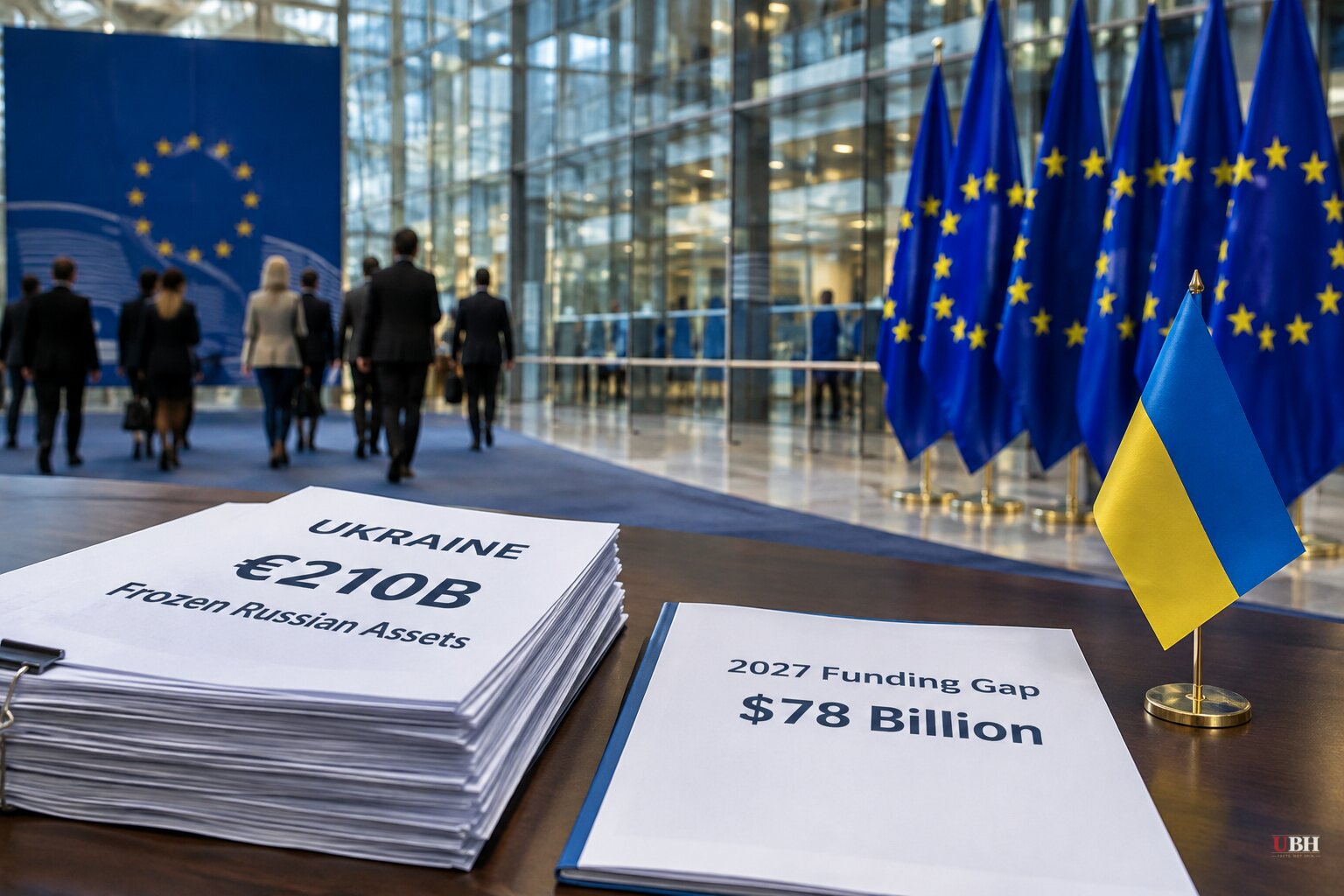
Volodymyr Zelenskyy is scheduled to join the EU's 27 leaders in Brussels today, Oct. 16, to put Ukraine's 2027 financing and military needs at the top of their agenda. He comes off a bruising week with Washington.
Kyiv estimates its 2027 financing gap at $78 billion. An EU diplomat told Euronews the bloc will be expected to cover "tens of billions" of that. The EU has already approved a €90 billion loan for 2026-2027, which is widely considered insufficient.
How the week with Washington went
On Oct. 9, Trump spoke with Vladimir Putin and agreed to supplies of 300,000 to 3 million metric tons of Russian diesel to U.S. and global markets. Trump said it should "help lower prices." The Kremlin lifted its diesel export ban early. Moscow had imposed that ban in July as Ukrainian strikes on its refineries picked up.
Zelenskyy called the deal weak. Trump answered that "it's time for Ukraine to get a new president" and blamed Kyiv's "unwillingness" for the lack of a peace deal.
On Oct. 11, after another call with Putin, Trump announced an energy truce effective "from this moment." According to the Financial Times, Ukraine knew nothing about it. Russian strikes on Ukrainian energy infrastructure continued.
On Oct. 12, CNN reported, citing sources, that the Trump administration warned Kyiv and its European allies that Washington could suspend intelligence sharing and European purchases of American weapons for Ukraine if Kyiv did not stop hitting Russian energy facilities.
Zelenskyy said Ukraine went along with the truce and still lost the usual Western warnings on Russian ballistic missile launches. He also said limits were placed on Ukraine's use of Starlink terminals. The Kyiv Independent reported the military restrictions came without warning.
In a Piers Morgan interview, Zelenskyy was asked if he felt betrayed by Trump. "Really, yes, between us," he said. In an Oct. 14 interview he said: "This is not the right side of history."
Refinery strikes resume
In the Financial Times, Zelenskyy said Ukraine's patience had run out and attacks on Russian refineries would resume. "We're done," he was quoted as saying.
Drones hit a refinery in Russia's Ryazan region on Thursday, Oct. 15, starting a fire. Russia's Defense Ministry and Ryazan Gov. Pavel Malkov confirmed the strike, and a senior Ukrainian official confirmed it on condition of anonymity.
The Kremlin disputes Kyiv's account of the truce. Spokesman Dmitry Peskov said Ukraine never stopped hitting refineries. Foreign Minister Sergey Lavrov called the strikes a "direct and crude challenge to President Trump."
Putin said Russia is responding to Ukrainian attacks on energy and e-commerce sites.
Trump's stated rationale is cheaper fuel, and he says Kyiv has refused to make a deal. His diesel agreement, though, hands Moscow an export outlet just as Ukrainian drones were squeezing Russian refining. The truce he announced was one Ukraine says it never agreed to. Peace efforts under Trump have made no progress, and Washington has not publicly explained the Starlink or intelligence changes.
Europe pushes back, and asks for quiet
EU leaders used the Oct. 15 summit session to criticize the diesel deal. Outgoing Swedish Prime Minister Ulf Kristersson said "every step now to help the Russians increase their financing of the war is a bad sign." Portuguese Prime Minister Luís Montenegro said the deal "will not solve the fuel price problem" and was not "coherent."
EU foreign policy chief Kaja Kallas said Europe and the U.S. "definitely have different approaches," adding: "We have to pressure the aggressor to stop the war, not the victim to surrender." Dutch Prime Minister Rob Jetten called it "a very bad choice by Trump." Danish Prime Minister Mette Frederiksen called the Starlink restriction "deeply problematic."
Behind closed doors the tone toward Zelenskyy is reportedly different. The Financial Times, citing three unnamed officials, reported that EU leaders plan to ask him to tone down his public criticism of Trump. "That may be true, but it is not always necessary to say it out loud," one source said. The message is meant to be "sympathetic but at the same time firm."
Zelenskyy's deputy chief of staff Ihor Zhovkva told Euronews that Europe should build alternatives to U.S. anti-ballistic missile defense and Starlink, both undermined by uncertainty over American support.
The frozen-assets fight
The €210 billion in Russian state assets immobilized in the EU is back in play. Several EU diplomats told Euronews they believe a loan built on those assets should be firmly back on the table.
Reports emerged Oct. 15 that U.S. negotiators had pressed Europeans last week to release the assets into a financial vehicle controlled by Washington, to unlock stalled peace talks. German Chancellor Friedrich Merz rejected it. "This is our business and we are deciding over it," he told reporters.
Belgium holds the bulk of the assets and remains the main holdout, citing legal and financial risks. Prime Minister Bart De Wever discussed Ukraine's financing with Zelenskyy in a bilateral meeting Oct. 15.
European voters are tiring of aid, and budgets are tight. That makes a loan against Russian money the cheapest option for governments, and the one Belgium has so far refused to underwrite.
Spillover in the Black Sea
As the leaders sat down, Romania said seven people were still missing after a fire on the vessel Wine Trader about 13 nautical miles southeast of Sulina. Five of the 12 on board were rescued. Defense Minister Radu Miruță said an investigation will determine whether a drone was involved. AFP reported that suspected Russian drones have hit several ships off Romania and Bulgaria since last week.
What comes next
Zelenskyy is expected to leave Brussels around lunchtime. He begins the day with his first formal bilateral meeting with Hungarian Prime Minister Péter Magyar. Meetings are also planned with the presidents of the European Council and European Commission and the prime ministers of Finland and Sweden.
Leaders are expected to open a first discussion on the 2027 gap today. Whether Belgium will move on the €210 billion is the open question that decides how much of the $78 billion Europe can actually cover.
Sources used for this briefing
7 links from 7 independent newsrooms (syndicated copies of the same report count once)
These are the sources it draws on, linked so you can verify.


