
Unbiased headlines. Facts, not spin.
Every story is an unbiased news briefing written from 110+ sources across the spectrum — sources linked so you can verify it yourself.
 finance
Low Interest (4/10)
June 19, 2026 at 12:02 PM
finance
Low Interest (4/10)
June 19, 2026 at 12:02 PM
Zealand Pharma Stock Down 38% Year-to-Date After Two Drug Setbacks. Here Is Where Analysts Stand Now.
Two Bad Days in One Year
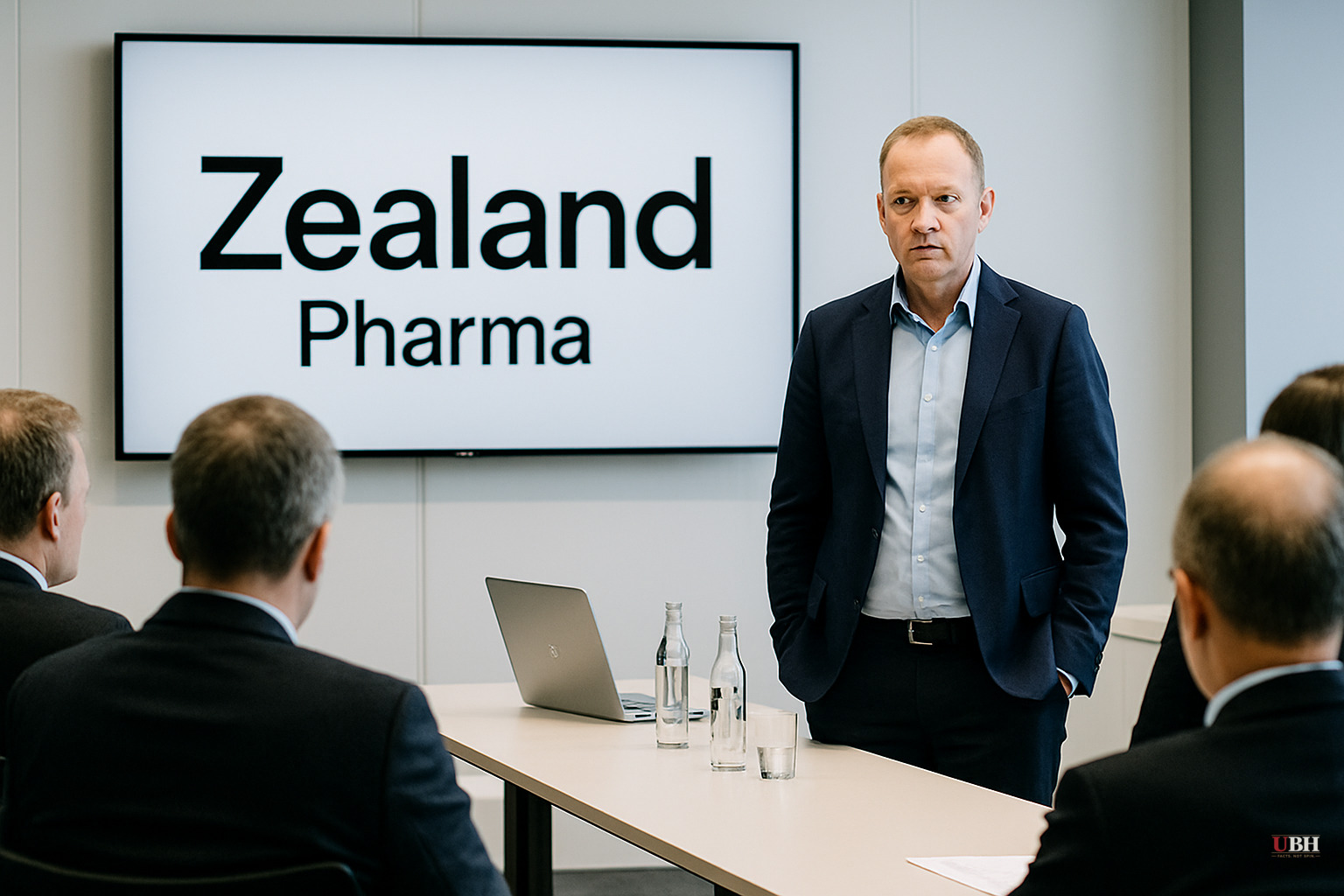
Zealand Pharma has had a rough 2026. The Copenhagen-listed biotech's stock has fallen 38% year-to-date after back-to-back clinical disappointments that forced Wall Street to reprice both of its leading obesity assets.
The first blow came in March, when petrelintide — Zealand's amylin-based drug and its most prized asset — posted weight-loss efficacy of just under 11% in a mid-stage trial. That was below market expectations, and shares dropped 36% in a single session, according to CNBC. It stands as one of the worst days in the company's history since its 2010 IPO.
CEO Adam Steensberg pushed back, telling investors the trial hadn't been optimized for weight loss. A mid-stage trial designed primarily for safety and dosing won't necessarily show the full efficacy a drug can deliver at an optimized dose in a properly powered study.
Survodutide's Tolerability Problem
The second hit landed earlier this month. Detailed data on survodutide — the drug Zealand licensed to Boehringer Ingelheim — showed a 19% patient dropout rate due to side effects. That's well above the dropout rates seen with leading GLP-1 treatments. According to the source, the placebo-adjusted discontinuation rate due to adverse events was 18.8%, versus roughly 4% for leading therapies Wegovy and Zepbound.
The drug did hit its primary endpoint, delivering an average weight loss of 16.6%. That's a meaningful number. But in the obesity drug market right now, efficacy alone doesn't close the deal. Patients who can't tolerate a drug stop taking it, and a drug people stop taking is a drug that doesn't sell.
Shares fell 23% on those results, according to CNBC. UBS analysts responded by cutting their peak sales forecast for survodutide by nearly 80% and reducing their price target on Zealand's stock to 540 Danish kroner from 730 kroner. "The tolerability data looks highly disappointing and will likely significantly limit its usage," UBS wrote in a research note. They kept their Buy rating anyway.
Why Bulls Are Staying
The bull case rests entirely on petrelintide. UBS was direct: "While survodutide data is disappointing to us, we are still positive on petrelintide, the most important asset."
Amylin is a hormone that regulates appetite and food intake through a different mechanism than GLP-1 drugs. Amylin-based drugs may achieve meaningful weight loss with a cleaner tolerability profile — fewer nausea and vomiting side effects that drive patients off GLP-1s.
At the American Diabetes Association's Scientific Sessions in New Orleans in early June, amylin drugs were a focal point of discussion. According to CNBC's reporting on UBS analysis, "an emerging theme from the ADA is the growing acknowledgement of the need for a drug with modest weight loss but pristine tolerability" — a profile that, if petrelintide delivers it, could carve out real commercial space even against dominant competitors.
CEO Steensberg told CNBC at the ADA in New Orleans that Zealand operates in a "sweet spot" between double-digit weight loss and a placebo-like tolerability with petrelintide. He also argued the drug fits well with medical professionals' call for a good tolerability profile, particularly for weight maintenance after GLP-1 use. "I truly believe that when these amylin [drugs] launch, we can have that, what I've described as an iPhone moment," he said.
The Competing Concern
Petrelintide already posted sub-11% weight loss in its mid-stage trial. Even if Steensberg is right that dosing wasn't optimized, investors have now watched two Zealand drugs disappoint in succession. The thesis that the next trial will be better is something that needs to be proved, not assumed.
Beyond Zealand's internal execution risk, petrelintide faces serious competitive pressure. Eli Lilly is developing its own amylin-based drug, eloralintide. Novo Nordisk has resources Zealand can't match. Jyske Bank analyst Henrik Hallengreen Laustsen warned that "Zealand needs to tell the market what makes [petrelintide] different from the other Amylin-products," adding that Lilly and Novo Nordisk are strongly positioned in both the current and future market.
UBS, for its part, noted that the size of the consumer obesity market will likely allow multiple players.
What Comes Next
The stock has clawed back some losses from the survodutide announcement but remains deep in the red for 2026. Petrelintide is due to initiate late-stage trials in the second half of the year, and Zealand is also due to report mid-stage results of petrelintide in diabetes patients. Everything now points toward the next substantive petrelintide data package as the stock's near-term catalyst.
Until that data arrives, the company is asking investors to hold a stock that has fallen 38% in six months on the promise that a drug which underperformed once will perform better when dosed differently. UBS is willing to make that bet. Whether the market agrees will depend on what the next readout actually shows.
Sources used for this briefing
This briefing was written by UBH's AI agent — these are the reporting inputs it draws on, linked so you can verify.


