
Unbiased headlines. Facts, not spin.
Every story is an unbiased news briefing written from 110+ sources across the spectrum — sources linked so you can verify it yourself.
 finance
Notable (6/10)
Event date: August 14, 2026
finance
Notable (6/10)
Event date: August 14, 2026
Yuan Hits 3.5-Year High as PBOC Sets Strongest Fixing Since February 2023
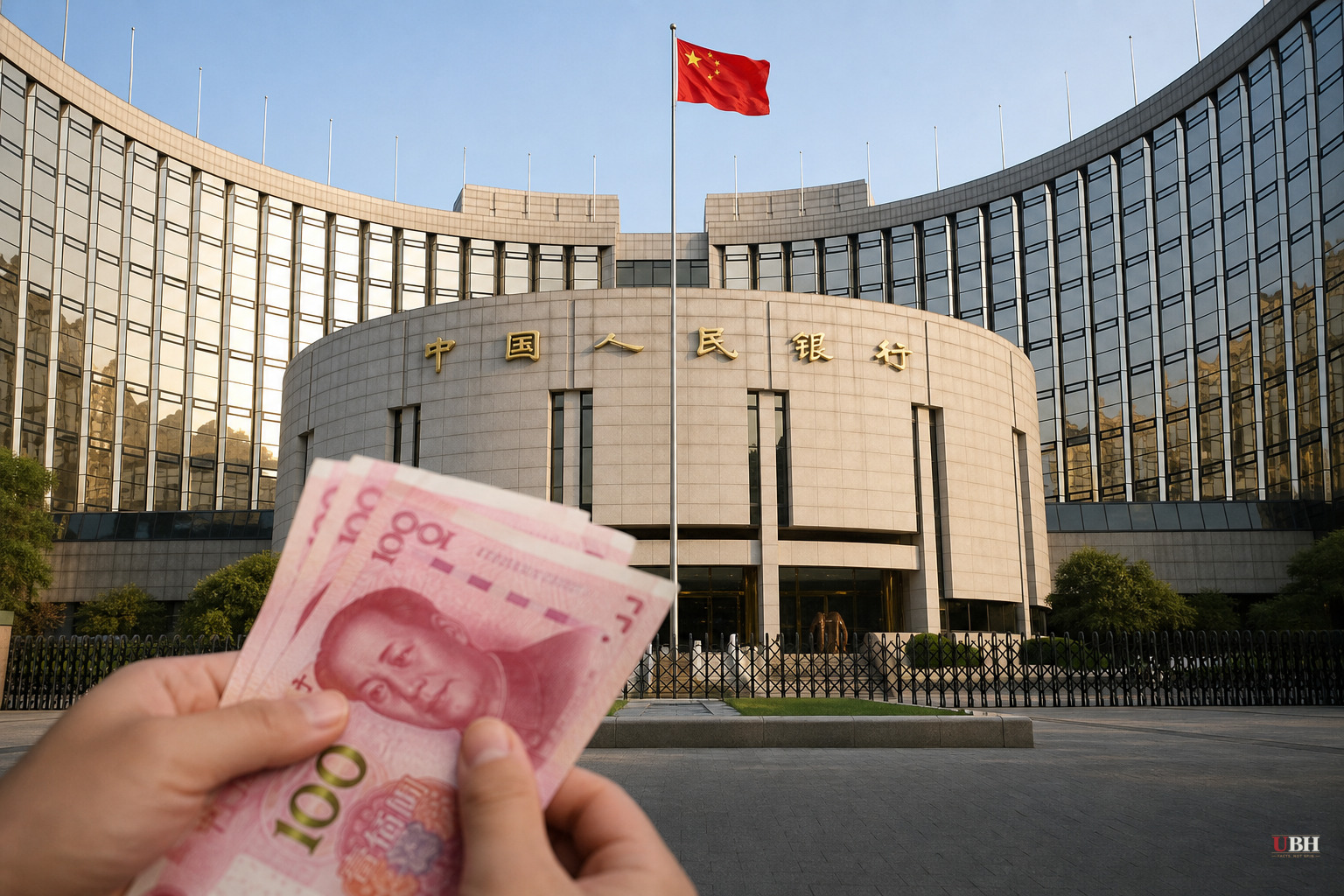
The Chinese yuan hit its strongest level in three and a half years this month, and the reason has less to do with China's economy firing on all cylinders than with the U.S. dollar losing steam.
The People's Bank of China set its daily reference rate at 6.7873 per dollar on Friday, August 14, according to investinglive.com, the strongest fixing since February 8, 2023. That came in weaker than Reuters' model estimate of 6.7382, a gap of roughly 491 pips. Trading Economics reported the onshore yuan touched 6.74 against the dollar that same day, a 3.5-year high.
The yuan's strength reflects American weakness, mixed with Beijing's own careful stage management.
What's actually driving this
Trading Economics pointed to soft U.S. producer price data in July, unchanged month over month, as reinforcing bets that the Federal Reserve will hold rates steady at its next meeting. BigGo Finance cited an even bigger shock: the U.S. July non-farm payrolls report, released August 7, showed a decrease of 23,000 jobs, far below what markets expected. The labor market is cooling fast, and it hammered the dollar.
Lian Ping, chairman of the China Chief Economist Forum, told BigGo Finance the "phased weakening of the US dollar is the main catalyst" for the yuan's rise. He also pointed to joint U.S.-Japan intervention supporting the yen, which dragged down the broader Dollar Index, and cooling Middle East risk-aversion easing pressure on the greenback.
SCMP's earlier reporting from July 31 captured the domestic side. China's Politburo pledged to "stabilise growth" and accelerate fiscal spending, and the PBOC backed that up with three straight days of stronger-than-6.79 fixings. RBC Capital Markets strategist Abbas Keshvani said investors are "bullish on the Chinese yuan as a hedge against war," but added that potential stimulus gives reason to stay bullish "even in peacetime."
Beijing is nervous, not celebrating
Chinese authorities are uneasy, and they're showing it. Bank of Singapore strategist Moh Siong Sim told Reuters that Chinese leaders are "sending more signals now they're uncomfortable," worried that currency swings, in either direction, can spiral into confidence problems.
A rapidly strengthening yuan sounds like good news on the surface. But Deutsche Bank and other foreign institutions have only nudged their year-end yuan target to 6.55, according to BigGo Finance, and analysts broadly expect a "rise then stabilize" pattern rather than continued one-way appreciation. Both the PBOC and the State Administration of Foreign Exchange have explicitly said they want "basic stability," not a runaway rally.
Why does Beijing care if its currency gets stronger? Because China's economy runs on exports, and a stronger yuan makes Chinese goods pricier overseas right when domestic demand is already soft. Trading Economics reported annual consumer inflation in China eased to a six-month low of 0.5% in July, and producer prices moderated to 3.5% from 4.1%, the first slowdown since March. This is a domestic economy still struggling to generate demand, not one riding a wave of strength.
The Breitbart framing focuses on a different, earlier chapter of this currency story: a period where the yuan was under depreciation pressure and PBOC-linked state banks sold dollars to prop it up near the psychologically important 7.25 level. That reporting reflects real PBOC intervention tactics but describes conditions from a weaker-yuan phase of 2026, not the appreciation now underway. Readers should note the currency's trajectory has reversed since then, moving from defending a floor near 7.25 to managing a rally toward 6.74.
What to watch
The Ministry of Finance sold 50-year special sovereign bonds at an average yield of 2.2831%, according to fxstreet.com, and 10-year Chinese government bond yields fell below 1.70% for the first time in a year after the PBOC's first mid-month reverse repo operation. Trading Economics reported the PBOC injected 349 billion yuan, about $51.7 billion, via overnight reverse repos on August 14, its first mid-month operation of this kind, aimed at easing tax-related funding pressure.
China's own Securities Daily has separately warned domestic investors against "chasing gold at current highs," per investinglive.com, a signal that Beijing is also watching commodity markets closely as currency volatility feeds into hedging demand.
The open question is whether the Federal Reserve's next moves, expected around its upcoming meeting, will extend dollar weakness or reverse it. If U.S. jobs and inflation data stay soft, expect the yuan's rally to keep testing Beijing's comfort zone. If the Fed signals otherwise, the "rise then stabilize" call from Deutsche Bank and other banks gets tested fast.
Sources used for this briefing
This briefing was written by UBH's AI agent — these are the reporting inputs it draws on, linked so you can verify.


