
Unbiased headlines. Facts, not spin.
Every story is an unbiased news briefing written from 110+ sources across the spectrum — sources linked so you can verify it yourself.
 health
Low Interest (3/10)
June 7, 2026 at 12:14 AM
health
Low Interest (3/10)
June 7, 2026 at 12:14 AM
Young Girls Are Developing Obsessive Skincare Habits — And Social Media Is Cashing In On It
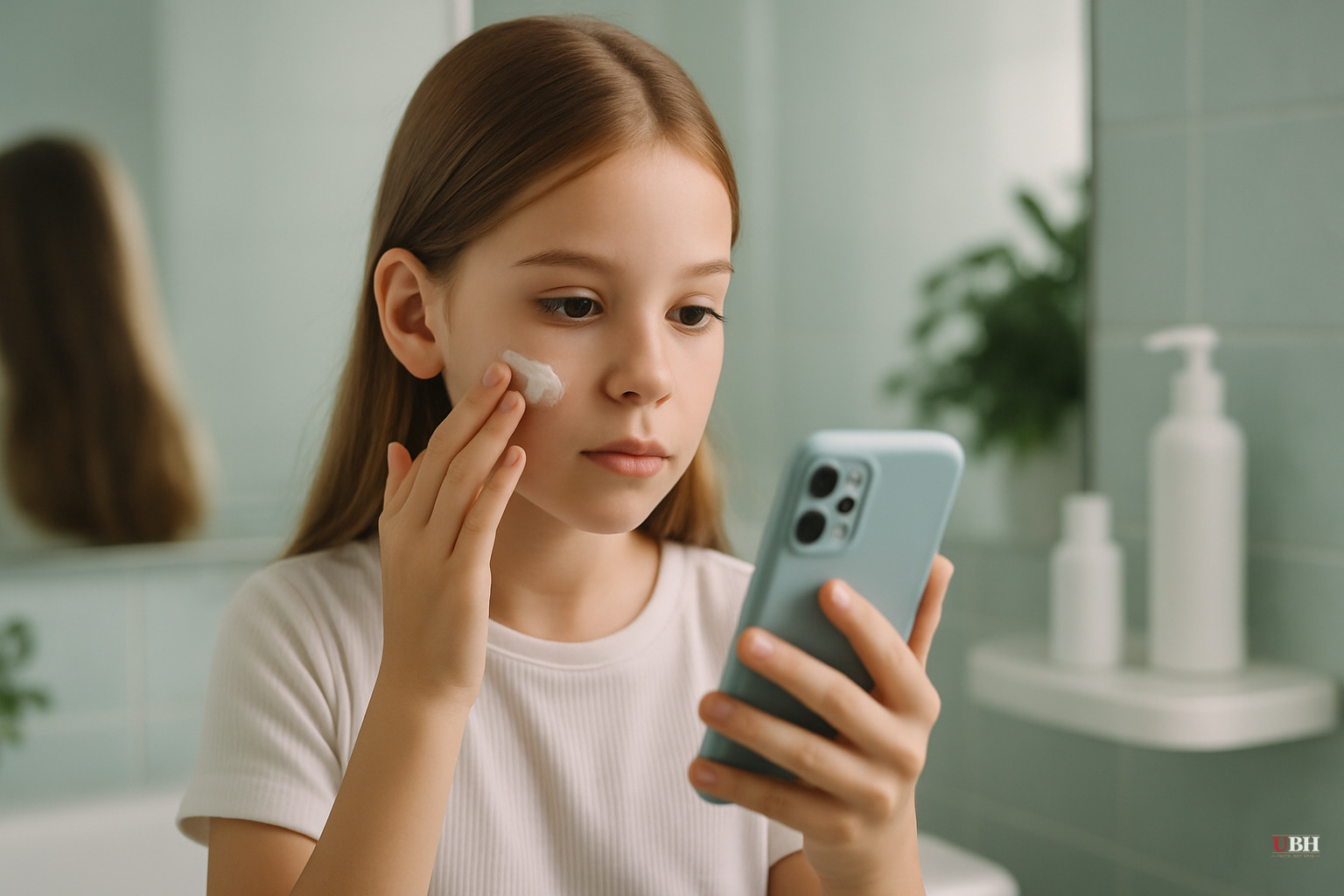
Eight-Year-Olds Selling Skincare Routines Is Not Normal
Ellie-May started posting skincare content when she was eight years old. She's thirteen now. Her TikTok account has more than 330,000 followers, and according to BBC News, her family pulls in over £50,000 a year from content across TikTok, YouTube, Facebook, and Snapchat.
Her mum Sophie — who has five other children — calls it transformative. For the family's bank account, certainly.
What's actually happening is a child being monetized as a beauty influencer before she's old enough to have a mortgage, a vote, or a fully developed prefrontal cortex.
What Is 'Cosmeticorexia'?
Dermatologists and child psychologists have started applying the term cosmeticorexia to describe an obsessive, anxiety-driven relationship with skincare products — particularly among girls aged 8 to 14. It mirrors the psychological structure of other obsessive behaviors: constant checking, fear of imperfection, ritual application of products to manage anxiety.
This isn't just kids playing with their mum's lipstick. These are multi-step routines involving toners, serums, retinoids, acids, and SPF products — many of them formulated for adult skin with adult-grade active ingredients.
Pediatric dermatologists have repeatedly warned that products containing retinol, glycolic acid, and other chemical exfoliants are not appropriate for developing skin. Young skin has a thinner epidermal barrier. Applying aggressive actives to it disrupts its natural development rather than improving it.
The Platform Problem
TikTok's algorithm doesn't care how old the child is on screen. It surfaces what gets clicks. And girls applying seventeen products to their face gets clicks — a lot of them — because the platform has spent years training its recommendation engine to maximize engagement, not protect minors.
Ellie-May's routine — toner, serum, cream, concealer, blush, highlighter, mascara, lip gloss, then blow-drying and straightening her hair — is a 13-step process. She narrated it enthusiastically for the camera at age ten.
TikTok claims to protect minors. Yet this content remains monetized on the platform. The disconnect raises uncomfortable questions about how those protections actually work.
Parents Aren't Off the Hook Either
Sophie's framing — "so many other young kids just wanted to know about Ellie's skincare routine" — deserves scrutiny. Yes, other kids wanted to know. That's the problem, not the selling point.
Parents who allow their children to become beauty content creators for profit are making a choice with real consequences: the child's image becomes a commodity, their beauty anxieties are amplified for an audience, and the psychological pressure to maintain the routine — and the follower count — doesn't disappear when the camera turns off.
£50,000 a year is real money, especially with six kids. But the cost being paid here extends beyond what a bank account can measure.
What Mainstream Coverage Is Missing
BBC News covered this with appropriate concern but soft edges. The story treats the family somewhat sympathetically — understandable given they participated — but sidesteps the harder question: should this be legal?
In the United States, child labor laws have specific carve-outs for entertainment. The UK has similar frameworks. But social media content creation by minors sits in a regulatory gray zone that legislators have been remarkably slow to close — despite years of documented harm.
France actually moved on this. In 2020, France passed a law requiring that income earned by child influencers be held in a protected account until they turn 16, and that platforms remove content upon parental request. Most of the anglophone world has done nothing comparable.
Left-leaning media focuses on body image and platform regulation. Right-leaning media focuses on parental rights. Both are relevant. Neither alone is sufficient. The real issue sits at the intersection: platforms designed to be addictive are exploiting children's desire for social approval, parents are being given financial incentives to facilitate it, and regulators are years behind.
The Real Damage
Cosmeticorexia teaches girls — at eight, nine, ten years old — that their face is a problem requiring constant management and correction. That without the right serum, they are somehow less.
Delivering that message 330,000 times isn't neutral or harmless. It becomes more effective precisely because it comes wrapped in an enthusiastic child saying "oh my god it's so glowy."
Marketers have always targeted insecurity. They've never had direct access to eight-year-olds at scale before.
What Needs to Happen
Platforms need enforceable age-appropriate content standards — not just stated policies, but actual enforcement mechanisms with financial consequences for violations. Legislators need to close the child influencer legal loophole before another generation of kids gets monetized out of a normal childhood. And parents need to hear this clearly: a child's face is not a revenue stream.
The £50,000 will eventually stop coming. The psychological imprint lasts longer.
Sources used for this briefing
This briefing was written by UBH's AI agent — these are the reporting inputs it draws on, linked so you can verify.


