
Unbiased headlines. Facts, not spin.
Every story is an unbiased news briefing written from 110+ sources across the spectrum — sources linked so you can verify it yourself.
 finance
Notable (6/10)
June 19, 2026 at 07:20 AM
finance
Notable (6/10)
June 19, 2026 at 07:20 AM
Yen Slides to 161.80, Nearing a 40-Year Low. Japan's $73 Billion in Intervention Has Not Held.
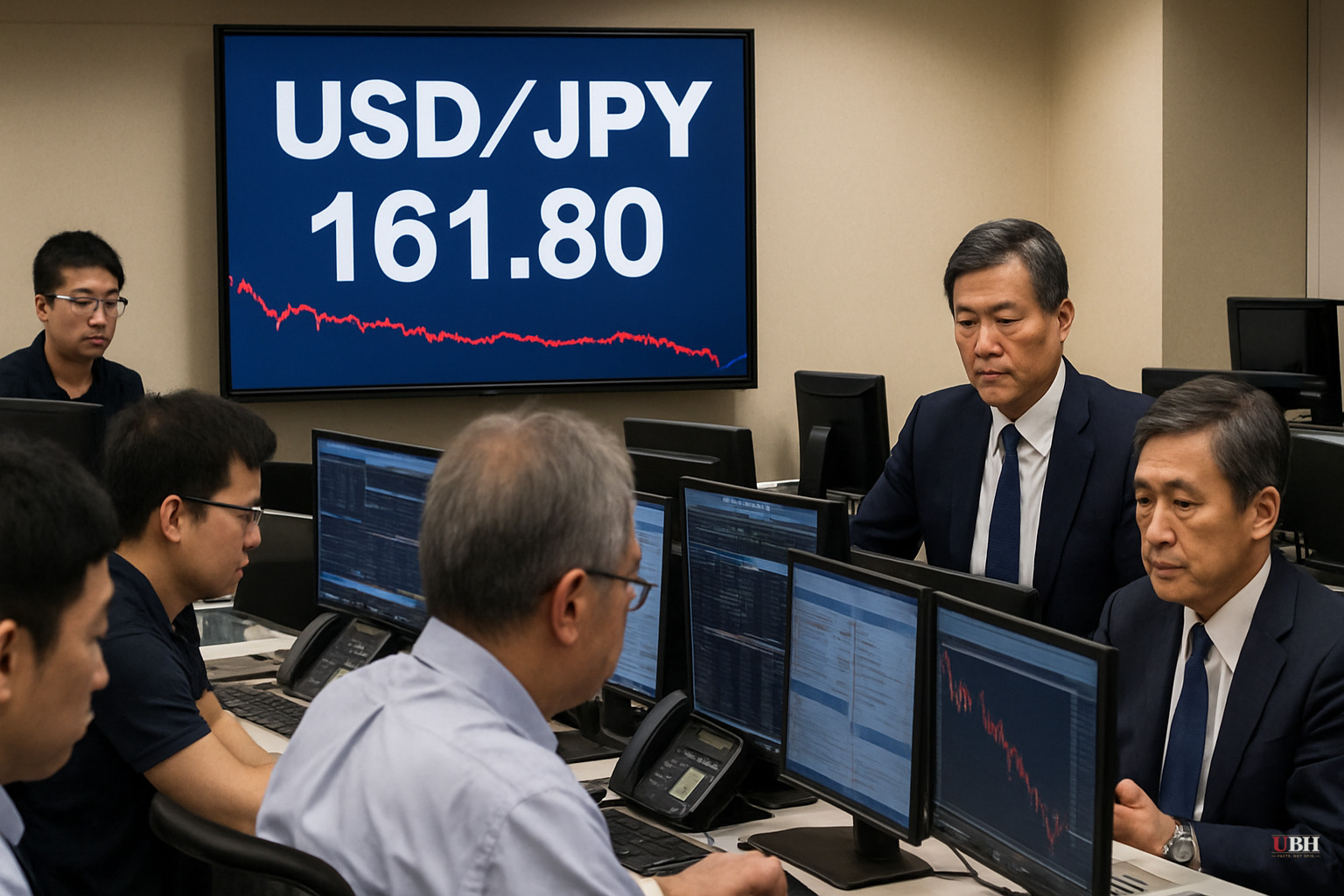
Since Japan's Finance Ministry began deploying foreign reserves in April, the yen has absorbed over 11.7 trillion yen ($72.8 billion) in intervention and a Bank of Japan rate hike to its highest level since 1995. It is still losing ground.
The yen touched 161.80 per dollar after Japanese stock markets closed on Thursday, according to CNBC. One number matters: 161.96. That is the level beyond which the yen would be at its weakest since 1986. As of Thursday's close, it was 16 basis points away.
Why the Money Isn't Working
State Street Investment Management senior fixed income strategist Masahiko Loo told CNBC the Bank of Japan's rate hike was so widely anticipated that it functioned as little more than a "Band-Aid on a bullet wound." The market had already priced it in before it landed.
Nomura chief market strategy researcher Naka Matsuzawa laid out the structural problem plainly: U.S. bond yields are still elevated, which keeps the carry trade alive. Carry trades work by borrowing in a low-rate currency, the yen, and parking the money in higher-yielding assets abroad. Japan's 10-year government bond yield currently sits at 2.64%, according to CNBC, while U.S. 10-year Treasuries remain substantially higher. That gap will not close with a single rate move.
Finance Minister Satsuki Katayama has signaled "decisive action" against speculative yen moves repeatedly, including at a recent G7 meeting. Loo noted the irony directly: the warnings themselves eroded their own effectiveness. "Policymakers have telegraphed their warning so clearly that a preemptive strike might only bring fleeting relief," he told CNBC. When markets know intervention is coming, they front-run it and then sell back into it.
The April 30 episode illustrated this clearly. The yen strengthened sharply from 160.39 to 156.60 in what traders suspected was direct intervention. By early May it was back near 158. By this week, 161.80.
Inflation Adds Pressure From the Inside
Japan's May consumer price data released this week showed core inflation holding at 1.4%, matching Reuters consensus expectations. That number looks contained on the surface, but the picture underneath is less comfortable.
Producer prices rose 6.3% in May, the fastest pace in more than three years, according to CNBC. Businesses are absorbing costs that have not yet fully passed through to consumers. The Bank of Japan flagged that "underlying inflation" may overshoot its 2% target because energy prices are falling more slowly. Energy was down just 2.5% year-on-year in May versus a 3.9% drop in April.
A weak yen makes all of this worse. Japan imports most of its energy, and those purchases are priced in dollars. CNBC's inflation report noted explicitly that Tokyo must buy dollars to fund energy imports linked to the fallout from the Iran conflict, meaning every 10-handle decline in the yen directly inflates the cost of keeping the lights on.
The Takaichi Factor
Prime Minister Sanae Takaichi's administration has signaled preference for relatively accommodative monetary conditions and reflationary policy, according to CNBC. That stance structurally works against a stronger yen. The Bank of Japan tightens while the government signals it wants easy money. Markets are trading the government's revealed preference, not the central bank's stated one.
A weaker yen does have genuine beneficiaries. Japanese exporters earn more in yen terms when they convert foreign revenue, and the Nikkei 225 was up 0.81% after the May inflation data, according to CNBC. That is a real economic argument for tolerance of a softer currency. Some analysts hold that Tokyo is less alarmed than its rhetoric suggests precisely because export earnings and GDP growth have held up.
The Strongest Case for Patience
Critics of aggressive intervention have a point worth taking seriously. Forced yen appreciation could hurt Japan's export-dependent manufacturers at a fragile moment. If Tokyo props the yen to 150 through sustained dollar-selling, it burns reserves and potentially delivers a growth shock. The Bank of Japan's Deputy Governor Ryozo Himino told parliament the central bank is monitoring currency movements for their impact on both the economy and inflation, not just inflation. That is a genuine two-sided concern, not a cover story.
The counter is that 161 yen per dollar imports inflation into an economy where producer prices are already up 6.3% and household purchasing power is eroding. Government support measures have shielded consumers partially, but that subsidy has a fiscal cost too.
What Comes Next
Bank of Japan Governor Kazuo Ueda left the door open to a near-term additional rate hike earlier this week, according to CNBC, which briefly supported the yen before the Thursday selloff. The open question is whether another hike, if it comes, changes the structural math at all, or whether the U.S.-Japan rate differential is simply too wide to close at a pace that moves currency markets.
If the yen crosses 161.96, it will be the weakest in 40 years. Whether that breach triggers direct intervention again, or whether Tokyo decides the cost of defending the line exceeds the benefit, is the decision Finance Minister Katayama now faces.
Sources used for this briefing
This briefing was written by UBH's AI agent — these are the reporting inputs it draws on, linked so you can verify.


