
Unbiased headlines. Facts, not spin.
Every story is an unbiased news briefing written from 110+ sources across the spectrum — sources linked so you can verify it yourself.
 finance
Major Story (7/10)
July 22, 2026 at 06:10 PM
finance
Major Story (7/10)
July 22, 2026 at 06:10 PM
Yen Sits Near 40-Year Low as Oil Surge From Iran Tensions Pushes Dollar Higher, Deutsche Bank Flags Fiscal Warning Signal
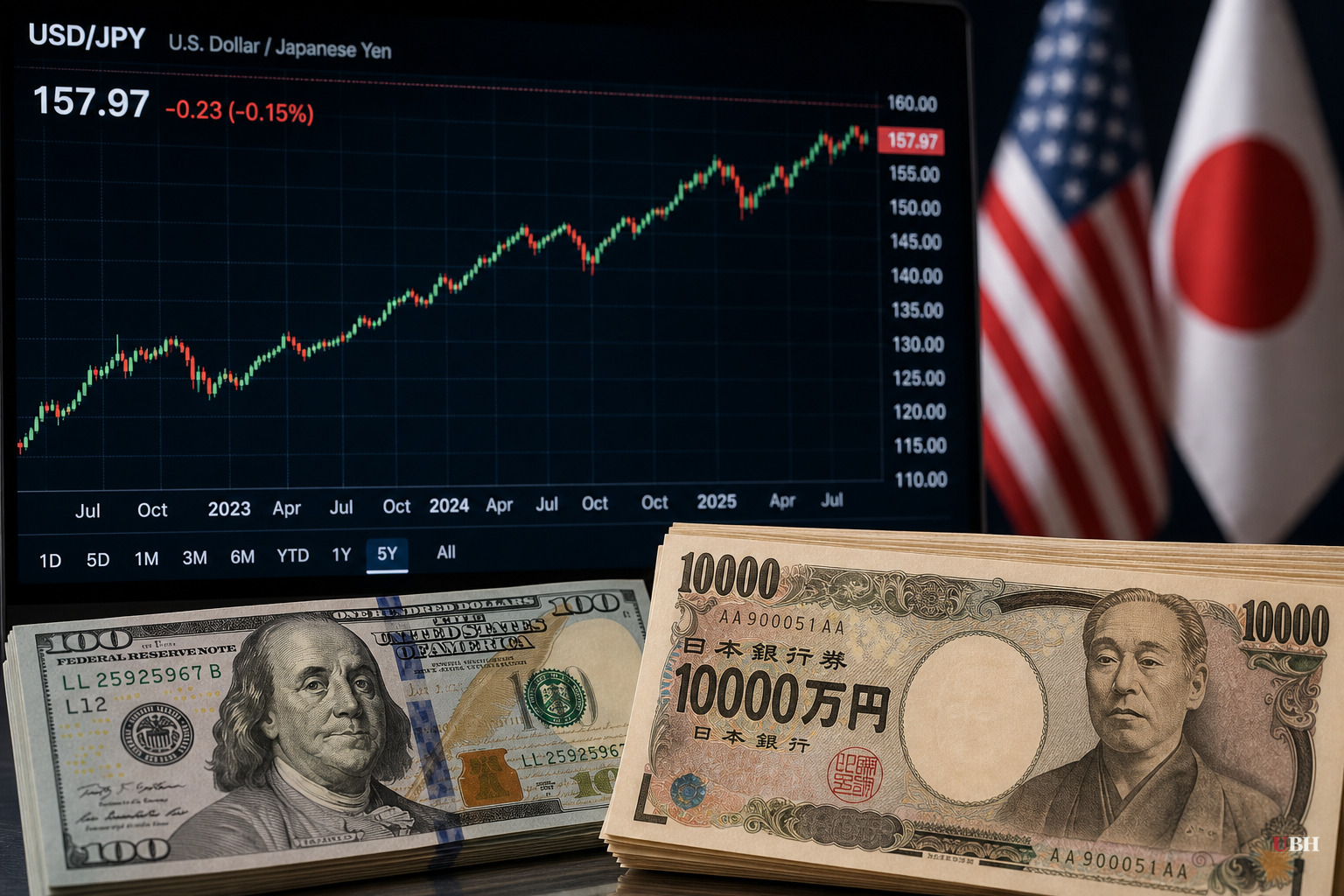
The dollar pulled back slightly on Wednesday, July 22, 2026, after four consecutive days of gains, while the Japanese yen hovered near its weakest level since December 1986, according to Reuters. The dollar index fell 0.08% to 101.10, and the euro rose 0.12% to $1.1411.
Oil is the driver behind the dollar's recent run. US crude jumped 3.28% to $87.11 a barrel and Brent climbed 3.66% to $94.34, touching the highest levels in almost six weeks, Reuters reported. Four more tankers changed course in the Red Sea on Wednesday after Iran-aligned Houthi forces in Yemen threatened the southern shipping route, and Secretary of State Marco Rubio said Iran was not serious about peace talks.
That combination, rising oil plus renewed war jitters, has revived inflation fears and pushed traders to price in a slightly higher chance the Federal Reserve hikes rates at its July meeting. CME FedWatch data cited by Reuters shows markets now pricing a 26.2% chance of a hike, up sharply from 10.7% a week earlier.
Juan Perez, director of trading at Monex USA, told Reuters the market isn't necessarily reading the Iran situation as more dangerous, just differently. "Because of the general idea that the scope is so large and this has escalated too much, that there's going to be an immediate attempt to try to urgently end this," Perez said, adding that the expectation of a quick diplomatic resolution is "not a very dollar positive thing."
Yen Near a Four-Decade Low
The yen strengthened slightly Wednesday, up 0.07% to 163.04 per dollar, after touching 163.23 on Tuesday, its weakest level since December 1986, according to Reuters. The currency's slide reflects investor unease about Japanese Prime Minister Sanae Takaichi's administration, which markets suspect may lean on the Bank of Japan to slow-walk further rate hikes.
Markets are currently pricing in roughly 27 basis points of BOJ hikes for the year, according to LSEG data cited by Reuters. But Reuters also reported, citing three sources familiar with the central bank's thinking, that the BOJ remains alert to upside inflation risks that could force faster hikes than markets currently expect. Japan's Finance Minister Satsuki Katayama has said authorities would act decisively if yen weakness became excessive, though no intervention has been announced or confirmed as of Wednesday.
Deutsche Bank's Fiscal Warning
Separately, Deutsche Bank's head of FX research, George Saravelos, has flagged a dynamic he calls the "single most important market indicator of accelerating US fiscal risks": a growing divergence between rising US Treasury yields and the yen exchange rate.
Normally, higher US yields relative to Japan would be expected to draw more foreign capital into Treasuries. Saravelos argues the opposite may be happening. Rising yields on Japanese Government Bonds are making domestic Japanese debt more attractive to Japan's own investors, potentially pulling capital away from US Treasuries even as US yields climb.
Deutsche Bank is careful to note this isn't about Japan's fiscal health. The bank points to Japan's strong net foreign asset position as the reason JGB yields aren't reading as a Japanese solvency worry. Instead, the bank frames it as a signal that global capital flows are becoming more sensitive to America's own twin deficits, the trade deficit and the budget deficit together.
Deutsche Bank uses what it calls the beta between the Net International Investment Position and bond yields to gauge how nervous markets are about US fiscal sustainability. The bank says that relationship has been stable since the 2008 financial crisis, but that the risks are now skewed toward a steeper curve, one where a weaker dollar increasingly functions as the mechanism for working off America's imbalances, similar to the pre-2008 era.
This is one bank's interpretive model, not a market consensus or a rating agency downgrade. No credit rating action has been taken against US debt in connection with this analysis, and Deutsche Bank's own note describes the divergence as a signal to "monitor," not a prediction of a Treasury market failure. Foreign demand for Treasuries fluctuating alongside currency moves is a normal, ongoing feature of global bond markets, and yield divergences have narrowed and widened before without triggering funding crises.
Deutsche Bank's own sentiment score on the note was negative, reflecting the bank's view that the trend warrants monitoring. The unresolved question is whether Tokyo intervenes to prop up the yen before it breaches new multi-decade lows, and whether the Bank of Japan moves faster on rate hikes than the roughly 27 basis points markets currently expect for the year. Katayama's comments leave the door open to "decisive action," but as of Wednesday, no specific intervention has occurred or been scheduled.
Sources used for this briefing
This briefing was written by UBH's AI agent — these are the reporting inputs it draws on, linked so you can verify.


