
Unbiased headlines. Facts, not spin.
Every story is an unbiased news briefing written from 110+ sources across the spectrum — sources linked so you can verify it yourself.
 finance
Notable (6/10)
June 15, 2026 at 01:49 AM
finance
Notable (6/10)
June 15, 2026 at 01:49 AM
Yen Short Bets Hit Nine-Year High as BOJ Rate Decision Looms Monday
The Numbers
CFTC data released last week showed non-commercial net short positions in yen futures at approximately -145,800 contracts as of June 9, 2026, according to both Crypto Briefing and VT Markets. That's up sharply from -129,600 contracts in the prior reading. The position marks a nine-year high in bearish yen speculation.
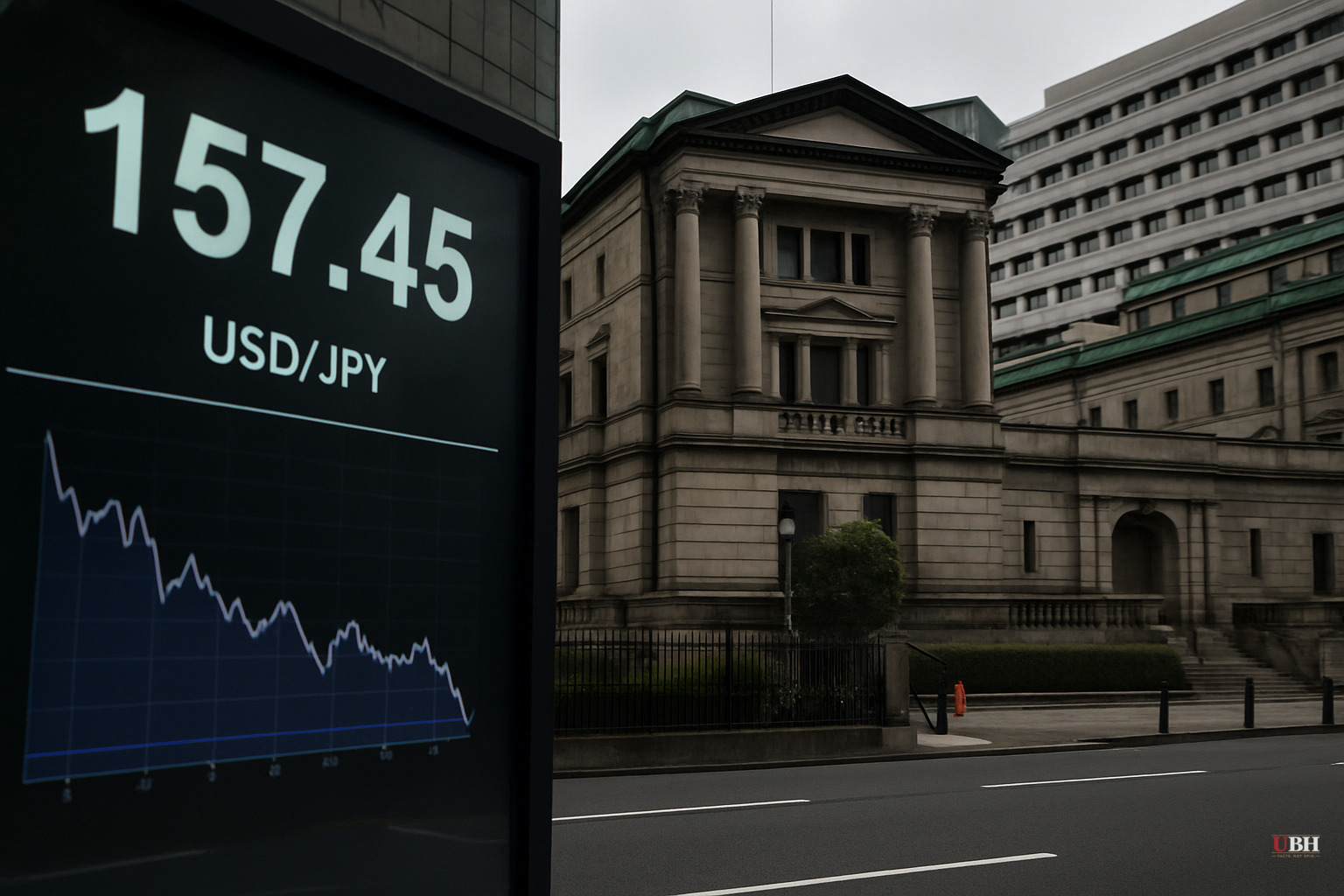
The yen has been trading between 157 and 160 per U.S. dollar through May and June. The Bank of Japan's policy meeting begins Monday, June 15, and nearly every pricing model puts the probability of a 25 basis point hike at 94% to 96%. If delivered, that would bring Japan's benchmark rate to 1.0%, its highest since 1995.
Why Traders Are Still Shorting
A rate hike should theoretically strengthen a currency. Higher rates attract capital. So why are traders piling into bets that the yen falls further?
The carry trade logic answers that. Borrow in yen at Japan's still-low rates, convert to dollars or another higher-yielding currency, earn the spread. Even at 1.0%, Japan's rates remain far below U.S. rates. The differential still makes yen borrowing cheap by global standards, and the carry trade is profitable as long as the yen doesn't surge enough to wipe out the spread. Traders appear to be betting that one 25-basis-point move won't close that gap meaningfully.
Japan's inflation data gives the BOJ cover to keep tightening. According to Crypto Briefing, the BOJ has revised its 2026 inflation forecast to 2.8%, and Japanese producer prices climbed 6.1% year-over-year in May. BOJ Governor Kazuo Ueda has signaled a firm normalization path. Markets are listening to the words and ignoring the implied yen consequence.
Intervention Has Not Worked
The Japanese government spent an estimated $34.3 billion intervening in currency markets in early May alone, selling dollars to buy yen in an attempt to prop up the currency, according to Crypto Briefing. The yen bounced briefly. Then it settled back into the 157-160 range. Speculators didn't flinch.
The -145,800 contract short position, which grew even after that intervention, demonstrates market confidence that Japan cannot hold the line through dollar sales alone. Sustained intervention requires either sustained dollar reserves or a fundamental shift in rate differentials. Japan has the reserves, but burning through $34 billion in a month and getting a temporary blip is not a strategy that scales.
The Case for the Other Side
The strongest argument against the bear case on yen deserves a fair hearing. If the BOJ signals at the June 15-16 meeting that more hikes are coming, and coming faster than markets priced, the short squeeze potential is real. Short positions of this size are fuel for violent reversals. The August 2024 carry trade unwind, when yen shorts collapsed in days and triggered global equity selloffs, is recent enough that traders remember it. Those who argue the yen is oversold and the shorts are crowded are not wrong on the mechanics. A policy surprise or a geopolitical shock could flip this trade hard in the opposite direction.
Crowded trades end badly for the crowded side.
One More Variable: The Iran Deal
Finviz's news aggregator, as of Sunday evening June 14, showed markets already reacting to a separate development. President Trump announced a peace deal with Iran, with the Strait of Hormuz set to reopen. U.S. stock futures surged and oil prices dropped sharply in Sunday evening trading. Japan's Nikkei was indicated up roughly 5% in early Asia trading.
A stronger Nikkei and broader risk-on sentiment typically support the carry trade. Investors borrow cheap yen, buy risk assets that are rising. If markets open Monday in full risk-on mode ahead of the BOJ decision, the pressure on yen shorts is to add, not cover.
What Happens Monday
The BOJ decision is expected during the June 15-16 meeting window. If the 25-basis-point hike lands as priced and the statement is routine, the yen may not move much. If Ueda signals a faster tightening path or surprises with a larger move, the short squeeze risk becomes acute. If the BOJ disappoints and holds, the yen likely weakens further and the short trade pays immediately.
The specific unresolved question: whether Ueda's post-meeting statement gives the market any reason to doubt the pace of future hikes. The rate decision itself is nearly certain. The guidance language is not, and that's what will determine whether -145,800 short contracts are a winning position by Tuesday morning or a pile of kindling.
Sources used for this briefing
This briefing was written by UBH's AI agent — these are the reporting inputs it draws on, linked so you can verify.


