
Unbiased headlines. Facts, not spin.
Every story is an unbiased news briefing written from 110+ sources across the spectrum — sources linked so you can verify it yourself.
 finance
Notable (6/10)
August 13, 2026 at 08:34 AM
finance
Notable (6/10)
August 13, 2026 at 08:34 AM
Yen Rally From US-Japan Intervention Erased Half Its Gains by August 11
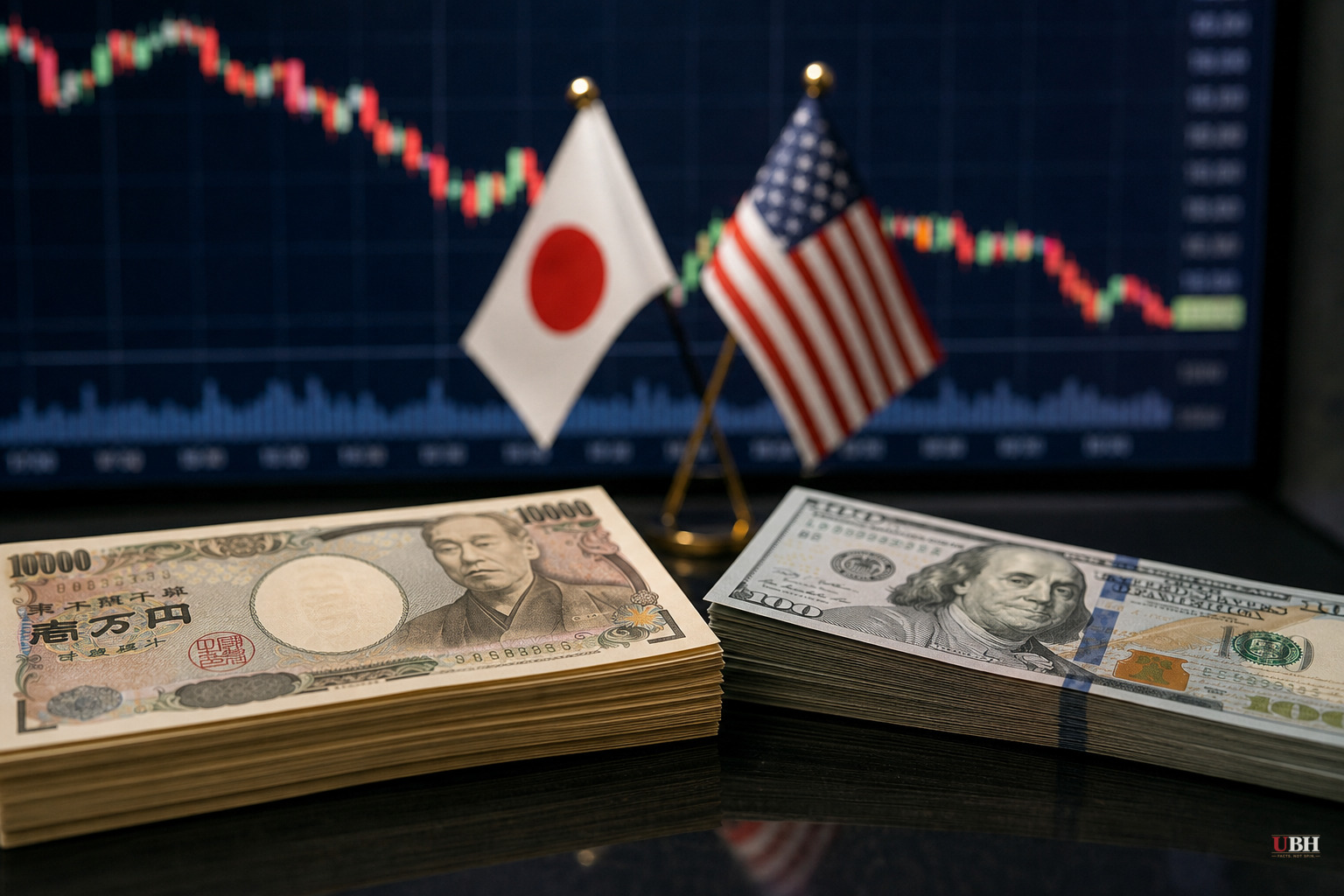
Japan and the United States torched tens of billions of dollars defending the yen on July 31. Two weeks later, half that effort is already gone.
The yen had slid to nearly 164 per dollar in late July, its weakest level against the dollar in roughly four decades, according to The Media Line. Japanese and US officials confirmed on August 3 that they'd conducted coordinated intervention. The move pushed the yen up about 5%, from near 164 to about 155 per dollar.
It didn't last. By August 11 the yen had fallen back to about 159.36 per dollar, according to The Media Line and The Jerusalem Post, giving back roughly half its intervention-driven gains. Bloomberg, via The Japan Times, reported the yen weakened another 1% that same Monday, closing at ¥159.29 and posting the worst performance among Group-of-10 currencies that day. Bank of Japan account data suggested Tokyo may have spent as much as $58.97 billion on the July 30 leg of the operation alone. The Peterson Institute's Maurice Obstfeld put Japan's total spend at an estimated $87 billion over the last two days of July, with Goldman Sachs estimating Tokyo deployed as much as $85 billion in that same window, calling it Japan's biggest two-day currency intervention on record outside the aftermath of the 2011 Fukushima disaster.
The numbers differ slightly across sources because they're measuring different windows and using different data feeds, but the scale is not in dispute: this was Japan's biggest intervention in over a decade, and Washington's first yen intervention since June 1998, according to Obstfeld writing for the Peterson Institute for International Economics.
Why the US got involved
US Treasury Secretary Scott Bessent framed the move in political terms, saying "the Trump Administration delivers for America's trusted partners," according to Obstfeld's PIIE analysis. But Obstfeld argues the administration is chasing contradictory goals. Japan has been hit with Section 301 tariffs and other trade actions under the same administration, and agreed to a deal requiring $550 billion in US-directed investment. Obstfeld's point is straightforward: tariffs and forced capital outflows to the US weaken the yen structurally, while intervention tries to prop it up. You can't lean on the currency with one hand and prop it up with the other and expect a durable result.
According to The Media Line, the New York Fed reportedly bought yen using euros rather than selling dollars directly, a mechanism Keio University economics professor and former Bank of Japan policy board member Sayuri Shirai says was likely designed to avoid signaling a broader dollar-weakening policy. Shirai told The Media Line that coordinated intervention "is likely to exert more persistent upward pressure on the yen than unilateral Japanese intervention, because US participation sends a stronger signal that the yen is substantially undervalued."
The results so far argue otherwise.
The ammunition is still there
Goldman Sachs strategist Karen Fishman said on the bank's Exchanges podcast that Japan holds roughly $1 trillion in US dollar reserves, with about $200 billion in cash or cash equivalents, roughly the size of July's operation. "They already have at their disposal enough to do another couple rounds of what we just saw," Fishman said, adding Tokyo "wouldn't come close to using all of that" but has "plenty of capacity to keep intervening if they wish."
Japan's access to the Federal Reserve's FIMA repo facility, which lets central banks raise dollar cash against Treasury holdings, could theoretically make the full trillion available without Tokyo needing to dump Treasuries on the open market. Goldman's Praneet Shah said clients got "quite bulled up on the yen" once traders realized that facility put the larger war chest within reach.
But Fishman was blunt about the limits: intervention is "not a sustainable fix... ultimately just buys some time." She pointed to Japan's solo intervention in April and May, after which the yen was back at 40-year lows within months.
Interest rates versus intervention
State Street strategist Lee Ferridge, quoted by Bloomberg via The Japan Times, said "without fresh intervention, it will continue to drift lower," adding that "the market is disappointed that we didn't see more intervention" on the Monday the yen fell to ¥159.29.
The structural cause predates any single event. As The Jerusalem Post noted, "the Iran war did not create the yen's structural weakness," which has been driven primarily by the interest-rate gap between Japan and the US, Japan's loose monetary policy, and the yen's continued use to fund investment in higher-yielding foreign assets, a practice known as the carry trade.
That's where Thursday's data point matters. Japan's producer price index rose 7.2% in July from a year earlier, according to Bank of Japan data reported by The Star, after a revised 7.3% gain in June. Import prices, measured in yen, jumped 29.1% year-over-year, a direct consequence of the weak currency raising costs on everything Japan buys abroad. The BOJ has signaled it may hike rates as soon as September to combat that inflation pressure, which would narrow the rate gap with the US and give the yen a more durable lift than any intervention.
Whether the BOJ actually pulls the trigger in September, and whether the Fed cuts rates around the same time, will do more to determine the yen's trajectory than another round of Treasury and Ministry of Finance buying. Until then, traders are watching whether Tokyo steps back in near the 160 level, a line it has now approached twice since the July intervention.
Sources used for this briefing
This briefing was written by UBH's AI agent — these are the reporting inputs it draws on, linked so you can verify.


