
Unbiased headlines. Facts, not spin.
Every story is an unbiased news briefing written from 110+ sources across the spectrum — sources linked so you can verify it yourself.
 finance
Notable (6/10)
August 6, 2026 at 10:25 PM
finance
Notable (6/10)
August 6, 2026 at 10:25 PM
Yen Hits 4-Decade Low Against Dollar as U.S. Bond Yields Stay Elevated
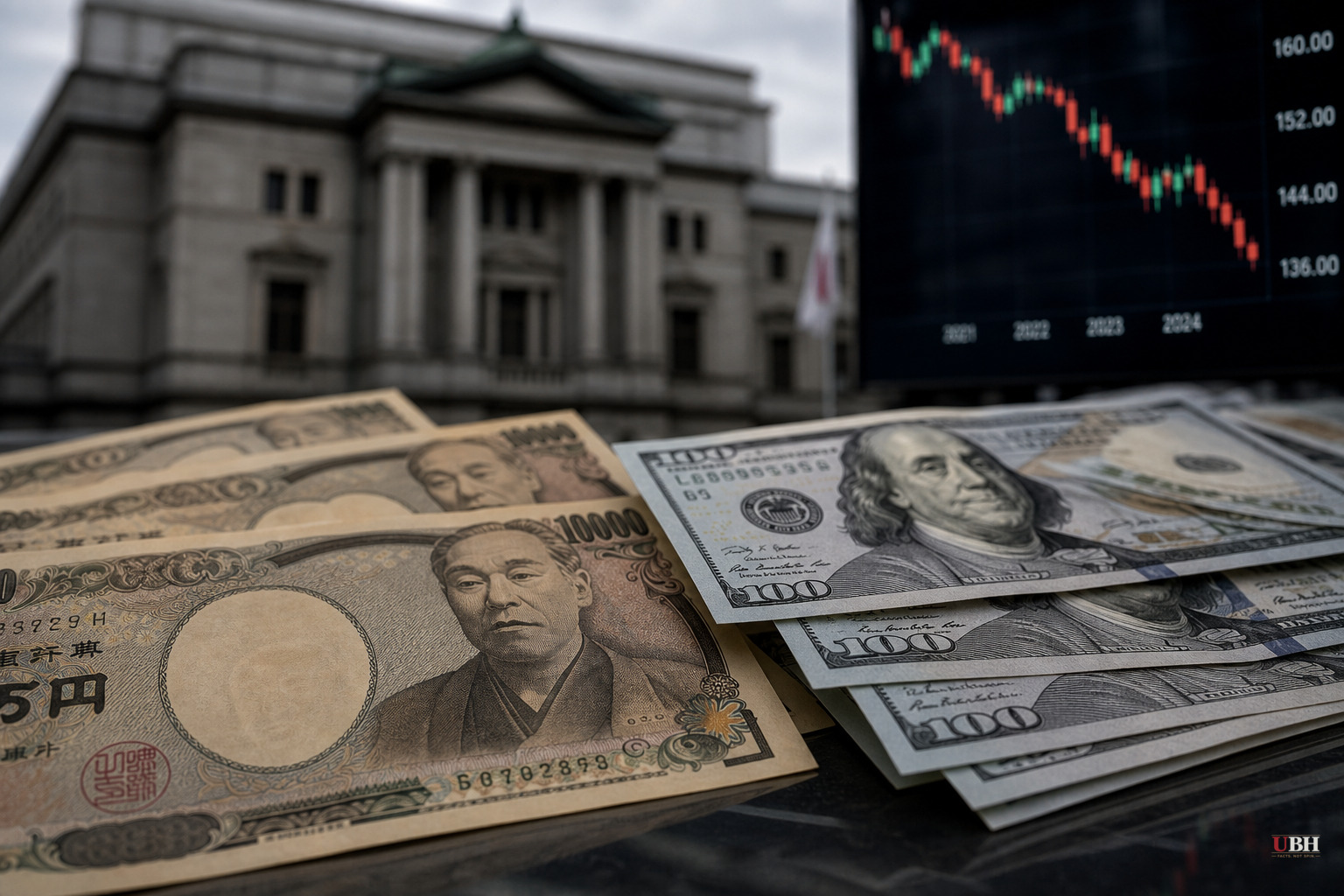
The Japanese yen has slid to its weakest level against the U.S. dollar in about four decades, according to commentary from Matthew Piepenburg published via VonGreyerz.gold and syndicated by ZeroHedge. The decline is the result of decades of aggressive Bank of Japan money printing, artificially suppressed interest rates, and a debt-to-GDP ratio that dwarfs almost every other developed economy.
Japan's government has cycled through finance ministers repeatedly in recent years, each trying and failing to arrest the currency's slide, per the same commentary. When a currency is that dependent on political patchwork instead of underlying economic strength, markets eventually notice.
The United States has its own version of this problem, just earlier in the timeline. Federal Reserve officials have been managing an economy sitting on top of roughly $40 trillion in public debt. Piepenburg's piece notes the U.S. currently pays close to $3 billion a day in interest expense alone just to service that debt.
More than $8 trillion of that debt is set to be refinanced over the next 12 months, according to the same analysis. If it gets refinanced at today's higher rates instead of the ultra-low rates of the 2010s, the interest bill balloons further.
The Rate Cut Debate
Piepenburg's commentary references a "no-rate-hike announcement" tied to former Fed governor Kevin Warsh, framing it as a market-moving signal. Warsh has been floated publicly as a potential future Fed chair pick and has been vocal about wanting the central bank to move away from what he's called overly discretionary, opaque policy.
The argument from rate-cut skeptics, ZeroHedge's framing included, is straightforward: cutting rates or avoiding hikes while debt and deficits stay enormous doesn't fix the debt problem. It just makes the debt cheaper to service in nominal terms while doing nothing about the total amount owed. Critics of that view, including many mainstream economists, argue that keeping rates too high for too long risks tipping the economy into a harder landing, costing jobs and growth in the process. Both sides are making a real trade-off argument.
Why Gold Keeps Coming Up
The throughline in the ZeroHedge piece is that rising bond yields plus rising debt levels create pressure for governments to inflate their way out, effectively debasing the currency to shrink the real value of what they owe. Gold, which can't be printed by a central bank, has historically been the asset investors turn to when they distrust that a currency's purchasing power will hold up.
Gold prices have climbed substantially over the past two years as central banks, including the People's Bank of China, have added to their gold reserves and diversified away from dollar-denominated assets, a trend widely reported across financial media well before this latest yen move.
None of that means gold is a guaranteed hedge or that a debt crisis is imminent. Gold can and does fall in price for extended stretches, and predictions of an imminent Treasury market "disaster" have circulated on and off for well over a decade without the predicted collapse materializing. The people warning loudest about it also, in many cases, sell gold or gold-related financial products.
What's Actually Verifiable
Strip out the forecasting and a few things are concrete and checkable. The yen has weakened dramatically against the dollar over a multi-decade stretch. U.S. Treasury yields remain elevated compared to the near-zero era of the 2010s. The federal government does spend billions daily servicing its debt, and a large chunk of existing debt does need refinancing within the next year.
What's not yet resolved is what the Fed does next under its current leadership, whether Warsh or another nominee eventually leads the Fed, and whether Tokyo intervenes further to prop up the yen the way it has in prior years. Those decisions will determine whether this becomes the kind of turning point Piepenburg's analysis predicts or another false alarm in a long line of them.
Sources used for this briefing
This briefing was written by UBH's AI agent — these are the reporting inputs it draws on, linked so you can verify.


