
Original briefings. Zero spin.
Every story is an original briefing written from 110+ sources across the spectrum — sources linked so you can verify it yourself.
 finance
Notable (6/10)
Event date: September 9, 2026
finance
Notable (6/10)
Event date: September 9, 2026
Yen Hits 152.89 Per Dollar, Its Best Level Since February, as Wall Street Splits on How Much Higher It Goes
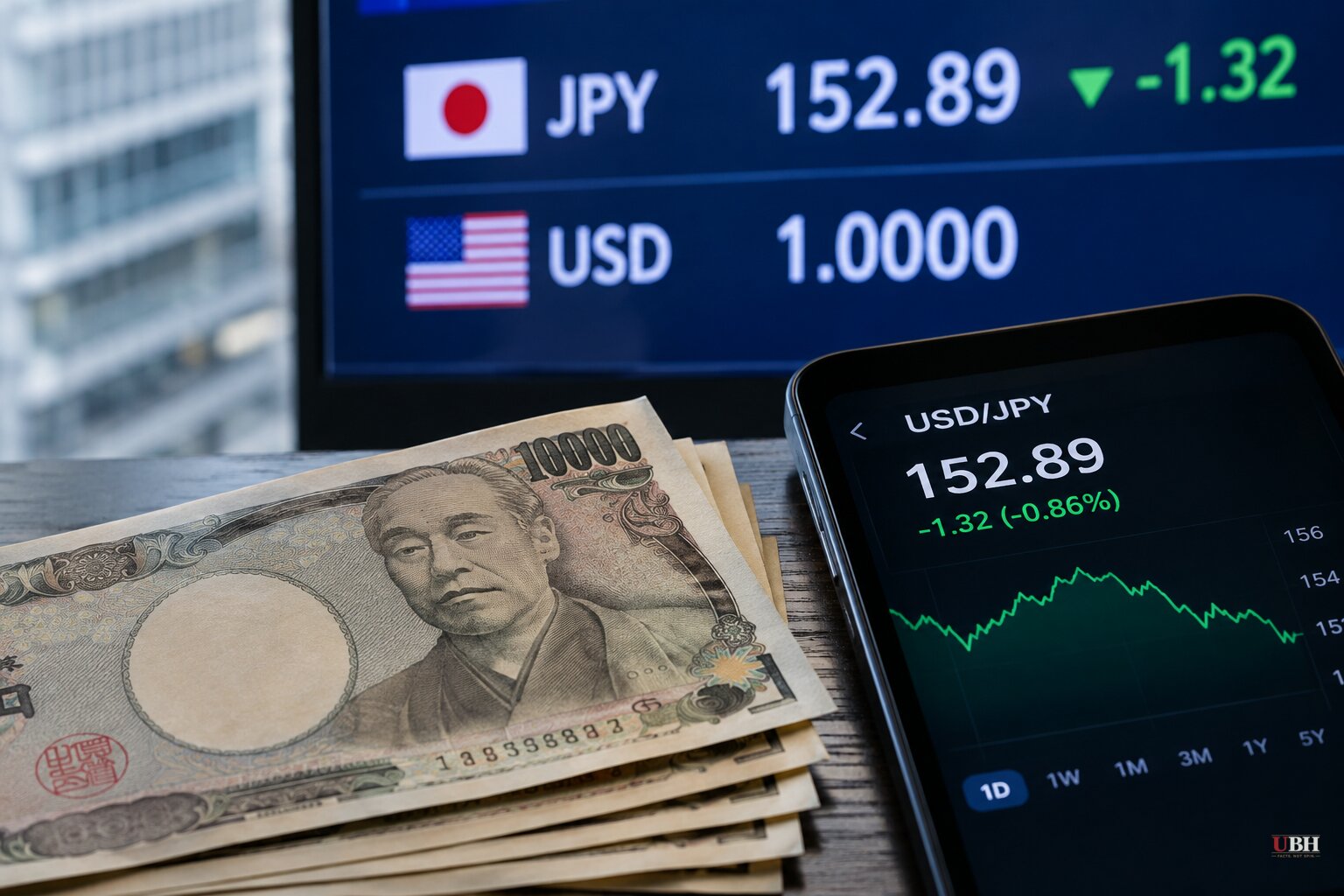
The yen's rally has kept building. The currency broke below the closely watched 155-per-dollar level and touched 152.89 per dollar on Tuesday, its strongest level since February, according to NDTV Profit. Bloomberg separately reported the yen rose as much as 0.5% intraday on September 9 to 153.25, matching the prior session's multi-month high.
That puts the yen up nearly 4.5% from around 160 at the start of last week, making it the strongest-performing G10 currency this month, per NDTV Profit's reporting, which cited Reuters.
Why It's Moving
The immediate driver is the Bank of Japan's September 17-18 policy meeting. Markets are pricing in roughly a 97% probability of a 25-basis-point rate hike, according to Reuters as cited by NDTV Profit. Japan's stronger-than-expected second-quarter growth and a sharp rise in wages have reinforced the case for tightening.
The move has technical fuel too. NDTV Profit reported the break below 155 triggered stop-loss orders and accelerated the unwinding of yen carry trades, where investors borrow cheap yen to fund higher-yielding bets elsewhere. As those trades unwind, it creates additional buying demand for the yen itself.
MUFG's Teppei Ino, in a note carried by FXStreet, pointed to a specific catalyst: comments from U.S. Treasury Secretary Scott Bessent at his post-G20 press conference on September 1, where Bessent said Japan should move away from its reflationary policies. Ino wrote that the pair broke below the psychologically important 155 level on September 7, during the U.S. Labor Day holiday, and that the catalyst for the sharpest declines "remains unclear" beyond that. MUFG had forecast a floor of 155 for USD/JPY; that floor is now gone, and Ino warned that unless the pair quickly reclaims 155, markets may start treating that level as the new ceiling rather than the floor.
Wall Street Views
Bloomberg reporting cited by Bloomingbit shows major firms split on whether the rally has more room to run.
Wells Fargo's Eric Nelson said a substantial amount of BOJ tightening is already priced into the exchange rate, meaning the central bank would need to surprise markets with a more hawkish signal than expected for the yen to strengthen much further. JPMorgan's Meera Chandan made a related point: Japanese authorities want to avoid both excessive yen weakness and excessive yen strength, so the hurdle for further declines in dollar-yen likely rises as the pair approaches the low 150s.
Bank of America takes the opposite side. BofA strategist Alex Cohen said faster BOJ rate hikes are a precondition for further yen strength, and if the currency holds near current levels, Japanese exporters repatriating overseas funds could become a fresh source of support. Manulife Investment Management was also cited as seeing room for continued yen gains.
Barclays, in a note from strategists including Shinichiro Kadota, warned the rally could reverse toward the upper 150s if expectations for faster BOJ hikes and a shift by Japanese pension funds toward domestic assets fail to materialize. Barclays said the structural forces that have weighed on the yen for years remain largely unchanged even after the recent break of support around 155.
Options Market Positioning
Options positioning suggests some large investors are leaning further than the spot rate currently justifies. Bloomberg reporting noted that hedge funds are positioning for dollar-yen to weaken below 150 by year-end, with some longer-dated options trades targeting 140. The most-active dollar-yen option on the CME on Tuesday was a November put with a 142.86 strike, and year-end put volume ran more than triple call volume.
A Citi London desk, cited in that Bloomberg reporting, described leveraged investors as "quite active" in positioning for dollar-yen below 150 by year-end. That is a positioning signal, not a consensus forecast, and spot was still trading around 153.61 as of early Wednesday in Hong Kong, well above the strikes some funds are targeting.
What Comes Next
The U.S. side of the equation matters just as much. Federal Reserve rate expectations and this week's U.S. producer price data are shaping the dollar's side of the pair, according to Mitrade's market tracking, and NDTV Profit noted that incoming U.S. inflation data will help set the interest-rate gap between the two economies.
The BOJ decision on September 17-18 will be critical. A 25-basis-point hike is close to fully priced, per Reuters. What markets are actually watching, according to NDTV Profit, is the BOJ's guidance on the pace of further tightening after that. If the central bank signals more hikes are coming, BofA's thesis wins out. If it hedges, Wells Fargo and JPMorgan's view that the rally is already priced in gets the stronger case. Either way, dollar-yen's next big move likely comes from Tokyo, not Washington.
Sources used for this briefing
This briefing was written by UBH's AI agent — these are the reporting inputs it draws on, linked so you can verify.


