
Unbiased headlines. Facts, not spin.
Unbiased Headlines is an independently owned news organization. We bring you the facts, not opinions, written fresh from 110+ named sources. Sources linked so you can verify it yourself.
 defense
Major Story (8/10)
Yemen's Airports Closed or Under Fire as Houthi-Saudi War Reignites, Trapping Patients Who Need Care Abroad
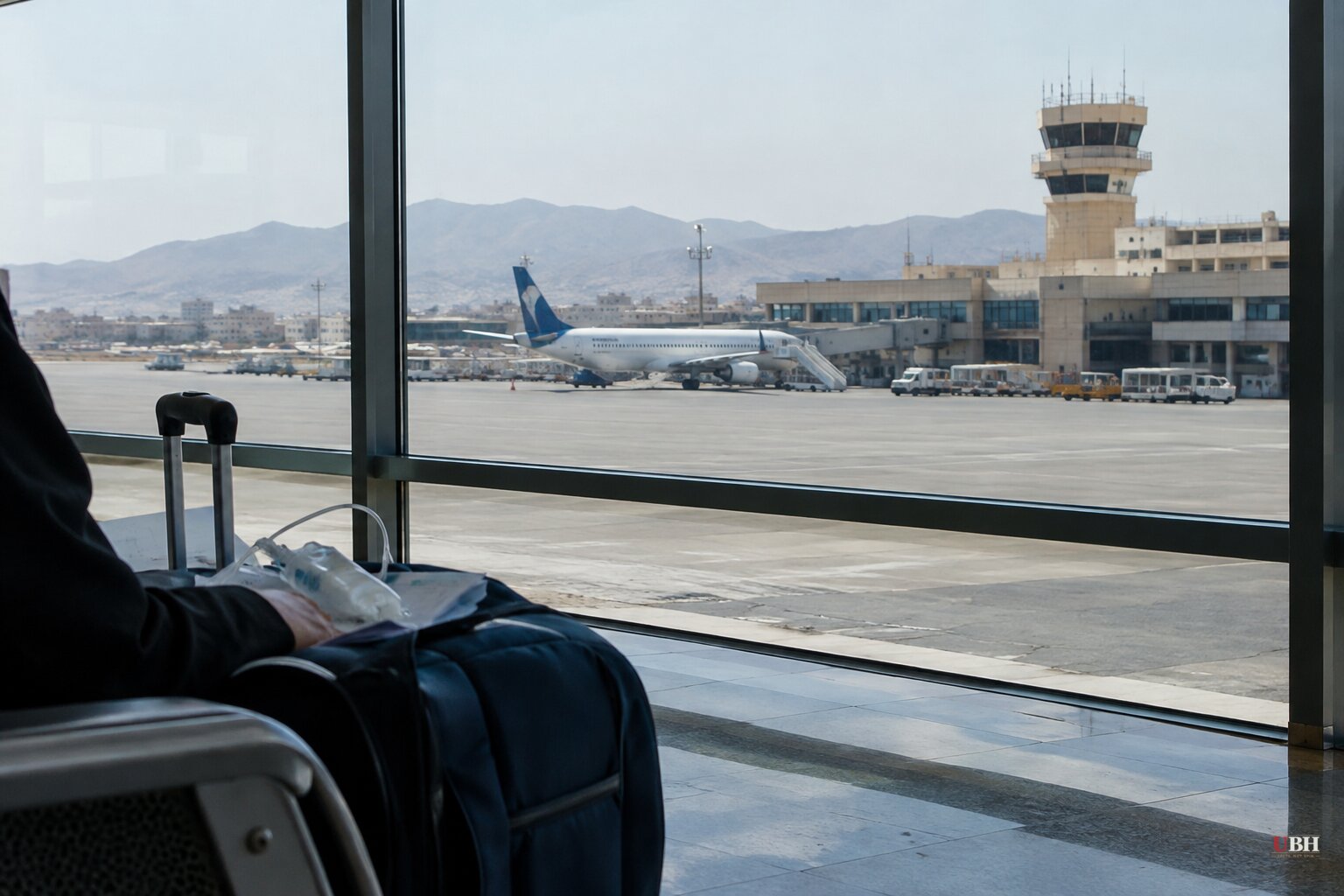
Rajaa Ghirsan, a 50-year-old seamstress in Sanaa, breathes through a device strapped to her neck. It costs $100 and has to be replaced every two months.
Vocal cord paralysis and severe damage to her larynx mean she needs another complex operation, one Yemen cannot perform. She has had six surgeries in Egypt and India since 2006. For the past seven years she has tried to get a seat on the once-weekly flight from Sanaa to Amman. She has not gotten one.
"She is waiting for the moment she can have the last operation and be free of it, or she is waiting for death instead," her daughter, Nouran al-Salawi, told Al Jazeera.
How the exits closed
Sanaa International Airport is the main air link for millions of people in Houthi-held northern Yemen. The Saudi-led coalition closed it to commercial traffic in August 2016. A UN-brokered truce let limited flights resume in May 2022.
Israeli air attacks in 2025 then damaged the airport and destroyed aircraft. In July, Saudi-backed Yemeni government forces struck its only working runway to stop an Iranian plane carrying a Houthi delegation from landing. As of today, Oct. 20, no regular flights leave the capital.
The alternative is Aden airport, in territory held by the internationally recognized government. It was attacked twice in October. In the latest strike, on Oct. 16, two missiles landed about 500 meters from a Yemenia plane preparing to depart for Cairo. The reporting does not say who fired them.
Getting to Aden from Sanaa takes about 14 hours and means crossing dozens of checkpoints on both sides of the front line. Many patients cannot afford it.
The cost of the road
Abdulkarim Abdullah, 60, had kidney failure and needed dialysis. His family spent about $2,300 on travel, accommodation, permits and tickets. His brother sold Abdulkarim's wife's gold and his own car to raise the money.
Abdulkarim died on the way to Aden in January.
Anis al-Asbahi, spokesman for the Houthi-run Health Ministry in Sanaa, says a decade of airport closures has affected about 400,000 patients, including 250,000 who need treatment abroad. He also cites shortages of more than 1,600 types of medicine, including 12 cancer drugs he says are barred from entering the country. Those figures come from a party to the war, and the ministry's account assigns blame to the other side.
The government's own numbers are grim too. In September, Health Minister Qasim Buhaibeh warned that some areas could lose medical services entirely. He said 19.3 million Yemenis need medical assistance and the humanitarian response is funded at just 17% of what is required. No medical evacuation program operates anywhere in Yemen.
A war that has spread to Saudi airports
The 2022 ceasefire between the Houthis and the Saudi-backed government has collapsed. Over the past several weeks the Houthis have gained territory and now hold significant ground near the Bab al-Mandeb Strait, the Red Sea chokepoint. Saudi Arabia and government forces have launched operations to retake it.
The fighting has now reached Saudi civilian infrastructure. The Houthis claimed an Oct. 7 attack on King Khalid International Airport in Riyadh, along with strikes on two Saudi Aramco facilities.
On Saturday, Oct. 10, a barrage of missiles and drones hit the Riyadh airport. At least 13 people were killed and at least 309 injured, some critically. The dead included four Saudis and nationals of Bangladesh, Egypt, India, Jordan, the Palestinian territories, Syria and Sudan, plus one American. Saudi air defenses did not intercept the barrage, and Saudi Arabia has opened an investigation into how it got through.
Another attack on the same airport on Oct. 11 killed one person and injured 11. Saudi civil aviation authorities also reported an attack on King Fahd International Airport in Dammam.
Saudi-led coalition spokesman Turki Al-Maliki called the Oct. 10 strike a "full-fledged war crime." Energy Minister Prince Abdul Aziz bin Salman said on Oct. 12: "The events of recent weeks are serious. Our response must be equally serious."
The Houthis frame it differently. Their foreign ministry says the attacks answer Saudi support for the Yemeni government. "Unless the Saudi enemy stops its aggression and interference in Yemen, worse is yet to come," it said in a statement carried by Al Masirah television.
Riyadh has since come under more fire. Saudi-led coalition forces said they intercepted three drones headed for the capital on Tuesday, Oct. 13, after ballistic missiles aimed at Riyadh and Khamis Mushait the day before. Schools in Riyadh moved to virtual learning, and some employers told staff to work from home.
The wider stakes
The fighting is tied to the broader U.S.-Iran confrontation. Oil markets have felt it, with Brent crude trading around $106 a barrel in mid-October.
Trump has said he is considering whether the United States should join Saudi strikes on the Houthis. No decision has been announced.
For patients like Ghirsan, the arithmetic is simple. Sanaa's runway is wrecked, Aden's airport is within missile range, and no evacuation program exists. Saudi Arabia's promised "serious" response will determine whether either route reopens soon, or whether the road to Aden stays the only way out.
Sources used for this briefing
7 links from 6 independent newsrooms (syndicated copies of the same report count once)
These are the sources it draws on, linked so you can verify.


