
Unbiased headlines. Facts, not spin.
Unbiased Headlines is an independently owned news organization. We bring you the facts, not opinions, written fresh from 110+ named sources. Sources linked so you can verify it yourself.
 defense
Major Story (8/10)
UK Approves RAF Typhoon Defensive Missions Over Saudi Arabia as Houthi Strikes Continue
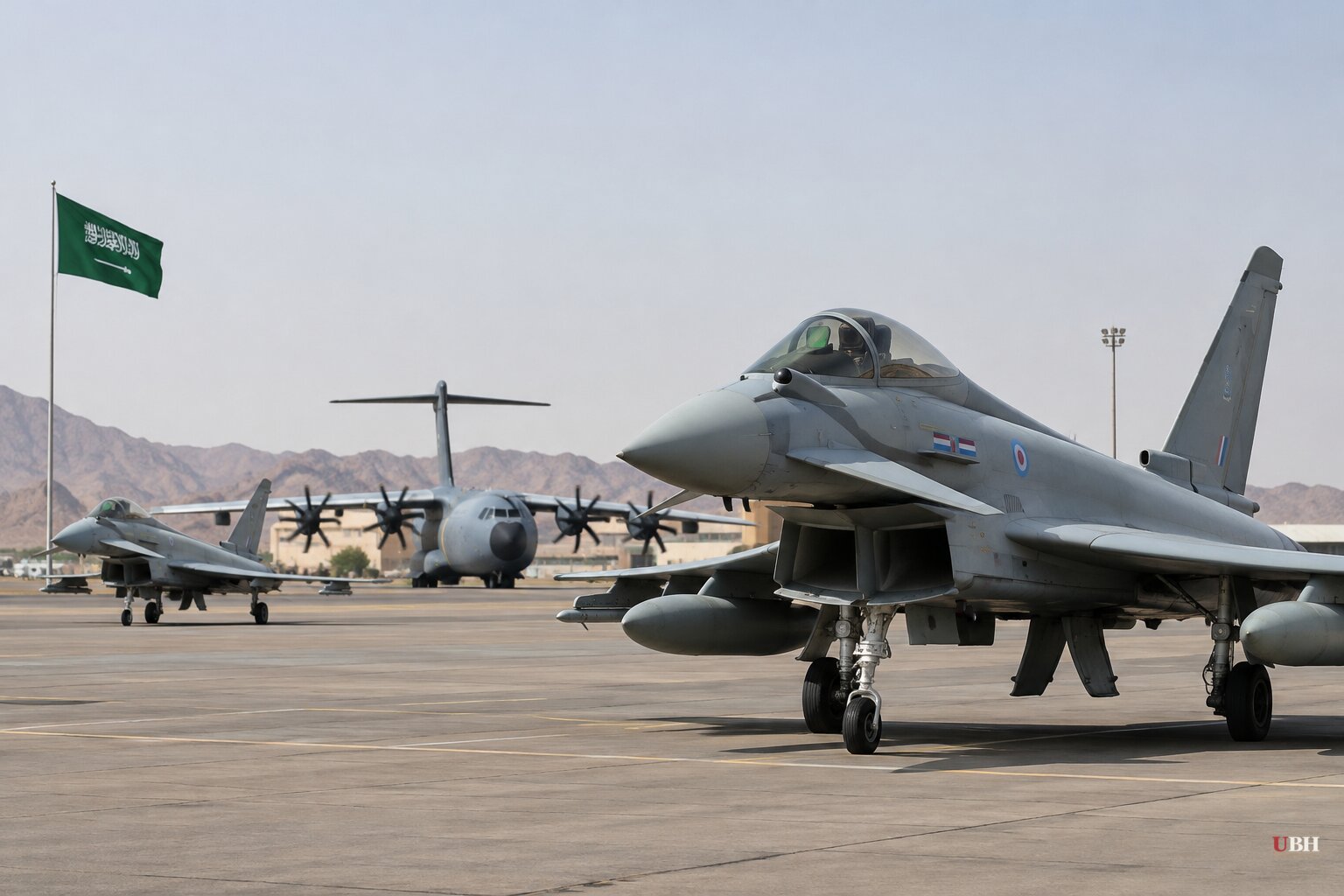
Since Houthi forces broke a shaky ceasefire in September and the Riyadh airport strike of Oct. 10, Britain has moved from supplying one refuelling aircraft to committing fighter jets. Defence Secretary Wes Streeting announced the step today, Oct. 20, in a written statement.
RAF Typhoons will fly what the Ministry of Defence calls "defensive counter air missions" to protect Saudi cities and critical infrastructure from drones and missiles. The ministry said the jets "will not conduct offensive strikes against the Houthis."
The package also includes an Atlas A400M transport aircraft to move defence materiel inside Saudi Arabia and British military advisers to support Saudi staff officers. The RAF Voyager tanker sent in September stays, and Streeting said that mission is extended by another 90 days.
The ministry has not said how many Typhoons are going.
What Streeting and Burnham said
"The continuing attacks from the Houthis on our ally Saudi Arabia are absolutely despicable," Streeting said. He singled out the Riyadh airport strike as showing "the lengths the Houthis are going to escalate the situation in the region."
The decision follows a request from the Saudi government, which Prime Minister Andy Burnham said earlier this month Britain was prepared to consider. Burnham told the House of Commons the UK will "continue to stand with Saudi Arabia." It is the most significant military mission he has approved as prime minister, according to The Guardian.
Streeting visited his U.S. counterpart, Pete Hegseth, at the Pentagon a few days ago, and the two discussed the Houthi escalation among other issues.
The Ministry of Defence also made a domestic argument. "Escalating violence in the Gulf can have a serious impact at home in the UK — driving up the cost of living, disrupting energy supplies and costs to British businesses," it said.
The damage on the ground
Saudi authorities said last week that 19 people have been killed in Houthi attacks on the kingdom's airports. The Oct. 10 missile strike on King Khalid International Airport in Riyadh killed 13 and injured 308, according to the BBC, making it the deadliest attack in Saudi Arabia in more than a decade. Aramco facilities were also targeted last week.
The Houthis have also hit Saudi-backed forces inside Yemen. Three ballistic missiles struck al-Alam camp near Ataq in Shabwa province earlier this week. Death tolls differ. The BBC put the toll at more than 70 security personnel. Al Jazeera reported at least 53 dead. A Houthi military spokesman said the group targeted "Saudi enemy concentrations."
The Houthi-run health ministry says Saudi air and artillery strikes have killed at least 141 people and wounded 395 since Sept. 3. Yemen's government health ministry says at least 1,282 people have been killed in the conflict across the country since Aug. 6. None of these figures has been independently verified.
The BBC reports that Saudi air defences were depleted by Iranian attacks earlier this year, and the kingdom's size makes comprehensive cover hard. Al Jazeera reports Saudi Arabia has cancelled its 2026 Future Investment Initiative conference, due to be held next week.
Precedent and open questions
This is not Britain's first defensive air mission in the Gulf. RAF Typhoons based at Akrotiri in Cyprus and in Qatar shot down Iranian and proxy missiles and drones aimed at Gulf states in the spring and summer, during the U.S.-Israel war against Iran. Britain's role in that war was limited.
BAE Systems has supplied Saudi Arabia with 72 Typhoons in a deal originally worth £4.4bn. Riyadh has been negotiating for years over another 48.
Critics of the move are voicing two concerns. The Guardian reports some concern that Britain risks being seen as closely aligned with the unpopular U.S. war on Iran. ZeroHedge argues the line between "defensive" and "offensive" will be thin if Saudi territory keeps coming under near-daily attack, and asks whether British jets would go after launch sites in Yemen if they are located. The ministry's statement rules out offensive strikes and does not address that scenario.
The BBC adds that British aircraft defending Saudi skies would free Saudi jets for offensive missions against the Houthis. The Saudi-led coalition is already conducting air attacks on Houthi positions, and the UK tanker extension is described by the ministry as supporting Saudi air operations.
What comes next
The regional picture is shifting beyond London. Egypt's parliament has delayed for a second day a vote on President Abdel Fattah el-Sisi's request to authorise military support for Saudi Arabia if the kingdom asks for it. That vote is still pending.
The Typhoons' deployment dates and the size of the detachment are the next details to watch. So is the first time British pilots engage Houthi missiles or drones over Saudi territory.
Sources used for this briefing
8 links from 8 independent newsrooms (syndicated copies of the same report count once)
These are the sources it draws on, linked so you can verify.


