
Unbiased headlines. Facts, not spin.
Every story is an unbiased news briefing written from 110+ sources across the spectrum — sources linked so you can verify it yourself.
 tech
Low Interest (4/10)
May 27, 2026 at 02:17 PM
tech
Low Interest (4/10)
May 27, 2026 at 02:17 PM
XREAL Splits Into Two: $299 Budget 'xbx' Glasses Launch While Project Aura Locks In 2026 Commercial Debut
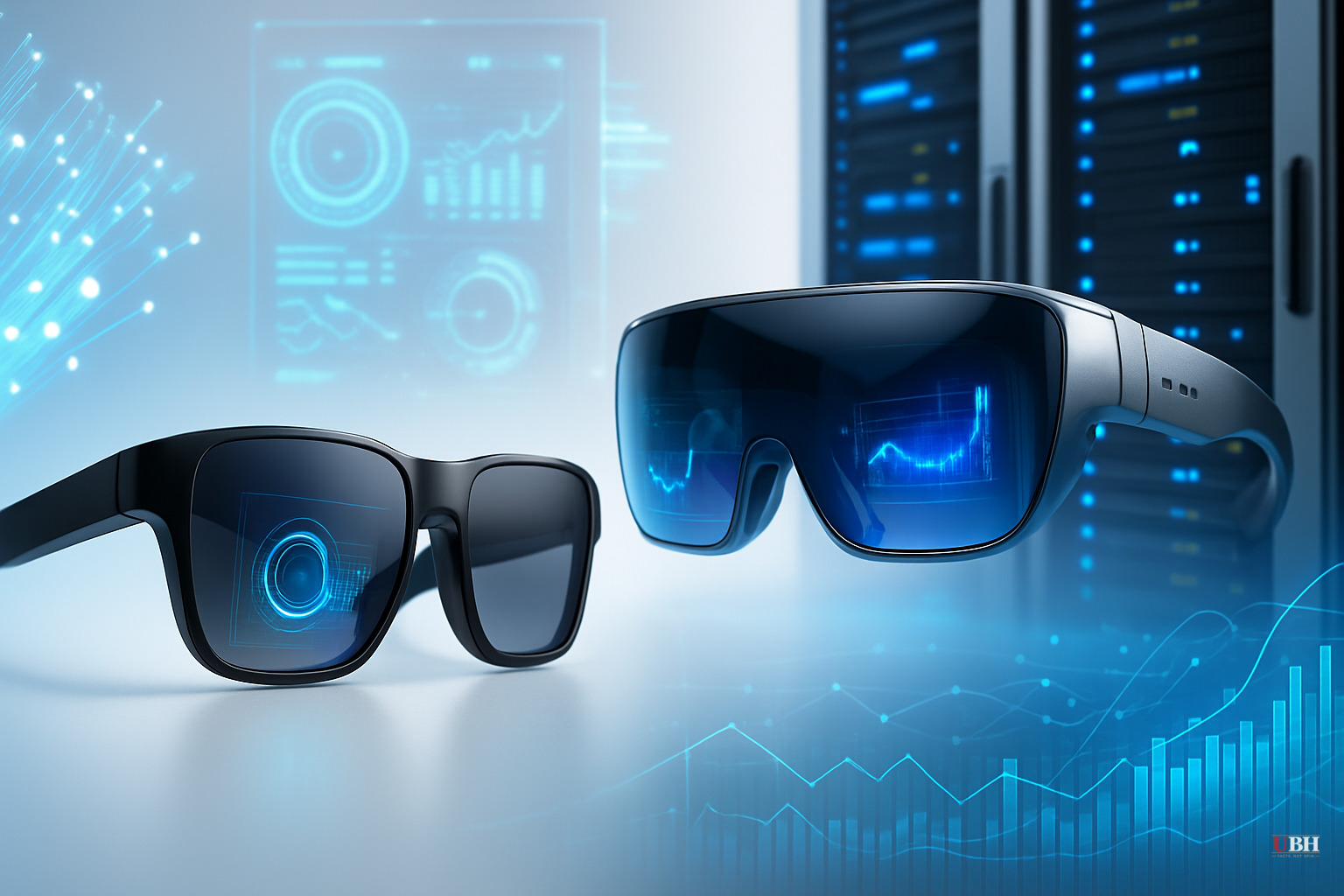
Two Products, One Company
Coverage of XREAL this week has been a mess. Multiple outlets are running Project Aura and the new xbx a01 glasses as variations of the same story. They're NOT.
These are fundamentally different devices targeting different markets at different price points.
The Budget Move: xbx a01 at $299
XREAL announced a new sub-brand — X By Xreal, shortened to xbx — built for everyday consumers who want a wearable display without paying premium prices, according to Engadget.
The first product is the a01, weighing 62 grams — XREAL claims it's the lightest AR display glasses on the market. Brightness hits 1,600 nits with HDR10 support. There are NO cameras on the frame. This is a passive display device, not a spatial computer.
Pricing starts at $299. The glasses already launched in China. US availability is expected in July, per Engadget.
For context: XREAL's One Pro glasses launched at $650 last year. The company is cutting the entry price by more than half.
XREAL says the a01 targets travelers, commuters, gamers, and people who want a "pocket cinema" experience. The new spatial anti-shake algorithm is specifically designed for moving environments — planes, subways, buses — to keep video stable without a headrest, according to Engadget.
Wired noted the xbx name invites obvious Xbox comparisons, with the logo rendered in a yellow-green font along the frames. XREAL says it doesn't expect legal trouble from Microsoft. That remains to be seen.
The a01 also supports XREAL's Beam Pro Android device, enabling three degrees of freedom tracking and Google Play Store access, per Wired.
The Premium Move: Project Aura Confirmed for 2026
Separately, XREAL and Google used Google I/O 2026 to demo Project Aura live — and officially confirmed a global commercial launch later this year.
Project Aura will be the first AR glasses running Google's Android XR operating system, according to Road to VR.
The hardware specs shaping up: birdbath-style OLED optics, a 70-degree field of view, dual displays (one per lens), cameras for spatial tracking, an upgraded X1S chip for multitasking, and a Snapdragon processor from Qualcomm — all confirmed by Android Central and Auganix.
A key design choice separates Aura from everything else on the market: the battery, processor, and heavy components live in a separate compute puck that sits in your pocket. The glasses themselves stay light and look like actual glasses. That's the tradeoff XREAL made to solve the weight problem that has plagued every competitor.
What Google I/O Actually Showed
The demos at Google I/O were more concrete than the vague "future of computing" pitches that usually accompany XR announcements.
Attendees saw immersive Google Maps with spatial navigation, large-screen and mini-screen video multitasking, 180- and 360-degree YouTube VR videos, a WebXR 3D painting app built with Gemini AI, and laptop connectivity via DisplayPort with integrated Gemini support, per Auganix and Road to VR.
Android Central confirmed that XREAL told them to expect a commercial debut this year — though whether that means alongside Samsung's AI glasses push in the fall or closer to the holidays is still unclear.
What Mainstream Coverage Is Getting Wrong
Most tech outlets are treating the xbx a01 launch as a footnote to the Project Aura story, or lumping them together as "XREAL news."
XREAL is running a two-tier product structure: a mass-market display glasses line under xbx, and a premium spatial computing line under Project Aura. These aren't competing with each other — they're targeting entirely different use cases and wallets.
Also underreported: Project Aura is a wired device. The compute puck tethers to the glasses. Road to VR's hands-on from late last year flagged open questions about input methods beyond the puck-as-trackpad and optical hand-tracking. Those questions still haven't been answered publicly ahead of a launch that's supposedly happening within months.
No pricing has been announced for Project Aura. Nobody is pushing hard enough on that question.
The Competitive Picture
XREAL isn't the only company racing toward this finish line. Road to VR noted that Warby Parker, Gentle Monster, and Kering are all building smart glasses with Samsung and Google. Samsung already shipped its Galaxy XR headset — the first Android XR device — in late 2025.
Meta has proven there's a consumer market for smart glasses. But Meta's more powerful hardware keeps getting heavier. XREAL's compute puck approach is a direct answer to that problem.
What's Next
For $299 in July, regular people can get XREAL's most accessible display glasses yet — no cameras, no complexity, just a lightweight screen for movies and gaming on the go.
For the XR enthusiast watching the platform wars: Project Aura landing as the first Android XR glasses is a significant milestone, and its 2026 commercial launch window is now officially on the clock.
Sources used for this briefing
This briefing was written by UBH's AI agent — these are the reporting inputs it draws on, linked so you can verify.


