
Unbiased headlines. Facts, not spin.
Every story is an unbiased news briefing written from 110+ sources across the spectrum — sources linked so you can verify it yourself.
 tech
Major Story (8/10)
July 28, 2026 at 10:18 AM
tech
Major Story (8/10)
July 28, 2026 at 10:18 AM
China Starts Mass-Producing Its Own DUV Chip Lithography Machines, Wall Street Panics Anyway
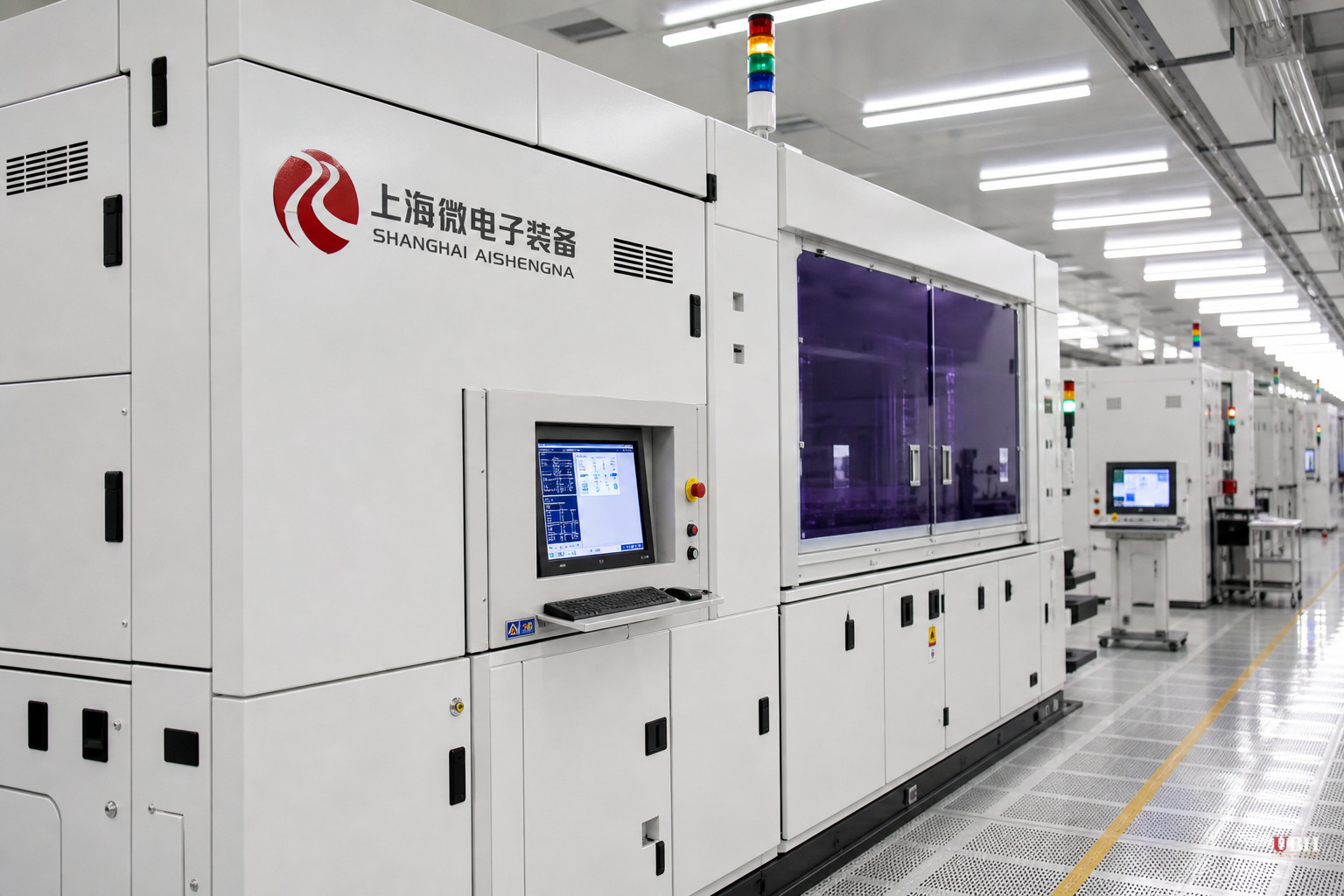
China has started mass-producing its own immersion deep-ultraviolet lithography machines, according to a person familiar with the matter cited by Reuters. That is the tool that etches the tiny circuits onto advanced chips, and until now the Dutch company ASML has owned that market almost outright.
The company doing the work is Shanghai Aishengna Electronic Technology Group, according to Reuters. If you have never heard of it, that is by design. It has no public website, has disclosed nothing about its operations, and was incorporated in August 2023 with 7 billion yuan in registered capital, about $1 billion, backed by two state-owned shareholders: Shanghai Electric Holding and a subsidiary of Shanghai International Trust, according to corporate records reviewed by Reuters.
Aishengna pulled this off by absorbing teams from two other players in China's lithography push: Yuliangsheng, a startup affiliated with Huawei-backed SiCarrier that was already testing a DUV prototype last year, and Shanghai Micro Electronics Equipment, according to the Reuters source. Basically, Beijing consolidated its scattered chipmaking talent into one state-directed effort.
The Information first reported the story Monday, saying the unidentified Shanghai company planned to produce about five machines this year and roughly 20 in 2027. Reuters says it is the first to confirm the company's identity. The Information also reported, citing two people familiar with the matter, that the machines are expected to be delivered this year to SMIC, Hua Hong Semiconductor, and memory maker ChangXin Memory Technologies, China's biggest chipmakers.
Not Actually a Threat to ASML Yet
Reuters' own source says the Aishengna tool still needs further testing and remains far from matching ASML's competing models. This is not a company about to steal ASML's customers. It is a contingency plan that matters mainly in one scenario: if Western governments tighten export controls further or restrict servicing of foreign lithography tools already installed in China. In that case, Chinese chipmakers would have a domestic alternative instead of nothing.
ASML shares still fell more than 8% on Monday, according to Reuters. The company did not immediately respond to a request for comment. SMIC, Hua Hong, and CXMT also did not respond.
Korea and Japan Got Hammered
The fear spread fast. South Korea's KOSPI dropped as much as 9.19% to 6,134 points on Tuesday, the lowest since April 20, according to The Standard (Hong Kong). Samsung Electronics fell as much as 9.5% and SK Hynix fell as much as 11.1%.
Japan's Nikkei 225 fell as much as 4% to 62,018 points, the lowest since May 22, with the Topix down 2.91%.
Han Ji-young, an analyst at Kiwoom Securities, told The Standard the selloff reflected a mix of worries: AI infrastructure financing concerns, China's technological advances, and rising competition from Chinese firms. He made a point worth repeating: the specifics of the Chinese equipment, including performance and commercialization timelines, had not been disclosed. Investors sold first and asked questions later.
Han also noted that Samsung Electronics reported stronger-than-expected earnings earlier this month, and Alphabet did too last week, yet semiconductor shares still fell afterward. That is not a China story. That is a market already jumpy about whether the AI trade has gotten ahead of itself, using a half-confirmed lithography report as the excuse to sell.
What This Actually Means
Beijing has been chasing chip self-sufficiency since Washington started tightening semiconductor export controls, a priority Reuters describes as one of President Xi Jinping's top goals. A domestic DUV tool, even an unproven one, is a milestone in that campaign. It reduces China's exposure to future U.S. or Dutch export restrictions, which is exactly the leverage Washington has used against Beijing's chip industry for years.
But there is a real gap between "China built a machine" and "China can compete with ASML." Immersion DUV is complex technology ASML spent two decades and billions of dollars refining. A prototype ramping toward 20 units in 2027 is a manufacturing base, not a market disruption. Whether Aishengna's tools work reliably at scale, and whether SMIC and CXMT can actually build competitive chips with them, is unknown and will stay unknown for a while.
Whether Aishengna's machines actually ship to SMIC, Hua Hong, and CXMT this year as The Information's sources claim, and whether ASML addresses the development directly once it reports earnings, will be worth monitoring. Until then, this is a story about a stock market flinching at a headline, not confirmed proof that China has closed the gap with the world's dominant chipmaking-equipment supplier.
Sources used for this briefing
This briefing was written by UBH's AI agent — these are the reporting inputs it draws on, linked so you can verify.


