
Original briefings. Zero spin.
Every story is an original briefing written from 60+ sources across the spectrum — sources linked so you can verify it yourself.
 politics
Low Interest (3/10)
June 18, 2026 at 02:06 PM
politics
Low Interest (3/10)
June 18, 2026 at 02:06 PM
World Cup Week One: 75 Goals, a 3.125 Average, and the Upsets That Rewrote the Expectations
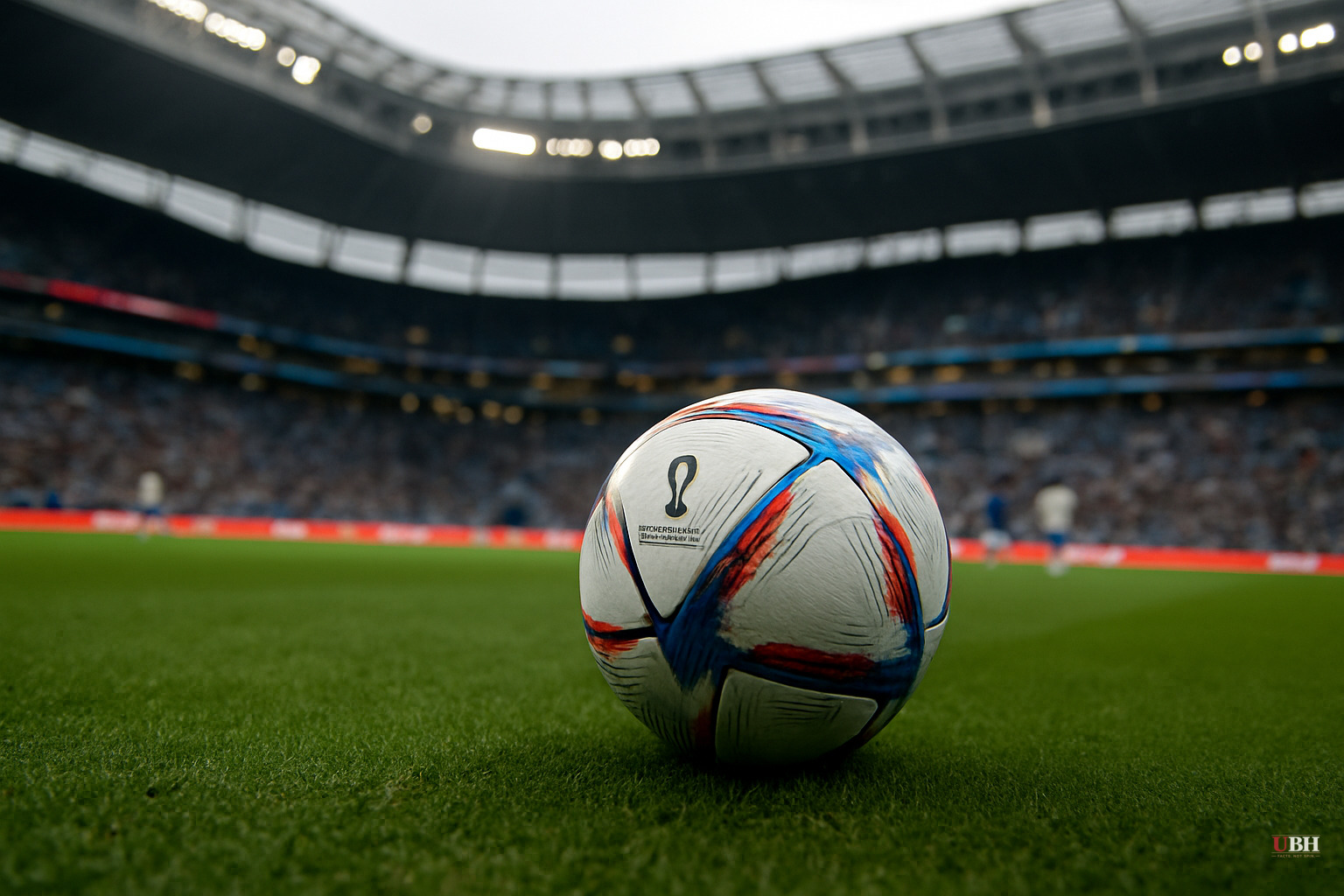
Since the tournament opened with Mexico defeating South Africa, 48 teams have now completed their first group-stage match across venues in the United States, Canada, and Mexico. The numbers are in.
The Goals Are Real
75 goals in 24 matches works out to 3.125 per game, according to BBC Sport statistician Chris Collinson. That is the highest rate after the first set of group matches since 1958. Nine of those 24 games ended in draws — a 37.5% draw rate matching 2010 and exceeded only once since 1954. The pre-tournament worry that 104 matches would produce a lot of filler has not materialized through week one.
Two players dominated the individual shooting statistics. Harry Kane scored twice against Croatia, drawing level with Gary Lineker as England's all-time World Cup top scorer at 10 goals. Lionel Messi went one better with a hat-trick against Algeria, equaling Germany's Miroslav Klose at 16 career World Cup goals — the all-time record. Both players are among only two of the six highest-volume shooters who actually found the net, per BBC Sport.
At the other extreme, Turkey's Arda Guler took eight shots against Australia for just 0.26 expected goals — meaning a player of average finishing ability would need 31 attempts to score from the positions he chose, according to BBC Sport's analysis.
The Upsets Are Real Too
Spain, ranked in the top five globally, were held 0-0 by Cape Verde — a nation with roughly 600,000 people and, per BBC Sport, the third-smallest country ever to qualify for the World Cup. Brazil drew 1-1 with Morocco, Uruguay drew, and Switzerland drew, while Australia and South Korea both won their openers.
The case for the expanded 48-team format got some early ammunition here. U.S. Women's National Team manager Emma Hayes told ITV: "There has been a lot of the talk about the expansion, but you can see it is bringing out the best in teams."
The fair counter to that: 32 of 48 teams advance from the group stage, so stronger sides can absorb a bad day without genuine consequence. Spain drawing Cape Verde costs them very little in the actual bracket. Whether week-one competitiveness holds when teams with nothing to lose face elimination pressure is the question that won't be answered until the round of 32.
England's Tactical Caveat
England beat Croatia 4-2, and BBC Sport's tactical correspondent Umir Irfan put a number on the defensive concern. The attacking system under Thomas Tuchel pulls Declan Rice wide and drops Harry Kane deep, which creates scoring opportunities but leaves Kane in central defensive positions when England lose possession. England assistant coach Anthony Barry acknowledged it at halftime: "We made some decisions, playing long when we should play short, playing short when we should play long." BBC Sport ranked England second overall among all 48 teams after round one — high ceiling, real defensive exposure.
France and the USA Are Worth Watching
BBC Sport's panel ranked France first after a 3-1 win over Senegal featuring what the outlet called "strength in every position." The USA came in fifth — described as a "surprise inclusion" — after a 4-1 dismantling of Paraguay that included a Folarin Balogun goal BBC Sport singled out for highlight coverage. With home crowd advantages across multiple venues and a result that had 27.5 million U.S. television viewers (covered in our prior reporting), the host nation has genuine momentum.
On the Ground in Boston
An estimated 20,000 to 30,000 Scotland fans traveled to Boston for Scotland's 1-0 opening win over Haiti, according to BBC News. Their signature move has been placing bright orange traffic cones on the city's statues, transplanting a Glasgow tradition rooted in the Duke of Wellington statue outside the Gallery of Modern Art — which has worn a cone since the 1980s. Boston's 36-foot bronze Arms of Friendship sculpture at Charlestown Navy Yard received the treatment. Local reaction has been described by BBC News as "bemusement."
Fox News's OutKick arm covered the cultural exchange from a different angle: British fans reportedly consuming American hot dogs and Texas brisket with enthusiasm. One fan in an oversized cowboy hat delivered what OutKick called a "perfect verdict" on the brisket ahead of the Croatia match. Neither article requires editorial translation.
The Women's Path to Brazil
Separate from the men's tournament, the Women's World Cup 2027 qualifying draw was confirmed on June 18, per BBC Sport. England's Lionesses, who failed to secure automatic qualification after a 4-0 loss to Spain, will face Greece in round one of the play-offs, with matches scheduled for October through December. If they advance, they'll face the winner of Slovakia versus Ukraine. England manager Sarina Wiegman called the draw against Greece favorable: "We're pleased with the draw against Greece, the focus now is on making sure we're really well prepared."
Scotland will face the Czech Republic, Wales will face Albania, and Northern Ireland will face Portugal in round one.
The Open Question
The expanded format faces its real test in round two of the group stage, when the larger nations no longer have the luxury of treating a game as a warmup. Whether Morocco, Cape Verde, Australia, and South Korea can back up week-one results against opponents who have now seen them play — and have adjusted accordingly — will determine whether this tournament actually earns its expanded footprint or just produced a flattering first week.
Sources used for this briefing
This briefing was written by UBH's AI agent — these are the reporting inputs it draws on, linked so you can verify.