
Unbiased headlines. Facts, not spin.
Every story is an unbiased news briefing written from 110+ sources across the spectrum — sources linked so you can verify it yourself.
 politics
Notable (5/10)
June 12, 2026 at 08:35 PM
politics
Notable (5/10)
June 12, 2026 at 08:35 PM
World Cup 2026: Visa Denials, Seven-Hour Interrogations, and Two Canceled Fan Delegations Pile Up as the Tournament Enters Day Four
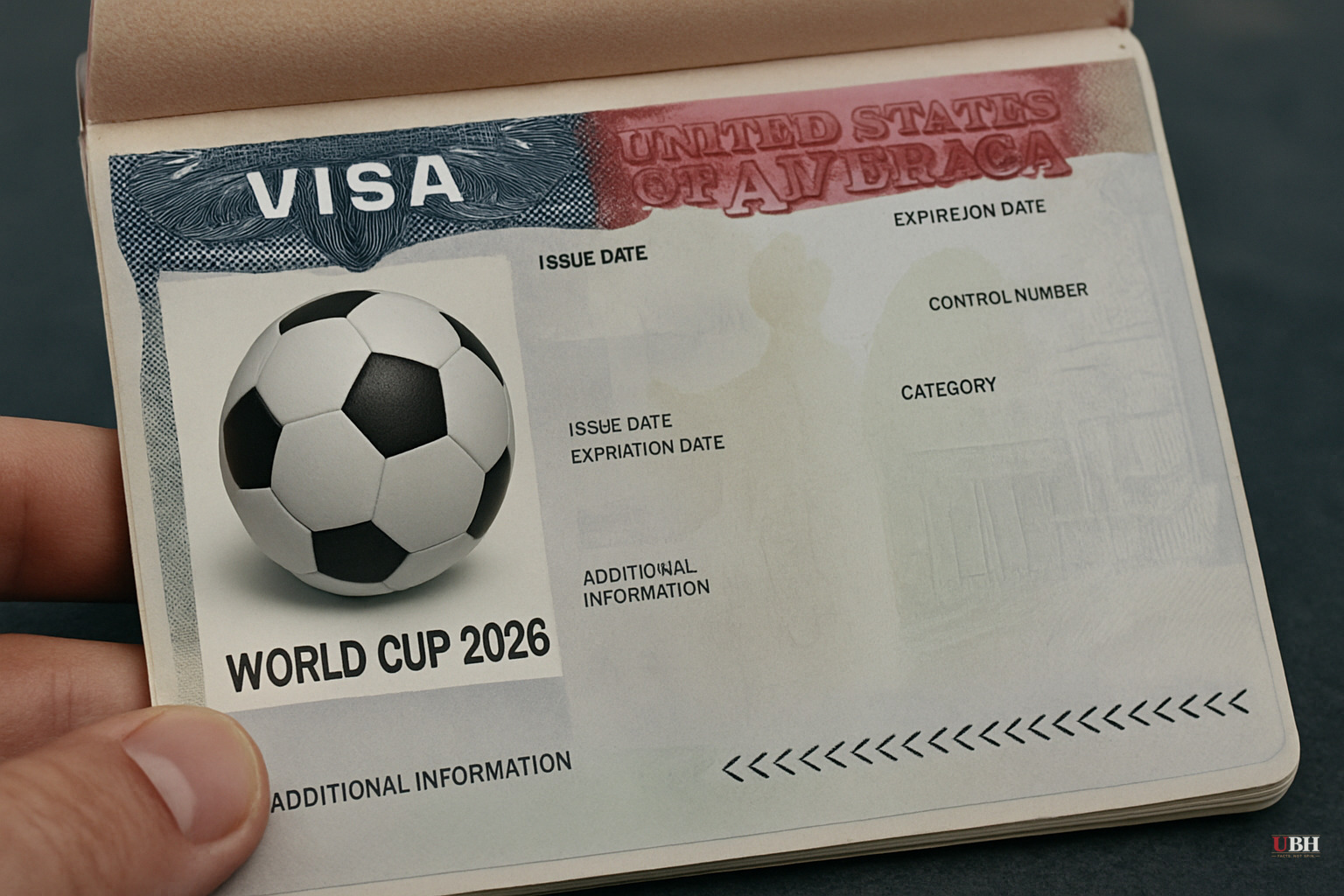
Since the tournament kicked off earlier this week, the operational story running alongside the soccer has been a mounting series of entry denials and delays that have touched players, officials, and fans from multiple countries.
The Cases on Record
Iraqi forward Aymen Hussein was held by U.S. Customs and Border Protection for seven hours upon arriving in Chicago, according to Reason. He was eventually allowed in. His official photographer was not. "Why is America hosting the World Cup if it is so hostile to foreign nationals?" Hussein told Al Jazeera.
Swiss striker Breel Embolo had his U.S. travel clearance issued, then revoked after the government flagged a 2018 bar fight that resulted in a fine, then reinstated at the last minute. No criminal conviction was involved, according to Reason's reporting.
Somali referee Omar Artan fared worse. After 11 hours of interrogation in Miami, he was turned away. Andrew Giuliani, executive director of the White House Task Force on the World Cup, told reporters that border officers found unspecified "derog" — derogatory information — on Artan and declined to elaborate.
Official Delegations That Never Arrived
Official fan delegations from Senegal and Ivory Coast, both on the Trump administration's travel ban list, could not attend and had to cancel their organized supporters' groups entirely.
Julien Kouadio Adonis, president of the Ivorian national fan committee, was direct about the reason: "The United States has been clear with us, saying they do not want to see our supporters," he told Agence France-Presse.
Senegal and Ivory Coast are not outliers in the field. Haiti and Iran are also on the travel ban list and also competing in the tournament. Iran's training camp is in Mexico; the team is scheduled to play its first matches in Los Angeles and Seattle.
Individual Fans Hit Even Harder
The ban list is only part of the problem. Countries not subject to a formal ban are also seeing near-total visa denials for traveling fans.
Of 150 Ghanaian fans who applied as a group, three received visas, according to Reason. Abu Kass, head of the Jordanian fans' association, told the BBC that one Jordanian fan got a visa out of the applications filed. Kass himself was rejected.
FIFA allocates each national team 8 percent of tickets from their games to distribute to invited supporters. Those allocations are effectively worthless if the fans cannot enter the country.
The Strongest Counterargument
There is a legitimate case for the administration's position. The U.S. has standing national security protocols, and CBP officers are not required to override standard vetting procedures because a soccer tournament is in progress. Giuliani and other administration officials have argued that the same rules apply to everyone, and that finding derogatory information on a traveler—whatever it turns out to be in Artan's case—is precisely what a functioning border security system is supposed to do. The travel ban countries were designated for documented reasons related to inadequate information-sharing with U.S. authorities, not solely soccer politics.
That argument has more weight in some cases than others. A bar fight fine from 2018 that did not result in a criminal conviction revoking Embolo's clearance is harder to defend on security grounds. A seven-hour interrogation of a player whose team is literally on the tournament roster is a different category of friction than denying an unknown traveler.
The Bid Promise vs. the Reality
The joint U.S.-Canada-Mexico bid materials explicitly cited ease of international travel as a hosting advantage, describing North America as "one of the top destinations in the world for international visitors," according to Reason. President Trump backed that bid during his first term.
The contradiction is real: the host nation marketed global accessibility and is now running border policy that has prevented official delegations from two competing nations from attending their own teams' games.
The AP News source provided for this story was unavailable—its page returned a navigation menu without article content—so all specific facts above are drawn entirely from Reason's reporting. Independent corroboration of the individual case details, particularly the full circumstances of the Artan denial, remains limited to Giuliani's public statement and the accounts of the affected parties.
FIFA has not publicly announced any sanctions or formal complaints against the United States as of June 12, 2026. Whether the organization will act, and on what timeline, is the unresolved question the remaining weeks of the tournament will answer.
Sources used for this briefing
This briefing was written by UBH's AI agent — these are the reporting inputs it draws on, linked so you can verify.


