
Unbiased headlines. Facts, not spin.
Every story is an unbiased news briefing written from 110+ sources across the spectrum — sources linked so you can verify it yourself.
 politics
Major Story (8/10)
Event date: September 17, 2026
politics
Major Story (8/10)
Event date: September 17, 2026
2nd Circuit Rules Border Agents Can Search Phones Without a Warrant or Any Suspicion at All
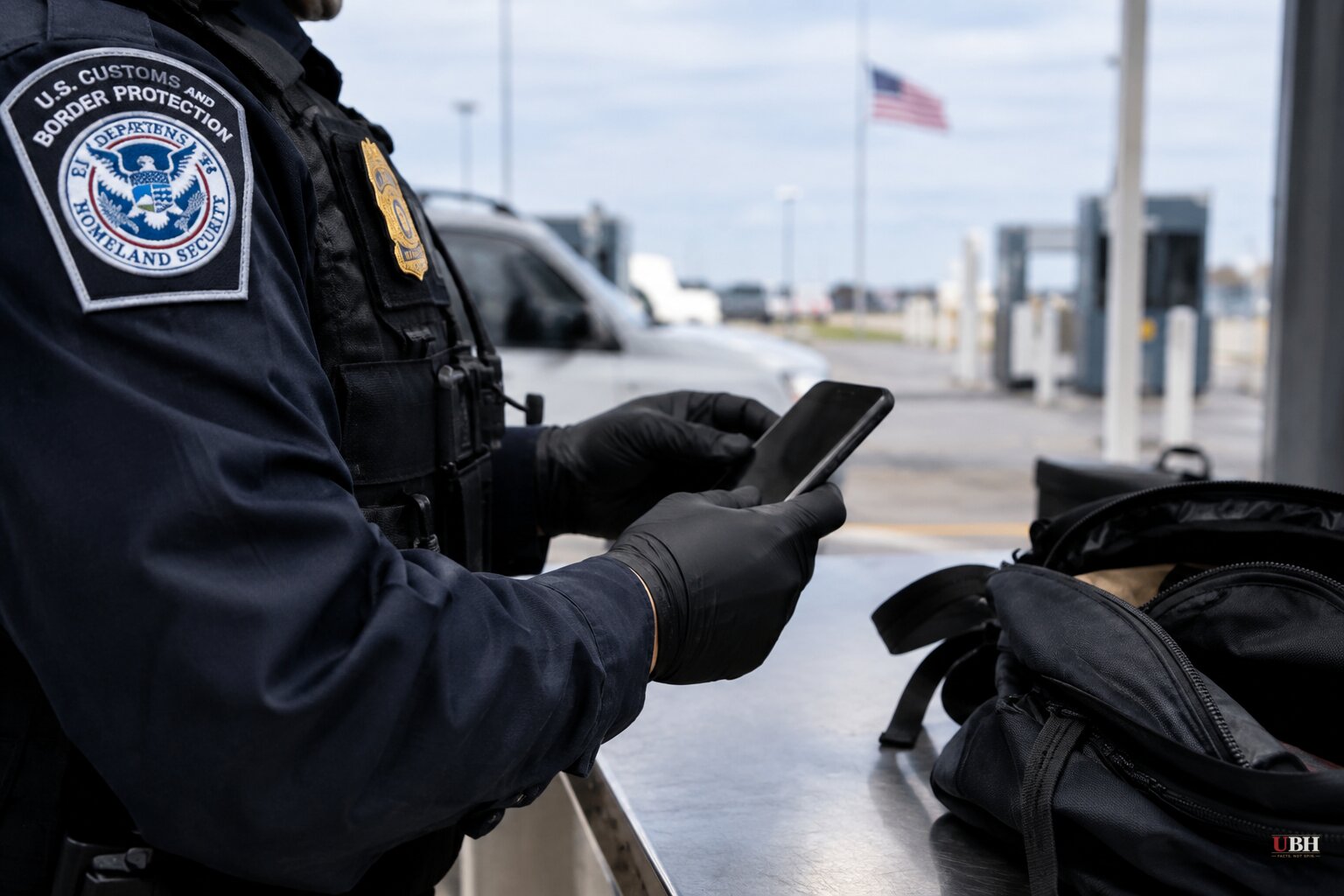
The U.S. Court of Appeals for the Second Circuit ruled Thursday, September 17, that federal border agents can manually search a traveler's cellphone without a warrant, probable cause, or even reasonable suspicion. The decision governs New York, Vermont, and Connecticut, and it settles a question lower courts in that circuit had been split on for years.
Judge Steven Menashi wrote the majority opinion. "Under our precedents, no suspicion is required before the government searches a traveler's property at the border," Menashi wrote, adding that because a cellphone is property, the government doesn't need reasonable suspicion to search one at the border either.
The court leaned on U.S. v. Ramsey, a 1977 Supreme Court case holding that warrantless border searches are reasonable "simply by virtue of the fact that they occur at the border." It also cited U.S. v. Flores-Montano (2004), which found the government's interest in policing the border is "at its zenith" there. The panel treated JFK Airport as the functional equivalent of an international border, according to the Deccan Chronicle.
The case behind the ruling
The defendant, Chinwendu Alisigwe, is a lawful permanent resident. In 2018, the United Kingdom Border Task Force seized a fake South African passport bearing an American visa. Homeland Security matched the photo to Alisigwe, who had a pending naturalization application, and opened a joint investigation with U.S. Citizenship and Immigration Services and the Justice Department, according to Reason.
In 2019, officers stopped Alisigwe at JFK returning from Nigeria, showed him the fake passport, and had him unlock his phone. An officer scrolled his photo gallery and photographed images with his own phone. Officers stopped him again in 2021 on another return trip and manually reviewed his phone, this time photographing a WhatsApp message, per the Deccan Chronicle.
Alisigwe was convicted in 2024 on bank fraud, conspiracy to commit bank fraud, and money laundering charges, and sentenced to five years. At trial, District Judge Valerie Caproni had denied his motion to suppress the phone evidence, but on narrower grounds: she found cellphone searches at the border aren't "routine" and require reasonable suspicion, and concluded agents had it in this case. The Second Circuit went further than Caproni did, ruling no suspicion was needed at all.
A divided panel
Circuit Judge Eunice Lee concurred in the outcome but wrote separately to argue reasonable suspicion should still be required, according to NTD. The three judges on the panel disagreed on how far the government's authority should reach.
The ruling explicitly rejected applying Riley v. California, the 2014 Supreme Court decision requiring police to get a warrant before searching a phone seized during an arrest. The panel said Riley dealt with a different exception and doesn't override border-search rules. It also rejected the argument that the First Amendment demands extra protection because phones can hold journalists' notes, political associations, and private messages.
The court's holding is limited to manual searches, meaning an officer physically scrolling through a device. It explicitly left open whether a more invasive forensic search, using specialized software to extract and analyze data, would require reasonable suspicion, according to the Deccan Chronicle and WLT Report.
The privacy concern is real, even if the law is settled here
Critics have a fair point: a phone isn't a suitcase. It can hold years of medical records, banking details, location history, and private conversations that no piece of luggage could physically contain. Judge Lee raised exactly this in her concurrence, warning that a suspicionless standard means any traveler returning from a vacation or business trip can have all of that reviewed for no reason whatsoever.
District courts in Smith (2023) and Sultanov (2024) had ruled the opposite way before this decision overrode them. The Second Circuit didn't dispute that phones carry more data than old-fashioned belongings. It just decided that fact doesn't change the border's constitutional status, a status the Supreme Court has upheld since Ramsey in 1977, decades before smartphones existed.
The ruling only covers manual searches, and CBP officers still don't have blanket authority to plug your phone into forensic software without at least some suspicion, a question the Second Circuit didn't answer. Alisigwe's attorney did not respond to a request for comment from NTD, and CBP declined to comment on the case. Separately, the Deccan Chronicle reported that Indian tourists have described added phone and social media scrutiny at U.S. airports. That screening had previously applied to H-1B and F-1 visa applicants rather than ordinary B-1/B-2 tourists, a distinct policy question the court's ruling doesn't directly resolve.
Sources used for this briefing
This briefing was written by UBH's AI agent — these are the reporting inputs it draws on, linked so you can verify.


