
Unbiased headlines. Facts, not spin.
Every story is an unbiased news briefing written from 110+ sources across the spectrum — sources linked so you can verify it yourself.
 politics
Major Story (8/10)
September 18, 2026 at 05:38 PM
politics
Major Story (8/10)
September 18, 2026 at 05:38 PM
Iran Rallies Hundreds of Thousands for War Training as US Midterm Voting Begins Under Shadow of the Same Conflict
Tehran puts on a show
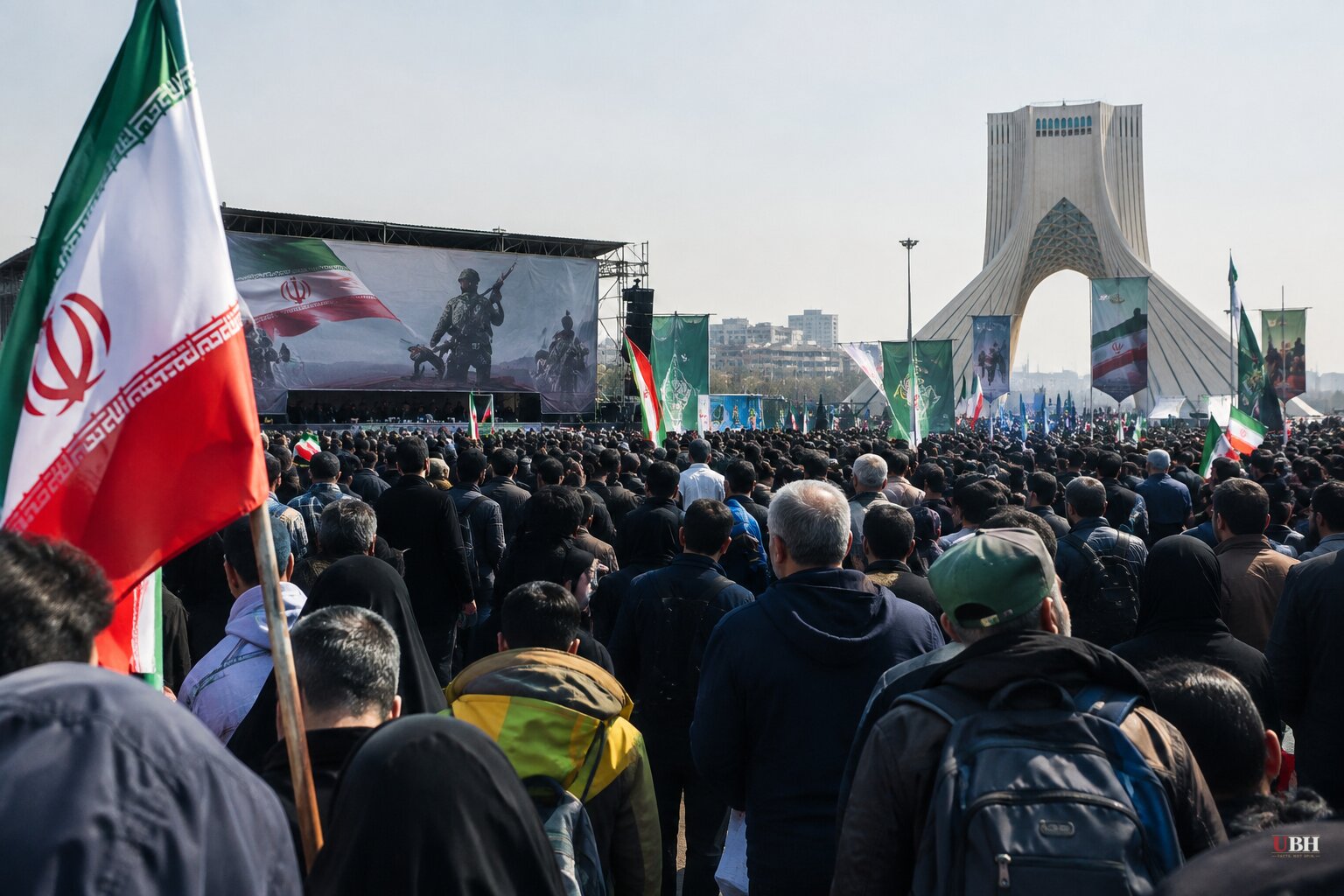
Iran's government organized its biggest public rally since the war with the United States and Israel began in February, according to the Associated Press. Hundreds of thousands of people marched through Tehran on Friday, September 18, pledging to take up arms against the country's enemies.
The campaign has a name: "Janfaday-e Iran," translated as "the ones who sacrifice their lives for Iran," per AP reporting carried by CTV News and other outlets. State media spent days beforehand pushing Iranians to sign up for what officials describe as basic training with assault rifles.
Tehran's Revolutionary Guard chief, Gen. Hassan Hassanzadeh, told Iran's state broadcaster that more than 600,000 people had registered, with over 1 million expected to eventually go through training. The broadcaster itself put Friday's crowd at over 300,000 in the streets. Those numbers come from Iranian state media, not an independent count, and should be read as the government's own claim about its own event.
The recruits are billed as backup for the Revolutionary Guard and the Basij militia. The Basij has been central to crushing anti-government protests inside Iran, according to AP's reporting. The militia's role isn't limited to fighting foreign enemies.
Hossein Taeb, the new head of the Basij, told the crowd the volunteers would be ready for "full-fledged defense" and promised similar rallies in other cities soon. He said the new recruits would be a "nightmare" for Iran's enemies. President Masoud Pezeshkian and senior military commanders watched the march in person.
The scene included the usual theater: American and Israeli flags trampled underfoot, chants of "Death to America" and "Death to Israel," anti-aircraft batteries on display, and female Guard members posed with truck-mounted machine guns. The Guard also showed off drones it says have been used against ships in the Strait of Hormuz.
Marzieh Afaghi, 24, who brought her toddler and husband to the rally, told AP: "I am here to tell Trump that we Iranians have no fear about his threats against our homeland. No one in history could invade Iran and remain there."
A blockade and another tanker hit
Iran's government is staging this show of unity while its own economy buckles. AP reports the country is under a U.S. naval blockade of its ports and fresh American sanctions, and the war has now stretched past seven months.
On the same day as the rally, Iran claimed it struck a Togo-flagged tanker called the Trend for what state media called an "illegal attempt" to cross the Strait of Hormuz. The UK Maritime Trade Operations center confirmed a tanker was hit by a projectile, sparking a fire that crews put out. Iran's attacks and threats in the strait have already disrupted the Gulf region's oil and natural gas shipments to the rest of the world, according to AP.
The war shows up on American ballots
Nearly 7,000 miles away, that same war is now a line item in the U.S. midterm campaign. In-person early voting started this week in Virginia, and voters in Idaho, Minnesota and South Dakota can already cast absentee ballots in person, according to Breitbart's coverage of AP wire reporting. Control of Congress is on the line, and the candidates are running on a mix of a cost-of-living crisis, the prolonged Iran war, AI risk and Trump's immigration enforcement push.
This midterm cycle also follows an unusual round of mid-decade redistricting. Trump pushed Texas Republicans to redraw the state's congressional map, and California followed with its own changes. The AP reporting cited by Breitbart says roughly 1 in 10 Americans is now voting in a different congressional district than before.
There's also a mail-voting fight in the background. U.S. Postmaster General David Steiner said the Postal Service has stopped work on a computer system tied to Trump's effort to limit mail voting, after the Supreme Court rejected his executive order this week. Steiner is now urging voters to mail ballots roughly seven days ahead of the deadline: "Everything is solved if people vote early," he said.
Reasonable people can disagree on the mail-voting fight itself. Concerns about ballot deadlines, postmark timing and USPS operational changes affecting when ballots get counted are a legitimate election-administration issue, not an accusation of fraud. Minnesota Secretary of State Steve Simon, addressing that unease directly in a briefing, told voters they'd be able to cast ballots "just like they always have." Voting-rights group All Voting Is Local, through co-founder and CEO Hannah Fried, argues early voting simply gives people more options and speeds up results, a separate claim from whether the now-scrapped USPS system itself posed a real risk.
Not every voter is focused on process. Bill Goehring, 67, voted early in Sioux Falls, South Dakota, for a mix of Democrats and independents, telling AP that Trump's "dictatorial tendencies are bad for America." That's Goehring's characterization, not an established fact, and Trump's stated justification for the mail-voting order, which centered on limiting what he's called mail-in fraud risk, was itself overturned by the Supreme Court this week rather than settled on the merits described by his critics.
The open questions heading into Election Day: whether Iran's registration numbers translate into an actual fighting force or mostly state-media messaging, whether the naval blockade forces Tehran back to the table, and whether American voters treat the war as a top-tier issue once they're actually in the booth.
Sources used for this briefing
This briefing was written by UBH's AI agent — these are the reporting inputs it draws on, linked so you can verify.


