
Unbiased headlines. Facts, not spin.
Every story is an unbiased news briefing written from 110+ sources across the spectrum — sources linked so you can verify it yourself.
 politics
Major Story (7/10)
September 18, 2026 at 04:56 PM
politics
Major Story (7/10)
September 18, 2026 at 04:56 PM
Egyptian Deportee Held Incommunicado in Equatorial Guinea a Week After Accusing Guards of Pulling Guns on Detainees
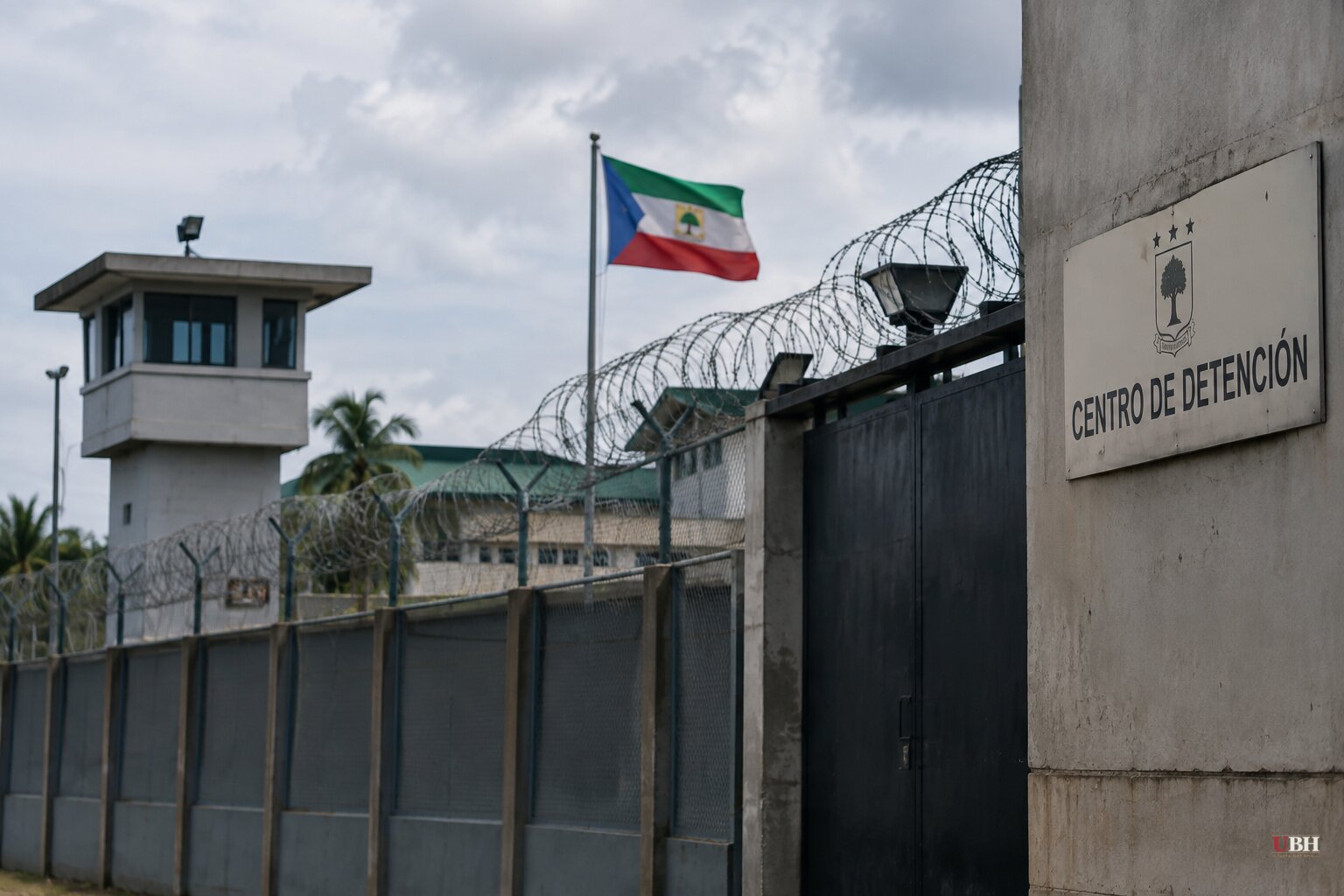
Ahmed Soliman grew up in Phoenix after his family fled Egypt when he was four years old. He spent more than four months detained at a decommissioned hotel in Malabo, Equatorial Guinea, after being deported there by the U.S. under a third-country removal agreement. On Sept. 11, according to Reuters, he was arrested. As of Sept. 18, his lawyer says he still hasn't been allowed to see counsel.
Soliman's attorney, Kate O'Donnell of the Tucson firm Green Evans-Schroeder, told the Arizona Daily Star the arrest is retaliation. "This is the latest thing they have done to try to silence him," she said. Soliman had told the paper that he and other deportees were repeatedly threatened at gunpoint, most recently on Sept. 5, and that video of security forces pulling guns on migrants at the hotel had circulated publicly.
According to Reuters, Soliman is being held at the La Luna gendarmerie station in Malabo, a facility Amnesty International says has previously been used to detain human rights activists. He and another deportee, Samson Birhane, were accused of breaking a mirror in an elevator. His lawyer told Reuters that charge is a pretext. "We are certain that it was a retaliation for Ahmed speaking out and the videos leaked," the lawyer said.
Amnesty International said in a statement that police covered both men's heads with a bag and beat them in the head, back and ribs during the arrest, and is demanding their immediate release or formal charges. Equatorial Guinea's government spokesman and its embassy in Washington have not responded to requests for comment from Reuters or the Star.
A Pattern Beyond One Country
Soliman's case is not isolated. Under the third-country deportation program, ICE has sent people the U.S. cannot legally deport to their home countries because an immigration judge granted them protection from persecution or torture there to nations they have no connection to at all.
CBS News traveled to Monrovia, Liberia, and interviewed deportees housed in a three-story hotel in a remote coastal area. None were Liberian, and several weren't even from Africa. Honduran deportee Elvis Rodriguez Venturas, who worked construction in Texas and has four children including two U.S. citizens, told CBS he'd never heard of Liberia before landing there in August. "I feel far away, on the other side of the world," he said. Colombian deportee Arin Garcia Yepes said the same. Brazilian deportee Paola Ferreira Dos Santos, 21, said she learned her destination only when the plane landed Aug. 20: "They said, 'Welcome to Liberia. You're in Africa.'" CBS reported most interviewed had won legal protections in U.S. immigration court barring their return to their home countries.
An Afghan woman named Farzana was deported to the Central African Republic on Aug. 28, according to the International Business Times UK, even as her lawyers had an emergency motion pending in federal court to block her removal. She entered the U.S. in May 2024 through the CBP One app after her fiancé, who assisted the U.S. mission in Afghanistan, applied for a Special Immigrant Visa. She was diagnosed this week with Plasmodium falciparum, the deadliest form of malaria. The World Bank reported in 2023 that 70% of the Central African Republic's population lives in extreme poverty and 90% lack electricity. "They kept us like animal[s]," Farzana said of her U.S. detention. Shawn VanDiver, president of the advocacy group AfghanEvac, said he's tracked roughly 20 Afghan cases tied to her flight.
The Administration's Case, and What's Actually Disputed
The Trump administration's position, as reported by Reuters, is that these deals are lawful and that deportations comply with U.S. immigration law. An ICE memorandum from July 2025 states removals can proceed without additional procedures once Washington receives "credible diplomatic assurances" that a deportee won't be persecuted or tortured in the receiving country. The underlying enforcement problem is genuine: if someone can't be sent home and won't leave voluntarily, the government has to put them somewhere.
But the assurances are only as good as the country giving them. Equatorial Guinea has been ruled since a 1979 coup by Teodoro Obiang Nguema Mbasogo, and the State Department's own human rights reports have repeatedly flagged the regime's use of torture and arbitrary detention. If a diplomatic assurance from that government is the only safeguard standing between a deportee and a beating, that assurance is worth exactly what Malabo decides to honor on a given day, which per Amnesty's account of Soliman's arrest may not be much.
Democratic Rep. Adelita Grijalva of Arizona, where Soliman spent most of his life, told Reuters the U.S. bears responsibility regardless of legal technicalities. "Our country is responsible for sending people out this way, period," she said. "We should make sure that where they're going is somewhere safe. Just because a country accepts somebody" doesn't mean it's actually safe, she argued.
No U.S. investigation into Soliman's arrest or the hotel incidents has been announced. Equatorial Guinea's government has not filed formal charges against Soliman as of Sept. 18, according to his attorneys, and has not publicly responded to Amnesty's allegations. Whether Washington presses Malabo for access to Soliman, or continues treating the third-country arrangement as a diplomatic success, is the open question hanging over the next round of deportation flights.
Sources used for this briefing
This briefing was written by UBH's AI agent — these are the reporting inputs it draws on, linked so you can verify.


