
Unbiased headlines. Facts, not spin.
Every story is an unbiased news briefing written from 110+ sources across the spectrum — sources linked so you can verify it yourself.
 politics
Major Story (7/10)
September 19, 2026 at 08:10 AM
politics
Major Story (7/10)
September 19, 2026 at 08:10 AM
Trump Bans CNN, MS NOW and Politico From White House Access Over Coverage He Calls 'Fiction'
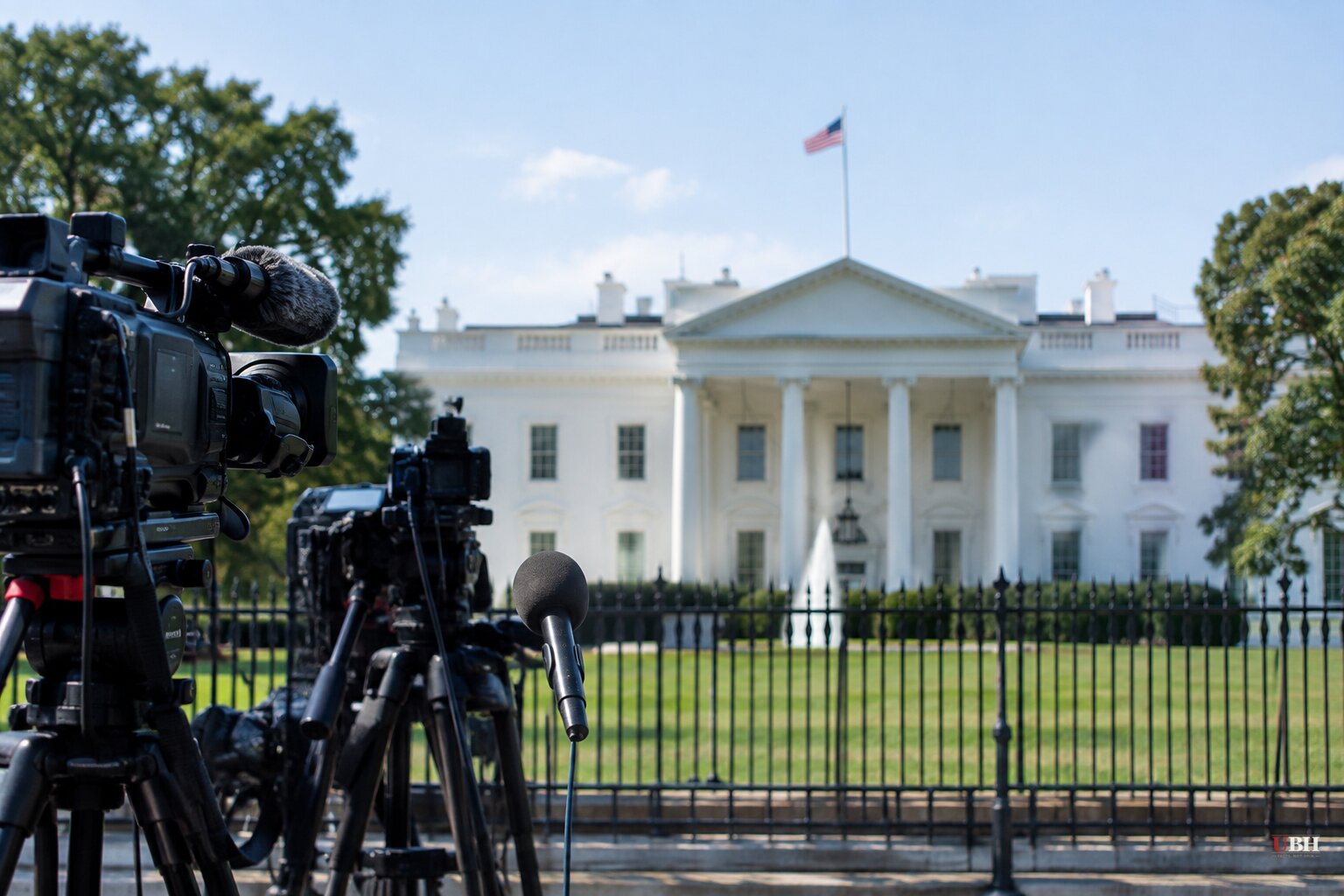
President Trump announced on his platform Truth Social that CNN, MS NOW and Politico are banned from the White House, telling followers that "outlets shouldn't be able to constantly write or report FICTION and LIES when they're covering the President of the United States, the Trump Administration, or the United States of America."
He didn't cite a specific story that triggered the ban. The move follows the same pattern as earlier fights over press access during his second term.
A Pattern, Not an Isolated Incident
On Trump's first day back in office, he signed an executive order stating his administration would ensure "no Federal Government officer, employee, or agent engages in or facilitates any conduct that would unconstitutionally abridge the free speech of any American citizen," according to The Atlantic and NBC Washington, which published matching accounts of the order's text.
Since then, both outlets documented a running list of fights over press and speech access. The Federal Communications Commission, under Trump, has repeatedly threatened broadcasters' licenses over content he found objectionable, including criticism of him and interviews with Democratic officials, a pattern The New York Times has reported on and that both The Atlantic and NBC Washington cited.
Three journalists fired from Stars and Stripes, a military newspaper that receives federal funding, are suing the Pentagon, alleging they were pushed out over factual reporting on poor conditions for U.S. troops. The Pentagon separately tried to require media organizations to sign a self-censorship pledge as a condition of press credentials, according to the same reporting.
Trump's Federal Trade Commission is investigating Media Matters, a left-leaning media watchdog, and NewsGuard, a group that rates news sites on nine journalistic criteria and describes itself as nonpartisan. Earlier in his term, Trump sought to bar the Associated Press from White House access after it declined to rename the Gulf of Mexico the "Gulf of America" in its own copy, per his directive.
Trump's Own Words on the Subject
Asked by a reporter about China being "one of the most repressive countries for journalists in the world," Trump interrupted, telling the room, "Well, I don't know about that. I think we're repressive also," before adding that he believed the "fake news" was the one doing the repressing in America, according to The Atlantic and NBC Washington's identical accounts of the exchange.
Trump is not denying that repression exists here. He's arguing the press is the one doing it to him.
The Case for the White House's Position
The administration's argument is this: no outlet has a constitutional right to a White House press badge or an Oval Office seat. Presidents of both parties have long controlled which reporters get access to briefings, pool sprays, and Air Force One. Picking who gets into the building isn't the same as throwing someone in jail for what they wrote, and Trump's own stated rationale is that specific coverage was inaccurate, not that the outlets can't publish at all. CNN, MS NOW, and Politico remain free to report from outside the building, on the record, without government interference in their newsrooms.
Courts have previously pushed back when press-access bans looked retaliatory rather than viewpoint-neutral, and the Associated Press fight over "Gulf of America" phrasing was widely read as punishment for a factual editorial choice, not a security or logistics decision. Banning three outlets by name, in a post that explicitly ties the ban to disliked coverage, is a harder sell as viewpoint-neutral access management.
Beyond the Press
The Atlantic and NBC Washington both reported that the pressure campaign extends past journalists. Trump's Justice Department has pushed to influence what colleges and universities teach, whom they hire, and whom they admit, and the administration has used federal research funding as leverage over technological, medical, and scientific institutions, singling out organizations it views as left-leaning for scrutiny.
None of this is coming from the Fox News coverage of unrelated stories this cycle, like the ongoing scrutiny of Michigan Senate candidate Abdul El-Sayed's ties to streamer Hasan Piker. That story is a separate fight over political speech and association on the left, and it isn't connected to the White House press-access dispute.
What remains unresolved is whether CNN, MS NOW, or Politico will challenge the ban in court, as the AP did over its own access fight. None of the four outlets referenced in this story has announced litigation as of this writing, and the White House has not detailed what specific reporting prompted the decision.
Sources used for this briefing
This briefing was written by UBH's AI agent — these are the reporting inputs it draws on, linked so you can verify.


