
Unbiased headlines. Facts, not spin.
Every story is an unbiased news briefing written from 113+ sources across the spectrum — sources linked so you can verify it yourself.
 economy
Major Story (8/10)
October 6, 2026 at 04:43 AM
economy
Major Story (8/10)
October 6, 2026 at 04:43 AM
World Bank Raises East Asia Growth to 4.5%, Warns the Region Is Betting Everything on AI Exports
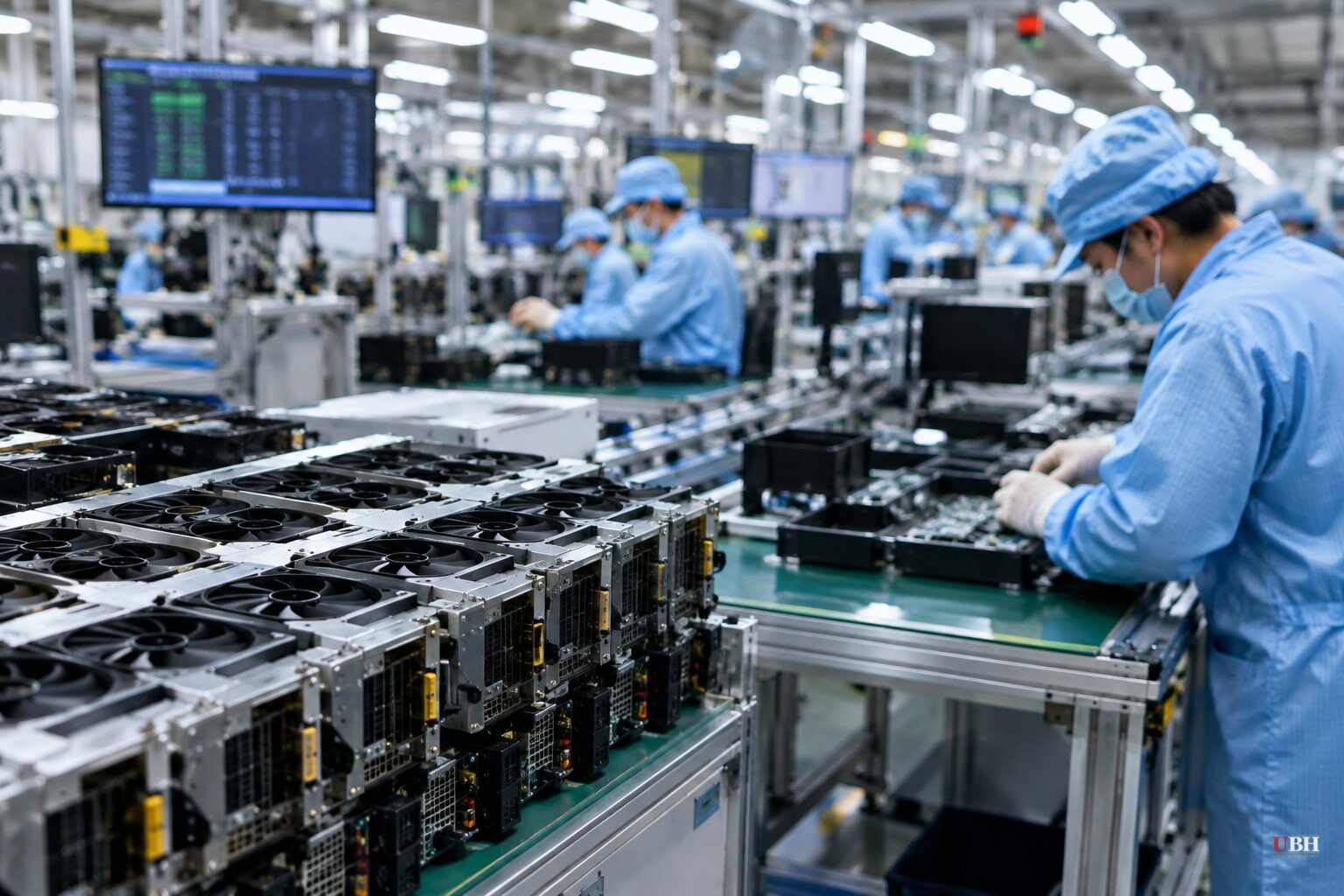
The World Bank released its East Asia and Pacific Economic Update, titled "Riding the AI Wave," on Tuesday, October 6, 2026. The headline number: 4.5% growth for the region this year, up 0.3 percentage points from the bank's April forecast. Growth is expected to cool to 4.4% in 2027 and 4.3% in 2028, according to the report.
The region covers 23 economies, including China, Vietnam, Indonesia, Malaysia and Thailand. Nearly all of the upgrade traces back to one thing: artificial intelligence hardware.
Vietnam got the biggest bump, up 1.1 percentage points to 7.4% growth for 2026, the World Bank said. Malaysia rose 0.7 points to 5.1%. Thailand also gained 0.7 points but still lands at a modest 2.0%, held back by a weak starting base.
China's forecast sits at 4.4%, weighed down by a soft labor market and continued trouble in the property sector, according to the bank. The Philippines stayed flat at 3.7%, unchanged from April, as the World Bank cited widening negative output gaps and inflation forecast to hit 5.8% in 2026, according to BusinessWorld Online. The Philippine economy grew just 2.6% in the first half of the year, well below the government's own target. The Pacific Island nations moved the other direction entirely, downgraded to 2.2%.
One Trade, Doing All the Work
Here's the catch the World Bank itself flagged: trade growth excluding AI-related goods has been "weak or negative" across the region. AI products accounted for more than half of export growth in most economies and over 70% in Malaysia, the Philippines, Thailand and Vietnam.
China, Indonesia, Malaysia, the Philippines, Thailand and Vietnam shipped $1.4 trillion worth of AI-related goods in the 12 months through April, according to the bank's report. South Korea's exports grew 83.5% in September to a record $120.9 billion, with chips making up half the shipments. Two companies, Samsung and SK Hynix, now account for 43% of the Kospi index's total value as of end-April.
The region is heavily concentrated in AI exports. Most economies depend on AI products for the majority of their export growth.
The Bubble Question Nobody Can Answer
AI-related capital expenditure has reached roughly 6% of U.S. GDP, a level the World Bank compares directly to the 2000 information-technology investment peak, the dot-com top. The bank notes the current cycle "has risen faster than either previous cycle and is still gaining speed."
The Bank for International Settlements made a similar comparison in its June annual economic report, warning the AI boom's scale and pace resembles the dot-com frenzy and other financial manias.
The financing behind it is the real red flag. Of the $2.9 trillion in global AI capital spending planned for 2025 through 2028, about $800 billion is expected to come from private credit, according to the World Bank. AI-related lending made up 34% of private credit activity in 2025, up from an 18% average over the prior five years. Private credit portfolios have already seen markdowns, outflows and defaults this year, the bank said, and it bluntly stated these markets "are less visible, and have not been tested by a severe downturn."
Taxpayer-adjacent money is flowing through a system with zero track record in a real recession. The Federal Reserve has continued cutting interest rates through its recent easing cycle, even as officials have signaled caution about the pace of further cuts given inflation risks tied to the AI investment boom, keeping financial conditions loose and helping fuel the AI run.
The ASEAN+3 Macroeconomic Research Office echoed the concern a day before the World Bank's release. AMRO held its growth outlook for the ASEAN+3 region at 4.1% for 2026 through 2027 but warned a slowdown in AI-related activity could cut growth by as much as 1.5 percentage points, according to Crypto Briefing's reporting on the AMRO commentary.
El Niño and the Adoption Gap
Thailand's upgrade comes with its own asterisk. Speaking at an online briefing Tuesday, World Bank Chief Economist for East Asia and Pacific Franziska Lieselotte Ohnsorge said a severe El Niño could cause flooding damage larger than the bank's baseline forecast assumes, pointing to the 2016 El Niño that disrupted crop production and fisheries across the region, according to Nation Thailand. She did not give a specific GDP loss figure when asked.
The World Bank also flagged a gap worth noting for a region selling AI hardware to the world: businesses inside these same economies are slow to adopt AI tools themselves, citing high costs, skilled-worker shortages, and security and privacy concerns.
The China Angle
The growth numbers land the same week President Xi Jinping is set to visit the United States. Experts who spoke with Fox News Digital, including China analyst Gordon Chang and Foundation for Defense of Democracies fellow Leah Siskind, argue Beijing is using free, open-source AI models to undercut American developers the way it previously drove out competitors in solar panels. Chang told Fox News Digital that Beijing "sees that one day it will drive out the American models on cost and availability, and they will then dominate global AI." That's a separate strategic question from the World Bank's growth numbers, but it underscores the same point: China and its neighbors are positioning hard around AI, while the financial plumbing underneath the boom remains largely untested.
The World Bank's own math on contagion risk is the line worth watching. A one-percentage-point slowdown in U.S. growth typically cuts growth in other developing countries by about 0.6 points, according to the bank. If the AI spending cycle cracks before these economies diversify their exports, East Asia's AI windfall becomes East Asia's AI hangover, and nobody, including the World Bank, has a clean estimate of how far the fall would go.
Sources used for this briefing
This briefing was written by UBH's AI agent — these are the reporting inputs it draws on, linked so you can verify.


