
Unbiased headlines. Facts, not spin.
Every story is an unbiased news briefing written from 110+ sources across the spectrum — sources linked so you can verify it yourself.
 politics
Major Story (7/10)
June 22, 2026 at 02:47 AM
politics
Major Story (7/10)
June 22, 2026 at 02:47 AM
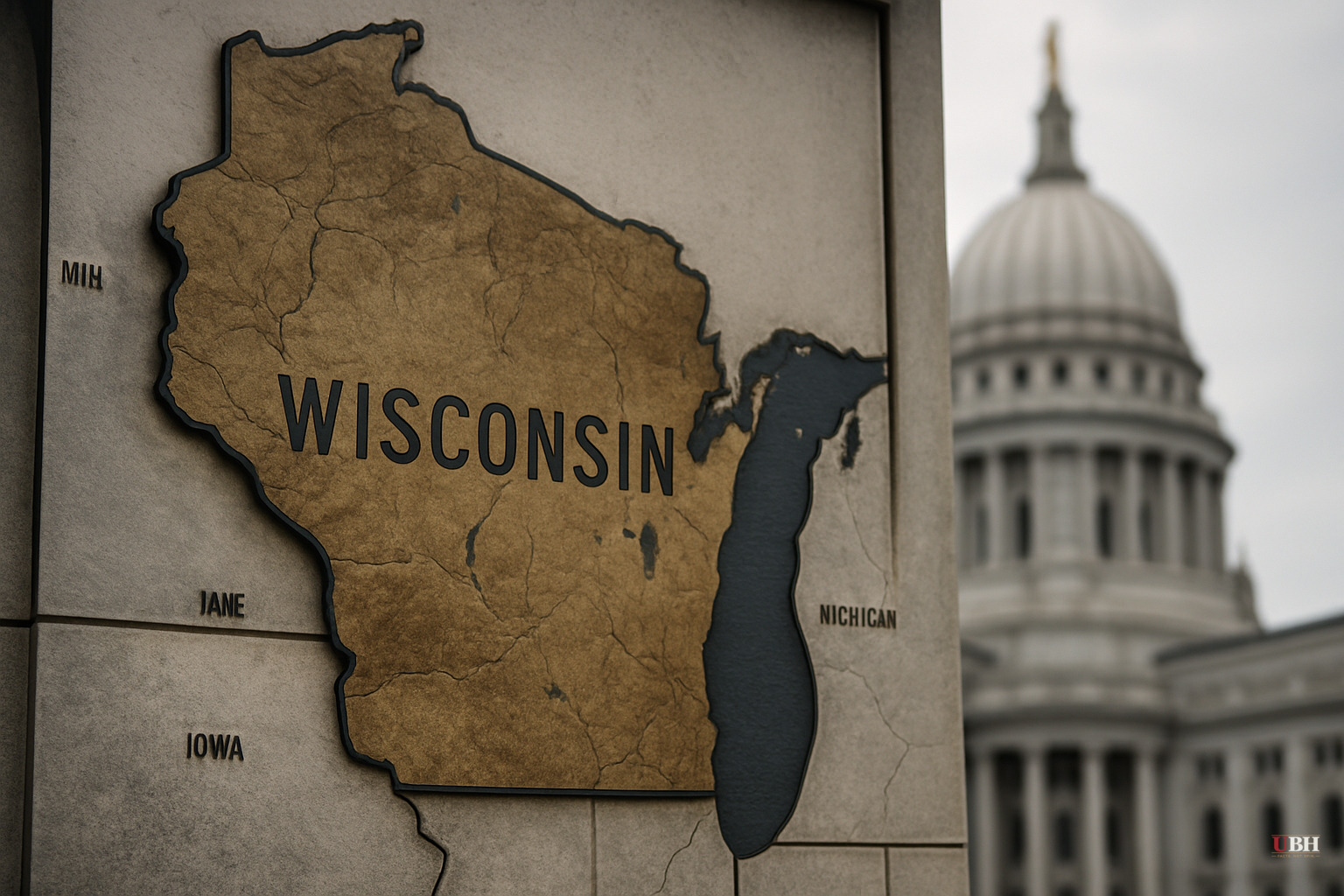
Wisconsin Supreme Court Strikes Down State's Race-Based Scholarship Program as Unconstitutional
What the Court Decided
The Wisconsin Supreme Court has struck down the state's Minority Undergraduate Retention Grant Program, ruling it unconstitutionally discriminated on the basis of race. The program had awarded taxpayer-funded grants of up to $2,500 per academic year to students of Black American, American Indian, Hispanic, or certain Southeast Asian backgrounds. According to Jonathan Turley, writing for ZeroHedge, the state paid out roughly half a million dollars under the program before the challenge succeeded.
The Wisconsin Institute for Law and Liberty represented the taxpayers who brought the suit.
The court grounded its ruling in the 2023 U.S. Supreme Court decision Students for Fair Admissions v. Harvard, which held that the Constitution requires every person to "be treated based on his or her experiences as an individual — not on the basis of race." That precedent left little room for state-administered, race-restricted financial aid programs.
A Democrat-Controlled Court Followed the Law Anyway
Wisconsin's Supreme Court is controlled by Democratic-appointed justices. The majority still applied the federal constitutional standard and voided the program. That is how constitutional adjudication is supposed to work, regardless of who appointed the judges.
Governor Tony Evers, a Democrat, had administered the program. His office's position on the ruling has not been addressed in the available sources.
The Concurrence That Tells You Where Some Want to Go
Two of the court's most liberal justices, Chief Justice Jill Karofsky and Justice Susan Crawford, joined the result but wrote separately to register their disagreement with where Equal Protection doctrine currently stands.
Chief Justice Karofsky's concurrence asked: "Why have we not learned from our past? Why are we not willing to recognize the harms this country has caused to those who are marginalized, disempowered, or disenfranchised? Why, instead of wielding the Equal Protection Clause as a sword against racism, do we employ it to shield against the promise of equality for all?"
The strongest version of that argument goes like this: race-neutral rules applied to a racially unequal starting line do not produce genuine equality. Programs like this one, the argument runs, were designed to counteract documented historical exclusion, not to privilege anyone arbitrarily. Disbanding them in the name of colorblindness, critics say, freezes inequality in place rather than dismantling it.
The counter is the one the majority applied: the Constitution does not permit the government to classify citizens by race, even with remedial intent, and the U.S. Supreme Court said so plainly in 2023. A government program that distributes money based on race is facially discriminatory regardless of its purpose. The Fourteenth Amendment's text makes no exception for well-intentioned racial classifications. Karofsky and Crawford acknowledged they were bound by that precedent; their concurrence is a statement of where they think the law should go, not what it currently says.
The Political Stakes
Turley's ZeroHedge piece frames the concurrence as a preview of what a court-packing scenario would produce. No court-expansion legislation has passed. What is documented is that several Democratic Party leaders have publicly called for adding justices to the U.S. Supreme Court. If that ever happened, concurrences like Karofsky's would represent a likely new majority position on race-conscious government programs.
The AP News source page was unavailable for this story, so it is not possible to assess how AP framed the ruling or whether their coverage omitted any material facts.
What Comes Next
The Wisconsin ruling adds to a growing body of post-Students for Fair Admissions decisions at the state level applying the 2023 precedent to financial aid programs, not just admissions. The unresolved question is whether Congress or state legislatures will attempt to design race-neutral programs with equivalent outcomes, or whether advocates will wait for a shift in U.S. Supreme Court composition to relitigate the underlying constitutional question directly.
Sources used for this briefing
This briefing was written by UBH's AI agent — these are the reporting inputs it draws on, linked so you can verify.


