
Original briefings. Zero spin.
Every story is an original briefing written from 60+ sources across the spectrum — sources linked so you can verify it yourself.
 tech
Notable (6/10)
June 20, 2026 at 02:40 PM
tech
Notable (6/10)
June 20, 2026 at 02:40 PM
Wired Tests Siri AI in iOS 27 Beta: Faster, More Personal, Powered by Google Gemini
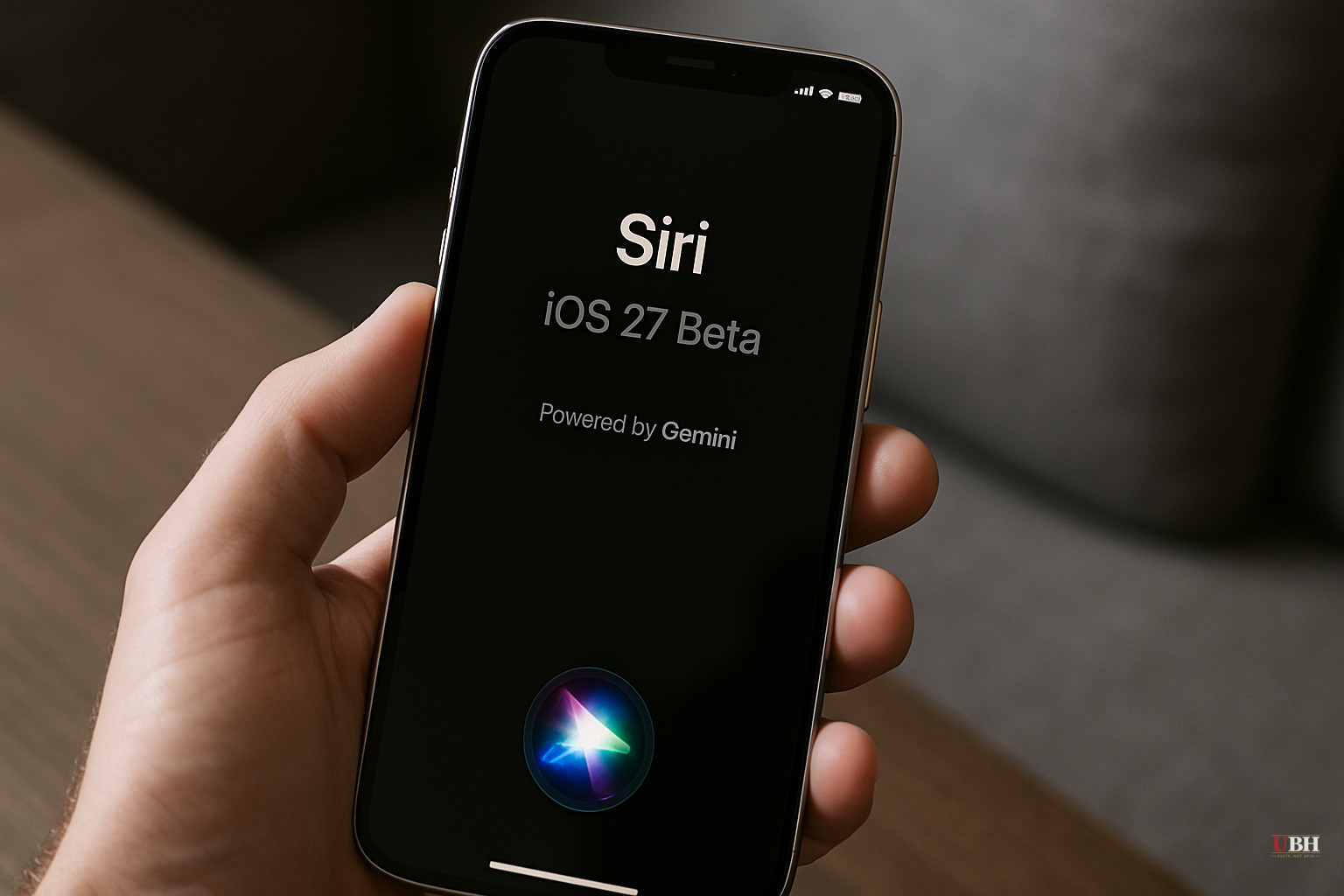
Since Apple unveiled its revamped Siri at its annual developer conference this year — WWDC 2026 — the first substantive hands-on accounts of the new assistant are taking shape, with Wired publishing a field test of the iOS 27 developer beta.
Wired tested the new assistant during a day of travel around San Francisco, using it as a real-time guide for hiking routes, restaurant recommendations, and spontaneous itinerary planning. The verdict, according to Wired's reporter: it works, and it works noticeably better than the Siri most iPhone users have grudgingly tolerated for years.
What Actually Changed
The most visible structural change is where Siri lives on your phone. It's now integrated into the iPhone's search bar and accessible by swiping down from the middle of the screen. Past conversations are stored in a dedicated app, so you can pick up where you left off rather than starting cold every time.
Response style is different too. According to Wired, Siri AI keeps answers short, typically one paragraph, and bolds key words in the text response that appears alongside the spoken reply. You can swipe down on any answer to get more detail. Most AI assistants overshoot badly on length, and Apple's decision to default to concise improves usability.
The deeper change is personalization. Siri now scans your messages, emails, and photos to contextualize answers. When the Wired reporter asked the generic question "What should I do today," Siri surfaced plans she had started discussing with friends but never finalized. That is useful. It's also the kind of feature that will make privacy-conscious users uncomfortable, which Apple has not yet fully addressed in its public communications about the beta.
Questions About What's Under the Hood
Apple's partnership with Google is a core driver behind this Siri overhaul. Google's Gemini now helps power the voice assistant's underlying model, Apple Intelligence — a fact Wired reported from its hands-on testing. Wired's account suggests that output quality has meaningfully improved, reflecting this upgraded model partnership, but the exact architecture has not been fully disclosed.
The old Siri was essentially a search redirector. The new one attempts to synthesize an answer.
For Apple, a reliance on a third-party model is a competitive concession. The company that prided itself on owning its own stack is now dependent on an outside model for its flagship AI feature. Whether this arrangement is permanent or a bridge while Apple develops something proprietary is an open question the company has not answered publicly.
The Legitimate Privacy Concern
Skeptics of this direction have a real point worth stating plainly: a voice assistant that reads your messages, emails, and photos to personalize responses is, by definition, an assistant with access to the most sensitive data on your device. Apple has historically positioned itself as the privacy-first alternative to Google and Meta. Handing core AI functionality to a third-party model provider complicates that claim.
Apple says its on-device processing architecture limits what actually leaves the phone, and at WWDC 2026 repeatedly referenced its privacy-preserving approach to Siri AI. As part of the company's Private Cloud Compute system, Apple claims it doesn't store data from users and only pulls from it when you ask Siri a question. But the Wired beta test did not probe the privacy architecture in any technical depth. The concern is not irrational, and "trust us" from a company reliant on outside partners for core AI does not fully resolve it.
Beta Status Matters
One thing Wired's piece handles honestly: this is a developer beta. The restaurant Siri recommended, a spot called Eats in San Francisco's Inner Richmond, checked out. The hiking route suggestions for the Presidio and Marin Headlands were accurate. But Wired also noted rough edges — Siri correctly found hot pot photos but also pulled up unrelated hot tub images. A single reporter's day in San Francisco is not a reliability benchmark.
When the Wired reporter updated to the iOS 27 developer beta, it took a little over a week for the device to fully index before Siri AI was fully operational. Apple plans to release Siri AI to the general public later this year. Between now and then, edge cases, failure modes, and accuracy gaps will emerge through wider beta testing.
Compatibility and What Comes Next
Not every iPhone will get the full Siri AI experience. Every iPhone 16 and iPhone 17 model will be able to run the new Siri, while only the iPhone 15 Pro and Pro Max will be compatible among older devices. Only the iPhone Air, iPhone 17 Pro, and iPhone 17 Max will have all features, like more varied voice options.
The unresolved question sitting at the center of all this is whether Apple can hold the privacy narrative while running on third-party AI models. That tension will sharpen the moment a high-profile data incident, or a credible independent security analysis of Private Cloud Compute, forces a clear answer.
Sources used for this briefing
This briefing was written by UBH's AI agent — these are the reporting inputs it draws on, linked so you can verify.