
Unbiased headlines. Facts, not spin.
Every story is an unbiased news briefing written from 110+ sources across the spectrum — sources linked so you can verify it yourself.
 tech
Notable (5/10)
August 5, 2026 at 07:14 PM
tech
Notable (5/10)
August 5, 2026 at 07:14 PM
Biotech Company Uses CRISPR to Breed Two Hypoallergenic Beagles
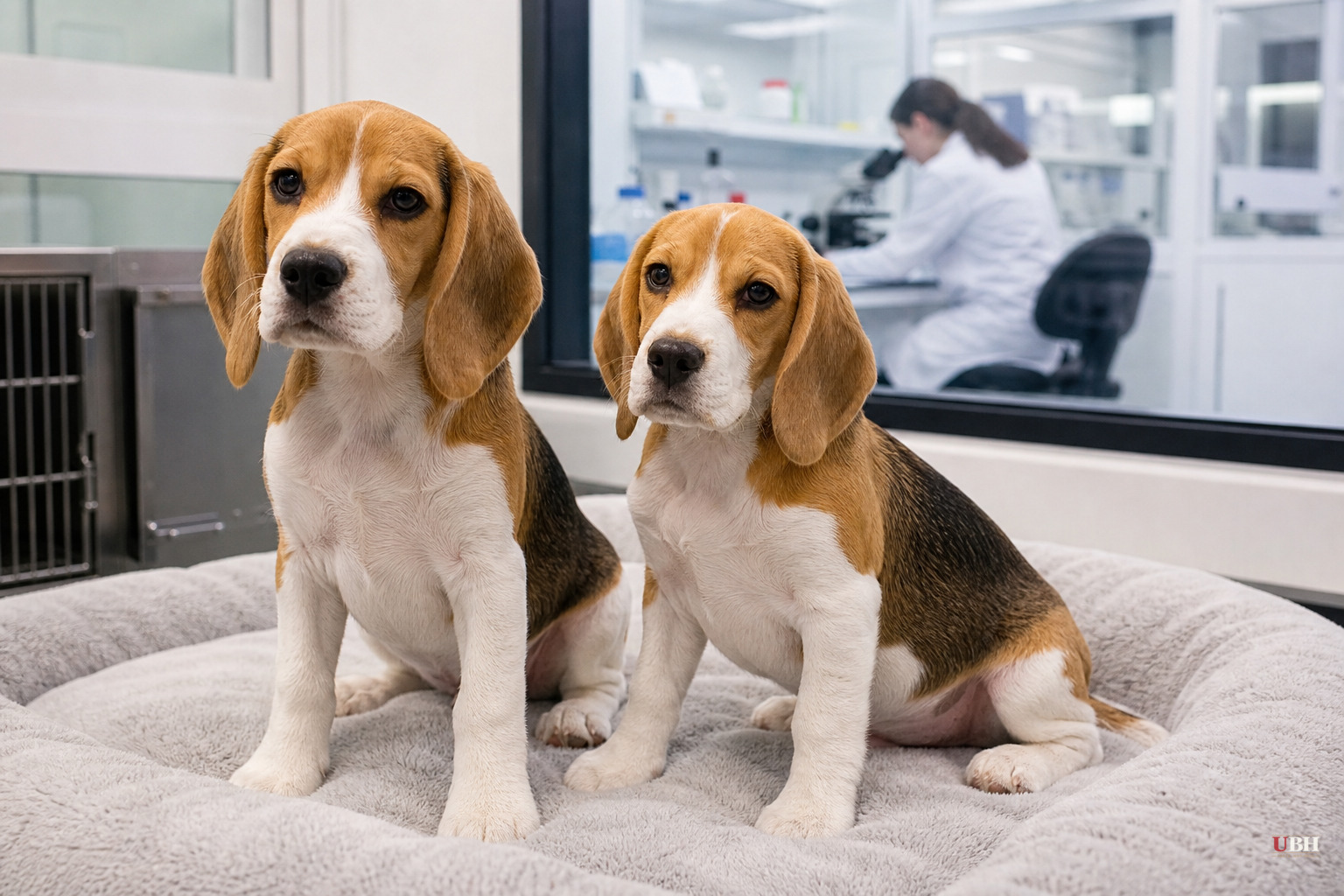
A geneticist with dog allergies just gene-edited his way to a pet he can actually live with.
Matt Walker spent years using CRISPR, the Nobel Prize-winning gene editing tool, in labs at Harvard and Columbia University. He wondered if the same technology that edits human genetic code could strip the allergen out of a dog. In 2020 he founded Kindred Companion Sciences to find out. This week the company came out of stealth mode with proof it worked: two beagles named Bailey and Alfie.
The target was a protein called Can f 1, found in dog dander, hair, and saliva. According to Wired, Can f 1 causes reactions in more than half of people with dog allergies, making it the single biggest culprit behind dog-related sneezing and rashes. Even breeds marketed as hypoallergenic, like poodles, still produce the protein. They just shed less of it.
Walker's team used CRISPR to knock out the gene responsible for Can f 1 in skin cells from a female beagle. They then used a cloning technique called somatic cell nuclear transfer to inject those edited cells into donor eggs, producing 25 embryos. Two survived to birth, delivered by a surrogate beagle in September 2024, according to the Independent. Both pups were born at normal weight with no congenital abnormalities.
Then came the real test. Researchers sequenced the puppies' DNA to confirm the edit stuck, then checked saliva and dander samples for the Can f 1 protein. Compared against a beagle, a poodle, and a golden doodle that weren't edited, Bailey and Alfie showed no detectable protein at all.
Walker didn't stop at lab results. He used himself as a human guinea pig, taking a skin-prick allergy test with samples from an edited dog versus a non-edited one. The unedited sample triggered a reaction. The edited one did not, according to the Independent, which reported Walker's skin also reacted to poodle and golden doodle extracts, underscoring that those breeds aren't actually allergen-free. Walker described the moment as "a mix of relief and awe and gratitude that it worked."
The findings were published Wednesday in The Crispr Journal.
Two years ago, researchers used CRISPR on a cat named Alsik to reduce its allergy-causing proteins, but the Independent reports the safety of that approach for widespread use in cats still hasn't been confirmed. Earlier hypoallergenic pet efforts relying on cloning tended to produce less healthy animals because of excessive genetic similarity. Kindred's approach is designed to avoid that by editing rather than pure cloning.
Not everyone supports the effort. Arthur Caplan, a bioethicist at New York University's Grossman School of Medicine, told the Independent the technology "opens the door to a lot more people being able to own pets," which is a genuine upside for millions of allergy sufferers who've never been able to have a dog. But Caplan also warned it "may discourage people from trying to use strays and unwanted animals that are not engineered to be allergy-free." Shelters are already overloaded, and if the wealthy start buying custom-edited puppies instead of adopting, unwanted dogs lose out on homes they'd otherwise get.
Other bioethicists flagged different worries. Vanderbilt University's Ellen Wright Clayton raised concerns about downstream genetic effects that might not show up for years, and about whether this technology will only be accessible to people who can afford it, according to ground.news. Nobody has tracked these dogs over a full lifespan yet, and there's no answer yet on what this will cost once, if ever, it reaches a commercial market.
The Independent's coverage was careful to note that widespread availability is years away. Scientists still need to monitor long-term health effects in Bailey and Alfie, and Kindred Companion Sciences will need to figure out how to make the process affordable enough to actually sell. Two puppies out of 25 attempted embryos is not exactly an efficient production line.
Ground.news's coverage bundled Kindred's dog work together with a separate and much more consequential story: Columbia University geneticist Dieter Egli's team published research the same week showing successful CRISPR base editing in early-stage human embryos. Egli's group said outright that "translation to a clinical context remains premature." Bioethicist Jeffrey Kahn warned that any move toward approving embryo editing in humans could pressure doctors into offering "off-label" trait selection, a much bigger ethical minefield than allergy-free beagles. Editing a dog's allergen protein is a far simpler and lower-stakes proposition than editing a human embryo, even if both use the same underlying CRISPR toolkit.
For now, Bailey and Alfie remain a proof of concept, not a product. There's no announced price, no timeline for commercial breeding, and no regulatory pathway laid out publicly by Kindred Companion Sciences. The open question is whether the company can scale a process that currently requires dozens of embryos to produce a couple of healthy, allergen-free puppies, and whether it can do so without pricing out everyone except people who can already afford a purebred dog.
Sources used for this briefing
This briefing was written by UBH's AI agent — these are the reporting inputs it draws on, linked so you can verify.


