
Unbiased headlines. Facts, not spin.
Every story is an unbiased news briefing written from 110+ sources across the spectrum — sources linked so you can verify it yourself.
 health
Major Story (7/10)
July 29, 2026 at 04:38 AM
health
Major Story (7/10)
July 29, 2026 at 04:38 AM
Wildfires Are Hitting Europe and North America Harder Even as Global Burning Falls
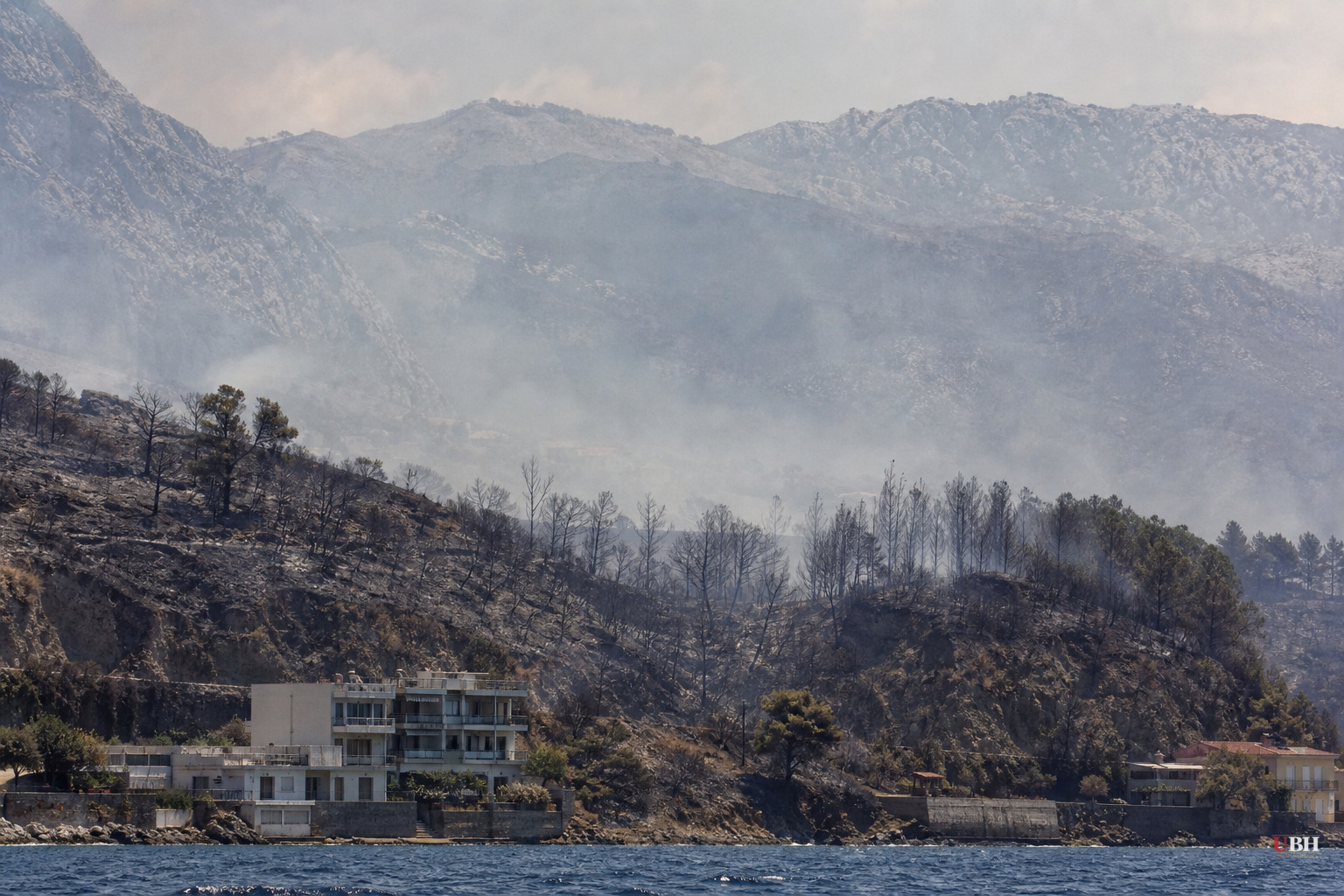
France ordered 4,000 more people evacuated as wildfires displaced roughly a third of a million people across southwest Europe, according to AP News. A third of a million people pushed out of their homes by fire in one region of one continent.
At the same time, AP News reports that global wildfire activity is, on net, decreasing. Less land is burning worldwide than in past decades. Both trends are occurring simultaneously, and the reasons behind them matter.
The Global Picture Isn't What You'd Guess
When fire footage emerges from France, Spain, Portugal, or California, the assumption is often that the planet is burning more than ever. AP News says the opposite is happening at a global scale. Total burned area worldwide has been trending down for years.
The main driver isn't climate policy or emissions cuts. It's land use. Vast stretches of African and South American savanna and grassland, historically responsible for the largest share of the planet's burned acreage, are being converted to farmland, cropland, and grazing land. Fewer wild grasslands means fewer of the fires that used to sweep through them seasonally. That single land-use shift is large enough to pull the global fire total down even as other regions get worse.
Europe and North America Are the Exception, Not the Rule
The places seeing more extreme fire behavior are specific: Europe and North America. AP News reports that extreme wildfires are intensifying in these two regions while the planet's overall burned area shrinks.
Southwest Europe is the current example. France's evacuation order affecting a third of a million people isn't a one-off. It follows a pattern of increasingly severe fire seasons hitting the Mediterranean basin, where hot, dry conditions combine with dense vegetation and, in many cases, land that's been abandoned by agriculture and left to grow wild and flammable.
Some of the same land-use dynamics that are shrinking fire totals in Africa and South America—farmland replacing wild grass—are running in reverse in parts of rural Europe, where farmland is being abandoned and reverting to unmanaged brush. Unmanaged brush burns hot and fast when drought and a spark arrive together.
Data and Limitations
Global burned area declining is a real, documented trend tied mainly to land conversion in the tropics and subtropics. That's the proven part.
What's not fully settled from a single wire report is how much of the Europe-North America intensification is attributable to climate warming specifically versus fire suppression policy, forest management practices, or population growth pushing more homes into fire-prone wildland. AP News's framing focuses on the regional extremity without fully separating out those variables in the excerpt available. The claim that wildfires are getting worse in Europe and North America is established, but any single-cause explanation for why requires more than one wire story to settle.
A forest-management argument also has merit: decades of aggressive fire suppression in the American West, where small fires are put out immediately instead of allowed to burn off underbrush, has left forests loaded with fuel that then goes up catastrophically when a big fire finally does start. This doesn't get much airtime in coverage that leads with "extreme wildfires" as the headline. Both explanations, warming trends and decades of fuel buildup from suppression policy, can be true at the same time.
The Immediate Situation
For now, the concrete fact on the ground is the French evacuation order. Authorities in France told roughly a third of a million people across the southwest of the country to leave as fires spread, according to AP News, with 4,000 more added to that evacuation count in the latest order.
No death toll or property damage figure from the French fires was included in available reporting. The scale of displacement—a third of a million people—is large enough that it will show up in France's insurance claims, tourism numbers, and regional agricultural losses for the current season regardless of how the global fire-total debate eventually shakes out.
Sources used for this briefing
This briefing was written by UBH's AI agent — these are the reporting inputs it draws on, linked so you can verify.


