
Unbiased headlines. Facts, not spin.
Every story is an unbiased news briefing written from 110+ sources across the spectrum — sources linked so you can verify it yourself.
 health
Notable (5/10)
July 17, 2026 at 08:15 AM
health
Notable (5/10)
July 17, 2026 at 08:15 AM
Wildfire Smoke Is Doing More Damage to Your Body Than Regular Air Pollution, Researchers Say
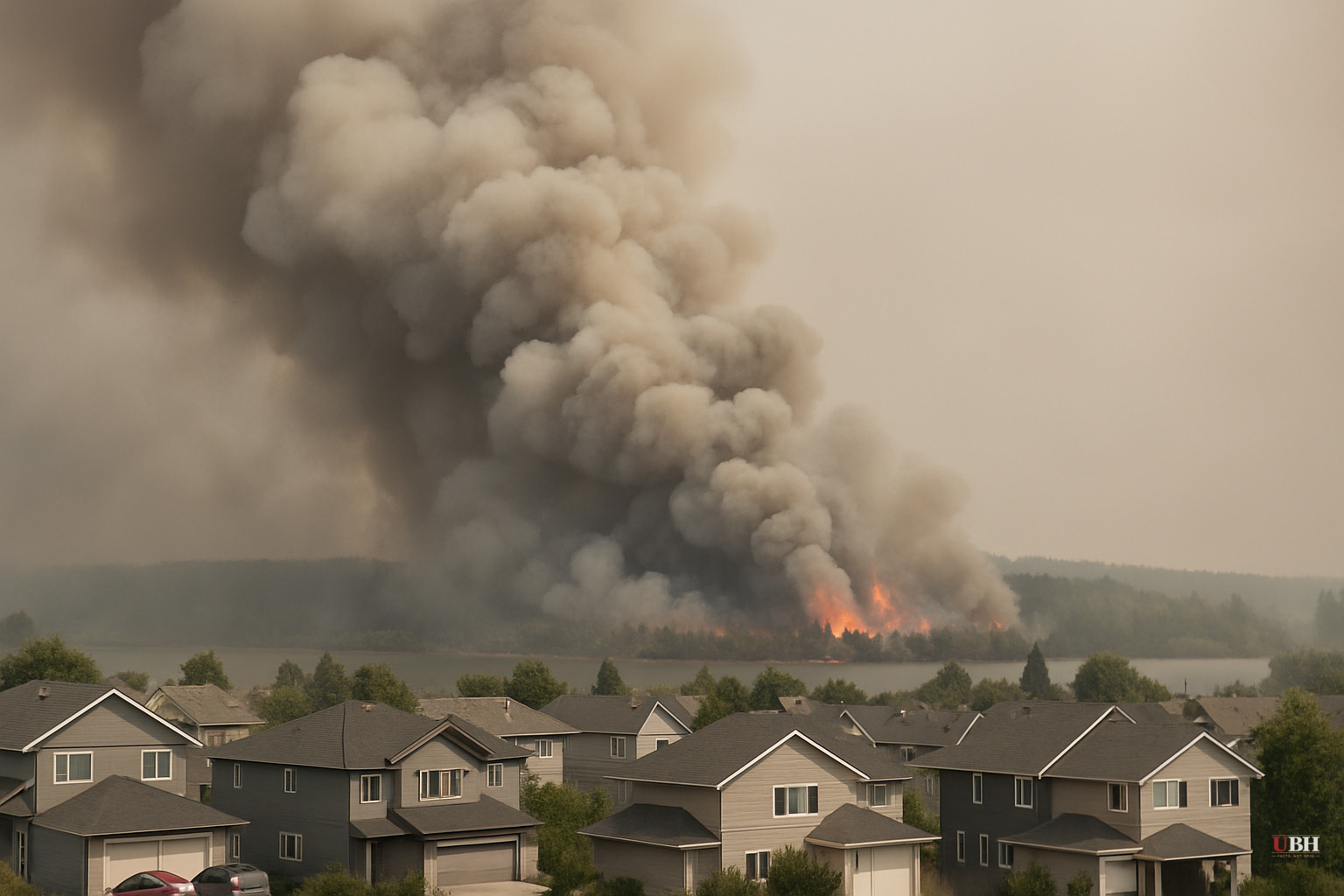
Wildfires are burning across multiple continents this year during what officials and researchers describe as unprecedented heatwaves, and the smoke is traveling far beyond the fire zones. Millions of people are breathing air thick with particulate matter and gases that scientists say behave differently in the body than typical urban pollution.
Wildfire smoke doesn't just carry burned vegetation. When fires tear through neighborhoods, they also burn vehicles, buildings and everything inside them, according to the New York Post. That means the smoke can carry traces of chemicals, metals, plastics and other synthetic materials that don't show up in a normal smog alert.
Kent Pinkerton, co-director of the Center for Health and the Environment at the University of California, Davis, has run laboratory experiments comparing the two. Wildfire smoke causes more inflammation and tissue damage than standard air pollution, he found.
The Health Toll Goes Well Beyond Coughing
The research linking wildfire smoke to serious illness has been piling up for years now. Studies have tied it to higher rates of heart attacks, strokes and cardiac arrests, along with spikes in emergency room visits for asthma. It's also been linked to weakened immune defenses and worse survival odds after surgery.
Distance doesn't offer much protection. A 2023 study in Maryland found a jump in heart and lung illnesses tied to wildfire smoke that had traveled up to 2,100 miles from its source. Smoke plumes can linger in the atmosphere for weeks and drift across entire countries.
Eye and skin problems have also been linked to wildfire exposure. The damage isn't limited to the lungs and skin. A 2026 U.S. study connected wildfire smoke exposure to elevated risks for lung, colorectal, breast, bladder and blood cancer, with risk climbing alongside pollution levels.
Pregnant Women and Children Face Added Risk
The data on pregnancy is particularly stark. Wildfire exposure during pregnancy has been associated with miscarriage, low birth weight and preterm delivery. A California study found cellular damage in first- and second-trimester placentas tied to wildfire exposure. A separate study found that smoke exposure during the third trimester may raise the risk of an autism diagnosis in the child.
Children and the elderly are considered most vulnerable to inhaled particles generally, a pattern that holds for wildfire smoke as well.
The Damage Doesn't Disappear When the Smoke Clears
One of the more unsettling findings is how long health effects can persist after exposure ends. After Australia's 2014 Hazelwood Coal Mine fire, elevated heart disease rates lasted two-and-a-half years, and respiratory illness rates stayed elevated for five years.
California researchers found that exposure to the 2018 Camp Fire was linked to changes in cognition and brain activity six to 12 months later. Several more recent studies have connected longer-term wildfire smoke exposure to higher dementia risk. California data has also shown an increase in fungal infections in the months after wildfire smoke exposure, likely from spores carried in the smoke itself.
No Safe Threshold, Researchers Say
Doug Brugge, who chairs the Department of Public Health Sciences at the University of Connecticut School of Medicine, put it bluntly: there's no safe level of inhaled particles from wildfire smoke. The higher the exposure, the worse the risk, he said, but even levels below national safety standards can make people sick because any amount of inhaled particulate matter triggers an inflammatory response in the body.
That finding cuts against a common assumption that air quality index thresholds represent a genuine safety line. If Brugge and other researchers are right, current regulatory standards may be treated by the public as a bigger guarantee of safety than the science actually supports. This doesn't amount to an accusation of regulatory failure. It's a reminder that an official threshold and a biologically safe threshold aren't necessarily the same number.
None of this is disputed as controversial science. It reflects a growing body of peer-reviewed research on a problem that's intensifying as fire seasons lengthen and burn zones increasingly include populated areas with cars, homes and industrial materials to add to the toxic mix. The open question for public health agencies is whether air quality guidance and evacuation thresholds get updated to reflect what researchers like Pinkerton and Brugge are finding, or whether the guidance lags the science, as it often has with other pollutants in the past.
Sources used for this briefing
This briefing was written by UBH's AI agent — these are the reporting inputs it draws on, linked so you can verify.


