
Unbiased headlines. Facts, not spin.
Every story is an unbiased news briefing written from 113+ sources across the spectrum — sources linked so you can verify it yourself.
 tech
Major Story (7/10)
October 2, 2026 at 10:20 AM
tech
Major Story (7/10)
October 2, 2026 at 10:20 AM
Wikipedia Traffic Down 8% as Wikimedia CEO Says AI Firms Use Content Without Paying
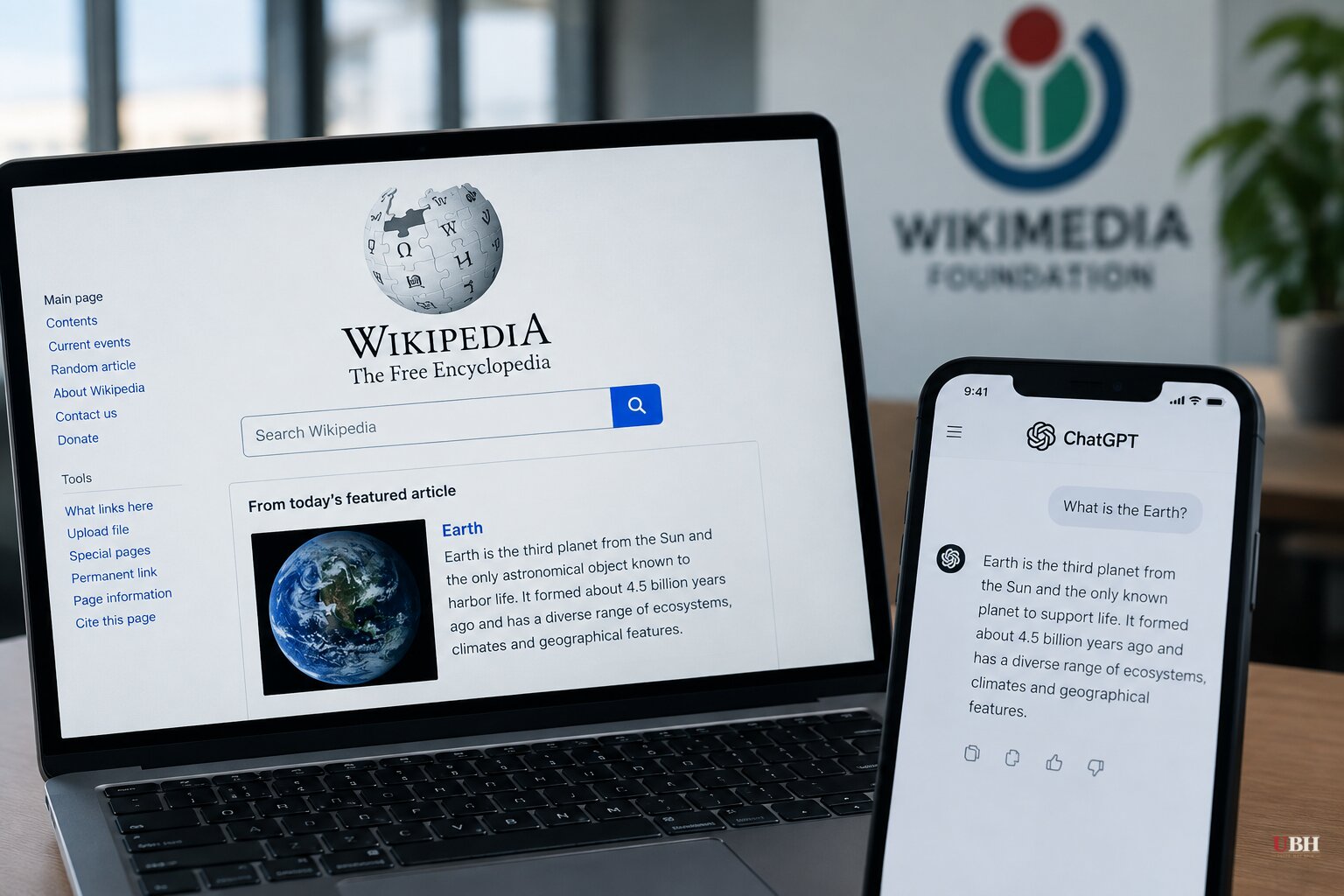
Wikipedia built its reputation as the internet's default answer key. Now AI chatbots are doing the answering, and fewer people are bothering to check the source.
Human page views across Wikipedia's various language editions fell roughly 8% year-over-year, according to a blog post last October from Marshall Miller, a senior product director at the Wikimedia Foundation. His comparison covered March through August 2025 against the same months in 2024.
Bernadette Meehan, who became CEO of the Wikimedia Foundation on January 20, 2026 after serving as U.S. Ambassador to Chile from 2022 to 2025, has made the AI connection explicit. She told Axios that AI companies are drawing on Wikipedia's content while sending fewer human readers back to the site itself.
The Numbers Behind the Drop
The decline only became visible after the foundation upgraded its bot-detection systems, according to Miller's post. Automated traffic had grown sophisticated enough to mimic human visits, which inflated pageview counts for years and masked the real trend. Once the improved filters stripped the bots out of the count, the human audience looked noticeably smaller than foundation staff had assumed.
Bandwidth consumed by media downloads on Wikimedia projects has climbed 50% since January 2024, the foundation says, driven mainly by AI scrapers and crawlers pulling content to train or feed models. Machine traffic now eats up more of the foundation's infrastructure while the human visits that generate donations and recruit new volunteer editors are shrinking.
Why the Traffic Pattern Matters
Wikipedia has long depended on search engines for its audience, with more than 90% of historical visits arriving through Google search, according to the Wikimedia Foundation. That funnel is what pays the bills, since Wikipedia runs almost entirely on donations and unpaid volunteer labor rather than advertising or subscriptions.
AI-generated summaries have scrambled that pipeline. When a search results page or a chatbot answers a question directly, often built on Wikipedia text, there's less reason for anyone to click through to the actual article. The reader gets the fact. Wikipedia gets nothing.
If a company trains a model on freely licensed Wikipedia text and then serves that answer directly to users, the traffic that would have gone to Wikipedia goes to the AI product instead. Wikipedia's content is free to reuse under its open license, so there's no legal violation here. But Meehan's argument is that a norm has been broken: the implicit deal where search traffic flows back to the source in exchange for free content use.
What Meehan Is and Isn't Asking For
Meehan wants AI developers to provide clearer attribution when their tools draw on Wikipedia material, and she wants large-scale reusers of that content to put resources back into the ecosystem they're pulling from, according to Axios. She hasn't specified dollar figures or named specific companies she wants to pay up.
She's also been clear about one limit: Wikipedia is staying open. The foundation isn't considering a paywall for ordinary readers, even as it looks for new revenue streams from the companies profiting off its content at scale.
That's a reasonable line to draw. Other publishers have handled the same AI-scraping problem differently. Some news outlets have simply locked content behind paywalls or blocked crawlers outright. Wikipedia, built on an open-license model from the start, doesn't have that option without abandoning its own founding principle.
The Open Question
What nobody has answered yet is what "attribution" or "resources back into the ecosystem" actually looks like in practice. Does that mean licensing fees similar to the deals some AI companies have struck with news publishers? Does it mean mandatory source links in chatbot answers? The Wikimedia Foundation hasn't laid out specific terms, and no AI company has publicly agreed to any new payment or attribution arrangement with Wikimedia as of this reporting.
The foundation also hasn't said whether the 8% pageview drop is expected to continue, stabilize, or reverse now that bot traffic is being filtered out more accurately. If AI search summaries keep growing, the gap between how much Wikipedia content gets used and how many people actually visit Wikipedia.org could keep widening, straining the donation model the entire site depends on.
Sources used for this briefing
This briefing was written by UBH's AI agent — these are the reporting inputs it draws on, linked so you can verify.


