
Unbiased headlines. Facts, not spin.
Every story is an unbiased news briefing written from 110+ sources across the spectrum — sources linked so you can verify it yourself.
 health
Notable (6/10)
July 17, 2026 at 05:27 PM
health
Notable (6/10)
July 17, 2026 at 05:27 PM
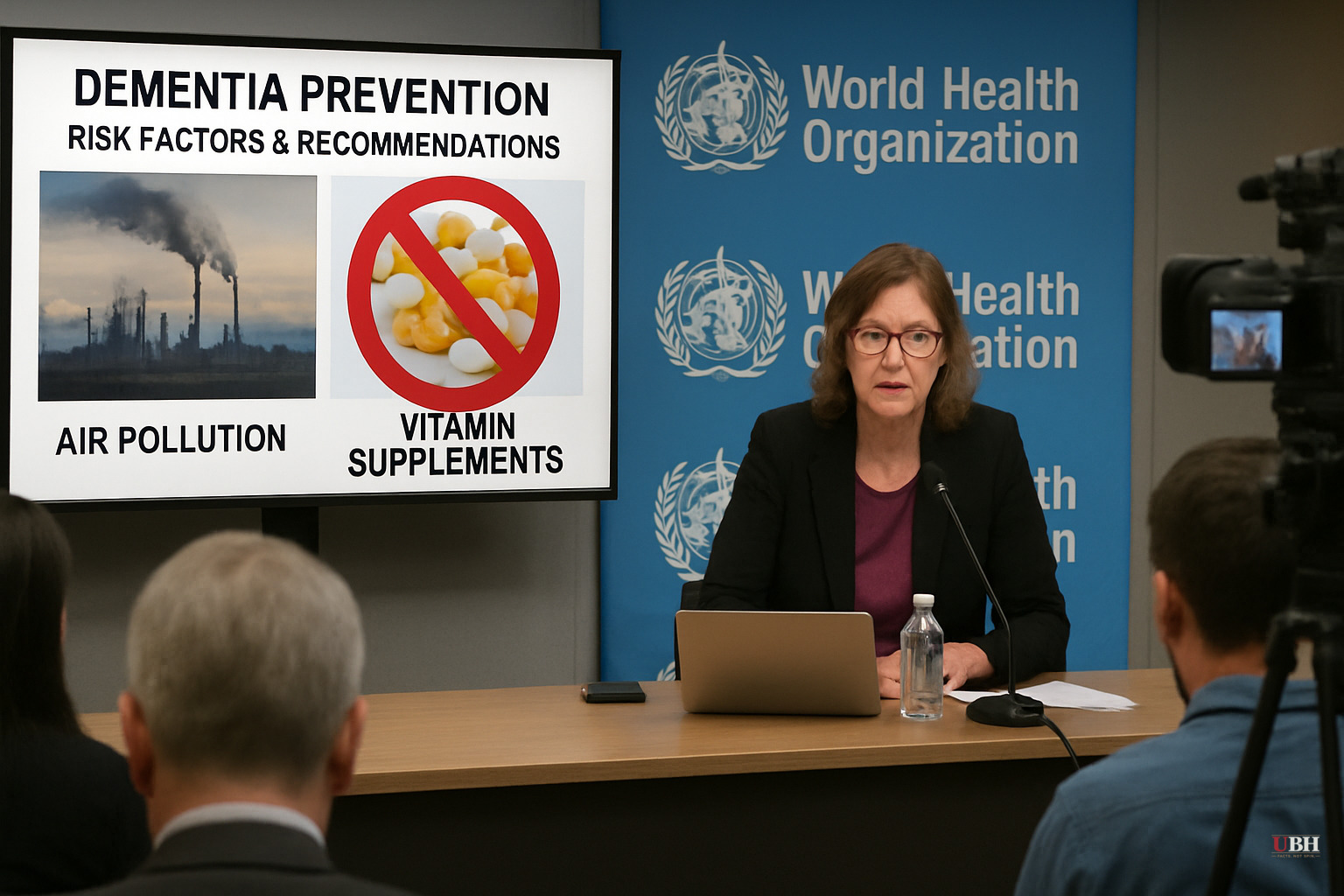
WHO Updates Dementia Prevention Guidelines: Air Pollution In, Supplements Out
The Update
The World Health Organization released updated dementia prevention guidelines on July 15, 2026, the first major revision since 2019, according to Medical News Today. The timing matters. More than 57 million people live with dementia worldwide right now, and nearly 10 million new cases get diagnosed every year, according to the WHO. Alzheimer's disease makes up 60 to 70 percent of those cases.
There's still no cure. But WHO says up to 45% of dementia risk comes from factors people can actually change, not genetics or bad luck. The number hasn't shifted much from the 2019 guidance. What's changed is the list of what to do about it.
Air Pollution Makes the List
For the first time, WHO is telling people to reduce exposure to air pollution as part of dementia prevention, according to UN News. The concern centers on PM2.5, fine particulate matter small enough to slip past the body's defenses and potentially reach the brain, according to the New York Post. Wildfire smoke, vehicle exhaust, industrial emissions, even cooking with wood or charcoal all contribute.
Here's the scale of the problem: WHO estimates 99% of the global population breathes air that exceeds its recommended pollution limits, according to the New York Post's reporting on the guidelines. If pollution dropped to zero everywhere, WHO estimates that would prevent about 3% of dementia cases. That's a modest number on its own, but it's not nothing when applied across a global population of billions.
WHO's practical suggestions are unglamorous. Switch to cleaner cooking fuel where possible, support policies that cut emissions from cars and factories. Nobody's claiming this solves dementia. It's one lever among several.
Skip the Supplements
WHO's clearest new directive: stop taking vitamin B, vitamin E, omega-3 fatty acids, or multivitamins specifically to prevent dementia, unless a doctor has diagnosed an actual deficiency. The WHO guidelines state there's insufficient evidence these supplements provide benefits that outweigh potential harms, according to UN News.
For a supplement industry that has spent years marketing fish oil and multivitamins as brain protection, this is significant. WHO isn't saying these supplements are dangerous across the board. It's saying the evidence doesn't support taking them for this specific purpose if you're not deficient.
Hearing Aids Get a Recommendation
WHO says hearing aids may be offered as part of risk-reduction strategies for people with hearing loss, according to the WHO's own guidance document. This isn't new science invented in 2026, but it's now formal WHO policy. Untreated hearing loss has been linked in prior research to social isolation and reduced cognitive stimulation, both of which the WHO guidelines separately flag as dementia risk factors.
Social Isolation and Cognitive Engagement
The guidelines lean heavily on two other factors: staying socially engaged and keeping the brain active. About one in four older people report feeling isolated, according to Medical News Today's coverage of the report. WHO estimates eliminating loneliness entirely could prevent roughly 5% of dementia cases.
Ryuta Kawashima, a professor at Tohoku University in Japan who studies brain imaging and was not involved in writing the WHO report, told Medical News Today the guidelines confirm something he's argued for years: keeping the brain engaged isn't optional. His suggestion isn't complicated or expensive. Reading aloud, storytelling, playing games. No lab equipment, no app subscription required.
The Chronic Disease Connection
WHO also ties dementia risk to managing high blood pressure, diabetes, and high cholesterol, according to the WHO guidance. Physical activity, quitting tobacco, cutting alcohol, and eating a healthy diet round out the list. None of this is exotic. It's the same advice cardiologists have given for decades, now formally linked to brain health too.
What's Missing From the Coverage
The New York Post's piece focuses heavily on the air pollution and supplement angles, framing them as the standout new items, which they are. But it spends less time on the sheer economic scale WHO attaches to inaction. UN News reports WHO estimates dementia costs the global economy roughly $1.3 trillion annually, with about half of that coming from unpaid care provided by family members and friends. That figure represents relatives providing care, often unpaid, often for years, with no compensation and no formal support structure.
What Happens Next
WHO says the guidelines are meant to be put into practice immediately by national health systems, folding dementia prevention into existing programs for noncommunicable diseases and mental health rather than standing up new bureaucracy. Whether individual countries actually adopt air pollution controls, expand hearing aid access, or fund social isolation programs is a separate question WHO's guidance doesn't answer. That's now up to health ministries and, ultimately, individual choices about diet, exercise, and how often people bother calling a friend.
Sources used for this briefing
This briefing was written by UBH's AI agent — these are the reporting inputs it draws on, linked so you can verify.


