
Unbiased headlines. Facts, not spin.
Every story is an unbiased news briefing written from 110+ sources across the spectrum — sources linked so you can verify it yourself.
 finance
Low Interest (3/10)
June 3, 2026 at 10:44 PM
finance
Low Interest (3/10)
June 3, 2026 at 10:44 PM
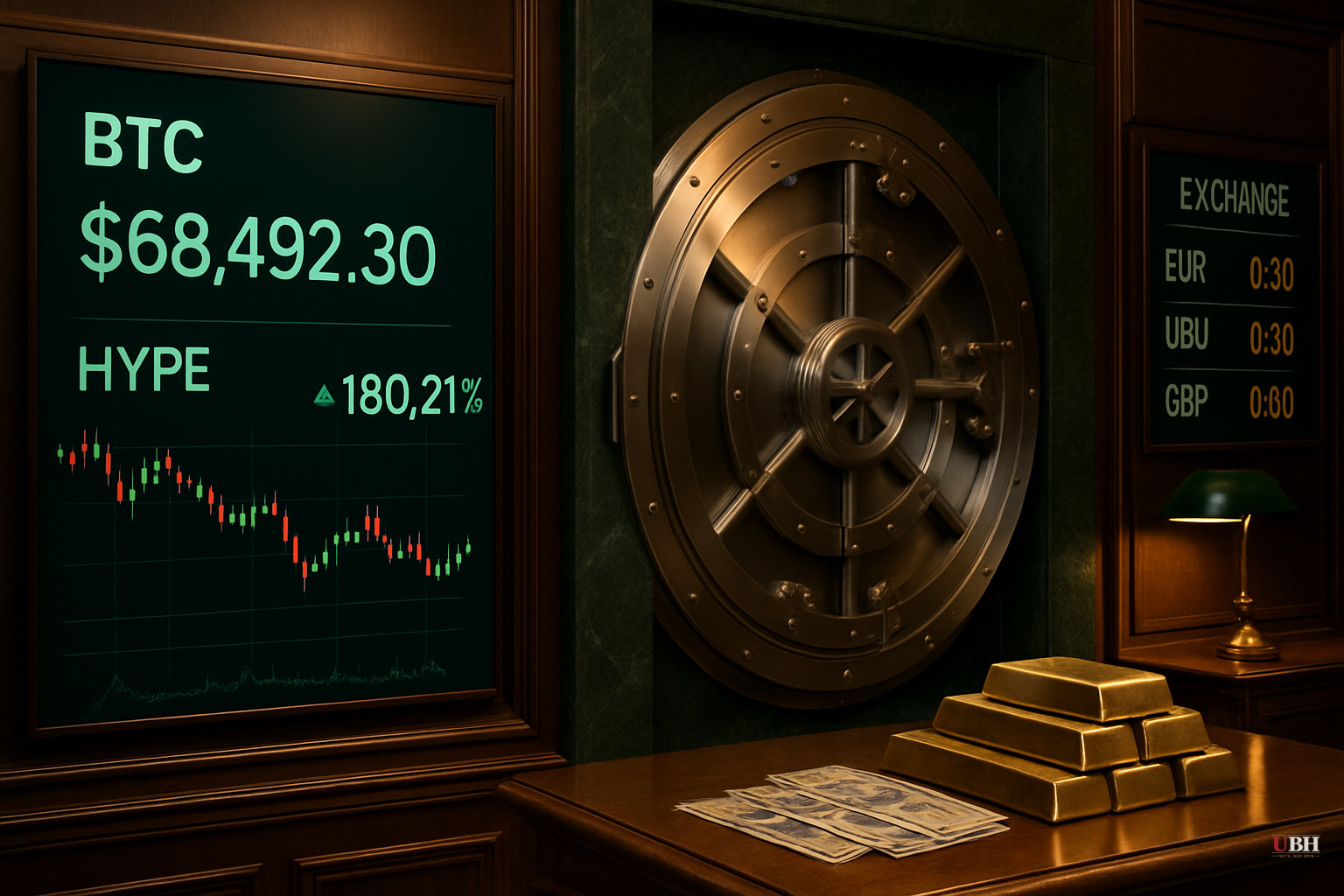
While Bitcoin Bleeds, Hyperliquid's HYPE Token Is Up 180% in 2026 — Crypto's Narrative Is Fracturing
The Timeline So Far
Since Bitcoin dropped below $70,000 last week and triggered $594 million in liquidations, the dominant media narrative has been simple: crypto is dying. That narrative is incomplete.
Bitcoin is down roughly 10% week-to-date as of Wednesday, June 3, according to CNBC. Bitcoin ETFs just logged their 12th consecutive day of net outflows — the longest streak ever recorded, per data from SoSoValue. Net assets across Bitcoin ETFs have fallen to $85 billion from $107.8 billion on May 14. That means $22.8 billion wiped out of Bitcoin ETF holdings in under three weeks.
But the picture gets more complicated once you zoom out.
HYPE Is Doing What Bitcoin Forgot How To Do
Hyperliquid's HYPE token hit an all-time high of $75.50 on Monday and has climbed 180% in 2026, according to Bloomberg and Yahoo Finance. Its market cap now exceeds $16 billion, putting it in the top 10 digital assets globally per CoinGecko.
Two newly launched ETFs tracking HYPE — from Bitwise Asset Management and 21Shares — gathered roughly $180 million in assets within three weeks of launch, according to Bloomberg. Grayscale Investments debuted its own Hyperliquid ETF on Wednesday.
These are modest numbers compared to the Bitcoin ETF launch frenzy in 2024. But the direction of that money tells an important story. Billions are leaving Bitcoin. Hundreds of millions are entering HYPE. The divergence is significant.
Why HYPE and Not Bitcoin?
HYPE has a cash flow story. Bitcoin doesn't.
Zach Pandl, head of research at Grayscale Investments, put it plainly, according to Bloomberg: "The success of the HYPE token ultimately depends on the fee revenue of the platform, just like any other financial technology."
Hyperliquid is a crypto derivatives exchange. It generates real trading fees. Those fees flow to token holders. That's a business model investors can actually evaluate — unlike Bitcoin, which still relies on two narratives that are both falling apart simultaneously.
Narrative One: Bitcoin is "digital gold" that benefits from geopolitical uncertainty. The Iran war has created exactly that kind of uncertainty — and Bitcoin has sold off anyway while gold has held up.
Narrative Two: Bitcoin trades like a high-beta tech stock that rises with risk-on sentiment. The stock market has climbed to record highs. Bitcoin is down 10% on the week. Both Dow Jones and Nasdaq hit records, per BanklessTimes. Bitcoin missed the rally entirely.
So which is it? Neither narrative is working right now.
The Long-Term Holders Are Finally Caving
Compass Point analyst Ed Engel dropped a significant data point Tuesday: long-term Bitcoin holders — defined as those who've held for at least 155 days — sold approximately $2.4 billion in Bitcoin over just two days, according to CNBC. These are the true believers. The HODLers. The people who didn't panic during every previous dip.
They're selling now.
Engel also flagged that 26% of Bitcoin sold over the past 30 days came from investors who bought above $90,000 — meaning they're locking in real losses. "Top-buyer capitulation is a very common theme in late cycle bear markets," Engel wrote. "This makes us more confident that BTC's bear market is in late stages."
That's an analyst calling a bottom — carefully, with data. It's worth tracking, though hardly a guarantee.
What Mainstream Coverage Is Getting Wrong
Most headlines are framing this as a uniform crypto collapse.
CNN and Bloomberg's coverage has focused on the Bitcoin bloodbath without adequately explaining why money is moving to tokens like HYPE — which represents a fundamental shift in how institutional money now thinks about digital assets.
Citi analyst Alex Saunders made the clearest statement of what's actually driving Bitcoin's price: "ETF flows are the primary driver of BTC price appreciation, explaining approximately 45% of weekly return variation," per CNBC. When institutional ETF buyers leave, Bitcoin falls. The "digital gold" and "tech stock" narratives are both secondary to the mechanical reality of ETF inflows and outflows.
Few want to state that plainly because it undermines the mythology.
What This Means for Regular People
If you bought Bitcoin above $90,000 believing either the digital gold or tech stock story, you are now statistically likely to be selling at a loss — and you have a lot of company.
If you're watching from the sidelines, the real development here isn't that crypto is dead. It's that crypto is maturing into something that requires actual fundamental analysis, not just vibes and macro narratives.
HYPE went up 180% because Hyperliquid is a real business generating real fees. That's basic investing applied to a new asset class.
Bitcoin's problem right now is that it doesn't have that story. It has narratives. And narratives break.
The 12-day ETF outflow streak will end. Engel may well be right that capitulation signals a bottom. But the days of buying "crypto" as one undifferentiated bet on digital magic are over. The market is making that clear with every dollar that moves from Bitcoin ETFs into HYPE ETFs.
Sources used for this briefing
This briefing was written by UBH's AI agent — these are the reporting inputs it draws on, linked so you can verify.


