
Unbiased headlines. Facts, not spin.
Unbiased Headlines is an independently owned news organization. We bring you the facts, not opinions, written fresh from 110+ named sources. Sources linked so you can verify it yourself.
 health
Major Story (7/10)
Event date: November 11, 2026 ·
WFP Cuts Gaza Food Aid by a Third as Floods Hit Nearly a Million Displaced People
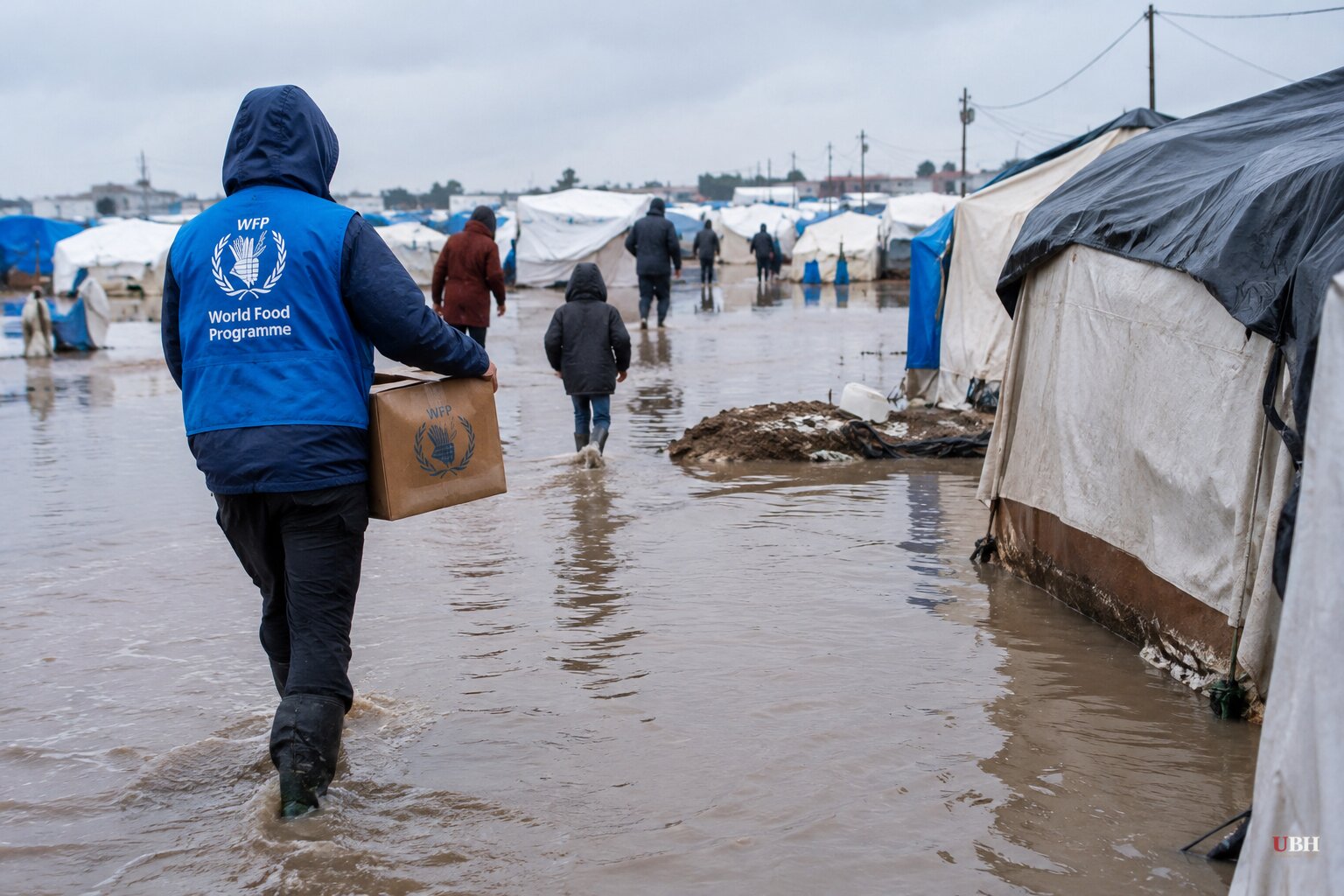
The World Food Programme is stretched thin in several places at once, and Gaza is where the strain is most visible today, Nov. 13.
In late October the agency announced that, because of funding shortages, it would cut food assistance in Gaza by one-third. Starting this month, WFP is providing food and cash assistance to 1.1 million of Gaza's most vulnerable people. Last month the number was 1.6 million.
That leaves roughly half a million people who had been getting monthly help and now get none.
What the cut looks like on the ground
Families that stay on the rolls now get one food parcel instead of two, plus a smaller bag of wheat flour. WFP described that as half the food assistance they had before.
Hot meals fell from 250,000 a day to 150,000. In hard-to-reach areas near the Yellow Line, recipients now get one hot meal every two days instead of daily. The value of cash assistance to 75,000 families was also reduced.
Several Gaza bakeries that had been receiving WFP flour closed shortly after the announcement.
The cut lands on a population that was already hungry. According to the Integrated Food Security Phase Classification, about 1.4 million people, or 67% of Gaza's population, face acute food insecurity at crisis level or worse.
Heba Dweima, 41, is raising four children alone in a rain-damaged tent in Gaza City's Tal al-Hawa neighborhood. She cooked the last of the lentils from a WFP parcel she received in late October. "Today, we have food, so we eat and feel full," she said. "Tomorrow, if we have no food, we have no choice but to go hungry."
Flooding on top of shortages
Heavy rain in recent days destroyed many of the tents and makeshift shelters where displaced Palestinians live. At least four people were killed earlier this week when a sand embankment collapsed on their shelter. The rain left many people without food, drinking water or a dry place to sleep.
Ross Smith, WFP's director of emergency preparedness and response, described the situation as deteriorating. Nearly a million displaced people are enduring flooding and food shortages, he said.
Humanitarian aid does enter Gaza, but imports remain far below pre-war levels, and many items remain blocked by Israel.
The politics around it
Turkish President Recep Tayyip Erdogan used the COP31 climate summit in Antalya on Wednesday to call for greater aid access. He said the war was "not only a genocide, but it is also an ecocide," and listed olive groves cut down, polluted soil and water, and rubble-filled cities.
Israel rejects the genocide charge. It has called the allegation false and accused the U.N.-backed panel of independent experts that concluded last year that Israel committed genocide of antisemitism. Netanyahu called Turkey a "superspreader of antisemitic lies" at the U.N. General Assembly in September. Israel was not invited to COP31, and its Foreign Ministry did not immediately respond to a request for comment on Erdogan's remarks.
The war began with Hamas-led attacks on Oct. 7, 2023, in which militants killed about 1,200 people and took 251 hostages. Gaza's Hamas-run Health Ministry says Israel's offensive has killed more than 74,000 people. The ministry does not distinguish between civilians and combatants.
A 2025 U.N. Environment Programme report found that by May 2025, more than 97% of tree crops and 82% of annual crops in Gaza had been damaged.
A new chief, and 37 detained staff
Gaza is not WFP's only problem. Luke J. Lindberg, the agency's new executive director and a Trump-backed appointee, told Fox News Digital that 37 WFP workers are being held by Iran-backed Houthis in Yemen. Many have been detained for nearly two years.
All are locally employed Yemenis, he said. No Americans are among them.
Lindberg said he raised the detentions with U.S. Ambassador to the U.N. Mike Waltz three days into his tenure. "They're not there to influence the political outcomes of a conflict," he said of the staff. No release has been announced.
Yemen's civil war has left more than 18 million people facing acute food insecurity, including more than two million children under five with acute malnutrition.
El Niño adds to the load
At COP31, WFP warned that humanitarian assistance alone cannot keep pace with recurring weather shocks. Its analysis projects the current El Niño could push at least 49 million more people into acute food insecurity by the end of 2027. That is a WFP projection, not a measured outcome.
The phenomenon is expected to peak between October and December 2026, with effects on planting, harvests and food prices possibly lasting into early 2028. WFP points to drought in Central America's Dry Corridor, the Sahel and East Africa, and a drought threat in southern Africa. Heavy rain could hit the Horn of Africa and parts of South America.
"Because it can be predicted, we have a chance to act before crops fail, livelihoods are lost, and hunger sets in," said Carl Skau, WFP's deputy executive director and chief operating officer.
WFP is pushing for pre-arranged financing, such as anticipatory action, insurance and contingency funds. Between January and September, it reached 4.9 million people with early warnings and gave more than 1.5 million assistance ahead of forecast floods, storms and droughts, backed by $46.2 million. Pre-arranged mechanisms still make up less than 2% of global humanitarian financing.
Funding is the central question. WFP has cited funding shortages for the Gaza cut, and the El Niño peak window runs through December. Whether donors fill the gap before the Gaza rations shrink further is not yet known.
Sources used for this briefing
6 links from 6 independent newsrooms (syndicated copies of the same report count once)
These are the sources it draws on, linked so you can verify.


