
Unbiased headlines. Facts, not spin.
Unbiased Headlines is an independently owned news organization. We bring you the facts, not opinions, written fresh from 110+ named sources. Sources linked so you can verify it yourself.
 health
Notable (5/10)
Event date: November 12, 2026 ·
Israeli Blood Test Identifies Early Breast Cancer With 95% Accuracy in 107-Sample Nature Study
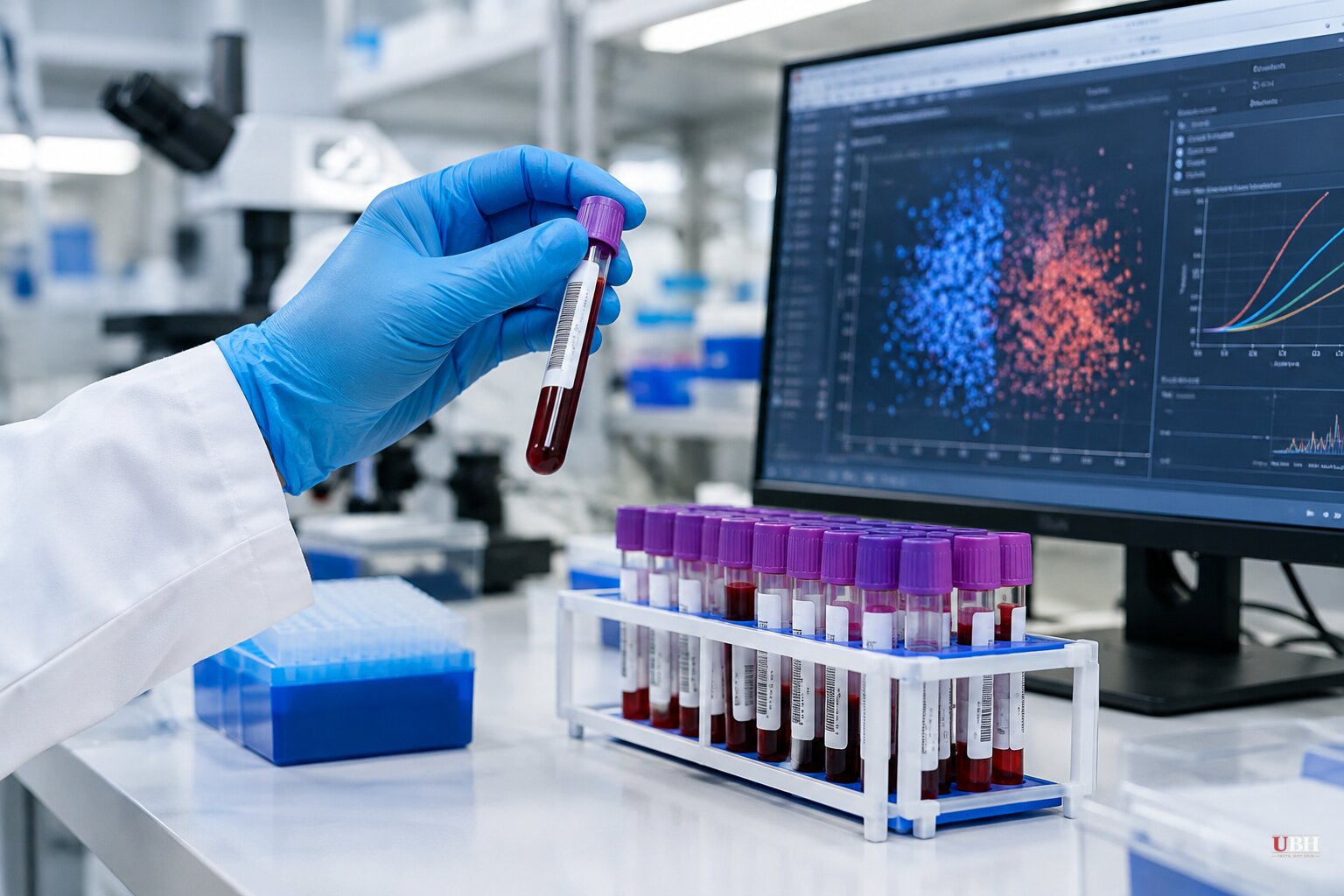
A blood test built by Israeli researchers picked out early-stage breast cancer from healthy samples with 95% accuracy, according to a study published Wednesday, Nov. 11, in the journal Nature. The work comes from the labs of Prof. Efrat Shema at the Weizmann Institute of Science and Prof. Guy Ron at the Hebrew University of Jerusalem.
The test is experimental. It is not approved, not on the market, and not something a patient can ask for.
How the test works
Most liquid biopsies hunt for genetic mutations from tumors in the blood. In early disease those traces are scarce, and chasing them risks false alarms, meaning a result that suggests cancer when none is present.
This test looks elsewhere. It reads epigenetic marks, chemical tags that help control which genes a cell uses, carried on nucleosomes. Nucleosomes are DNA wrapped around proteins, and they spill into the blood when cells die, cancer cells included.
The team used single-molecule microscopy and fluorescent labels to measure dozens of epigenetic markers across millions of nucleosomes. Computational methods and artificial intelligence then picked out patterns tied to cancer. The same core platform showed early promise for colorectal and pancreatic cancers in a peer-reviewed study published in 2022.
The numbers
To build a reference catalog, the researchers recruited 12 women scheduled for tumor surgery at Kaplan Medical Center in Rehovot. Dr. Noa Furth said the epigenetic tags start to deteriorate soon after a tumor is removed. Surgeons alerted her when an operation began, and she carried samples to the lab on ice for same-day analysis.
The test was then run on banked blood from 77 breast cancer patients who had at least five years of follow-up at the Mayo Clinic in Florida. Blood from 30 healthy women served as controls.
The AI models told early-stage cancer from healthy samples with 95% accuracy. Those cancers were still confined to the breast and measured no more than two centimeters.
The researchers and their institutions also say the test beat conventional tissue biopsy at predicting recurrence after treatment. They report that the work identified a particularly aggressive population of cells inside the tumors.
Why recurrence matters
Breast cancer comes back in an estimated 20 to 40 percent of cases, even after an early diagnosis and apparently successful treatment. Doctors have few reliable tools to tell which patients are in that group.
Dr. Lucy Hooper, a general practitioner and co-founder of Coyne Medical, said the research could eventually support more precise decisions on prevention and treatment, including for women whose cancer looks low risk. She also pointed to a gap in current screening. "In women with extremely dense breast tissue, screening sensitivity has been reported at around 50 percent in some studies," Hooper said. "Innovations that could help us detect cancers missed by current screening are very exciting."
What the study does not yet show
The sample is small. A total of 107 blood samples is a proof of concept, not a screening trial. The 30 healthy controls are a narrow base for judging false positives, which is the exact problem liquid biopsies are supposed to solve.
Hooper told Newsweek that larger studies are needed before the test can be used routinely. The study tested banked samples from patients already diagnosed, not a general population of women with no known disease. Whether a test performs the same way in a screening setting is a separate question that only a prospective trial can answer.
The researchers describe the approach as a step toward something that could eventually guide treatment. Ynet reported the test also performed well in women with dense breast tissue. The detailed figures for that group were not available in the summaries.
A separate approach from Sweden
A different team is working on the recurrence problem from another direction. Researchers at Lund University in Sweden published a study in EMBO Molecular Medicine on a blood test called Pathlight, which tracks tumor-specific DNA alterations rather than epigenetic marks.
The study followed 136 patients treated with chemotherapy and surgery for different types of breast cancer. Blood was collected at diagnosis, during treatment, shortly after surgery and regularly during follow-up of up to six years.
Among patients who later developed metastatic disease, the test detected signs of recurrence a median of 13.8 months before the relapse became clinically visible. In some cases the lead time was nearly four years.
"These findings could change how breast cancer patients are monitored and treated in the future," the Lund researchers said in their release. They added that the method may help identify the lowest-risk patients who could avoid unnecessarily intensive therapy. Lao Saal, the senior author, said the method is also faster and cheaper than more advanced genetic analyses, though it gives less detail.
The Lund method is built on sequencing each patient's own tumor first. The Israeli method works from epigenetic patterns without a tumor-specific mutation profile, according to the study descriptions.
What comes next
Neither test has cleared the step that matters most: a large prospective trial in people who have not been diagnosed, or in patients followed forward in real time. Until that happens, mammography remains the standard screen, with its known limits in dense breast tissue. The Weizmann and Hebrew University teams have not announced a timeline for a larger trial.
Sources used for this briefing
6 links from 6 independent newsrooms (syndicated copies of the same report count once)
These are the sources it draws on, linked so you can verify.


