
Unbiased headlines. Facts, not spin.
Unbiased Headlines is an independently owned news organization. We bring you the facts, not opinions, written fresh from 110+ named sources. Sources linked so you can verify it yourself.
 health
Notable (5/10)
HHS Commits Up to $4.9 Million to Ibogaine Groundwork, With Mark Cuban's Cost Plus Drug Company Leading the Team
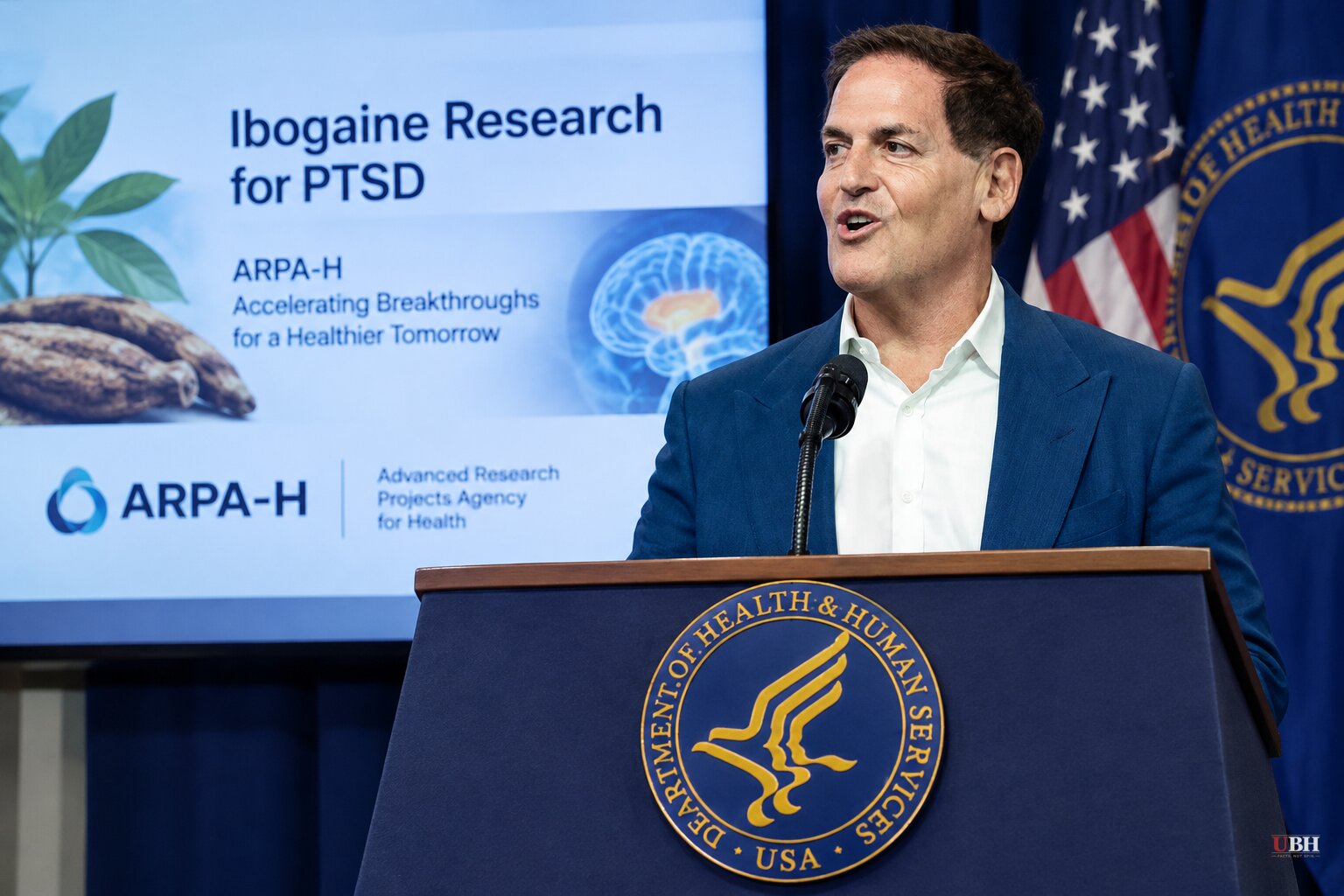
Since President Donald Trump signed an April executive order directing agencies to open access to psychedelic treatments for serious mental illness, the federal government has moved from paperwork to money. On Thursday, Nov. 12, HHS Secretary Robert F. Kennedy Jr. announced the first concrete ibogaine award.
The Advanced Research Projects Agency for Health (ARPA-H) will invest up to $4.9 million. That money does not pay for clinical trials. It pays for the groundwork that has to exist before trials can start: regulatory filings, clinical-grade drug supply and a domestic manufacturing process.
Who gets the work
The research team ARPA-H selected is led by the Mark Cuban Cost Plus Drug Company, PBC. HHS says it will build the regulatory, clinical, chemical and engineering foundation for a domestically made, single-molecule ibogaine hydrochloride product aimed at PTSD.
A second company, Beond, Inc., will supply clinical data on safety, dosing, efficacy and durability. Beond is Texas-based and operates a licensed clinic in Mexico that, according to Spectrum News, has treated more than 3,000 patients with 6,000 doses of ibogaine.
HHS says the work supports preparation of Investigational New Drug applications, which are required before U.S. trials can proceed.
Kennedy said the Beond data "is going to allow us to dramatically accelerate the clinical trial process," adding, "So we're going to have, I think, a record drug approval process."
A second pot of money
HHS also announced a $20 million Notice of Funding Opportunity from the National Institute of Mental Health. It would build a research network for what the agency calls rapid-acting psychotropic interventional drugs, including ketamine, esketamine and psilocybin. HHS says awards will be announced in the summer of 2027.
Kennedy said a separate federal effort to study ibogaine for addiction will be funded, with details to be announced before the end of the year.
The conditions attached
Officials said the initial ARPA-H commitments span five years and will not be renewed unless milestones are met. Kennedy listed what researchers must establish: whether ibogaine helps patients, who might benefit, whether the benefits justify the risks, and how long any improvement lasts. "We will judge this work by the quality of the evidence," he said.
The risks are real, and HHS says so itself. The department says ibogaine carries serious safety risks, including potentially life-threatening heart rhythm problems. It remains a Schedule I controlled substance in the United States with no approved therapeutic use. It is legal in clinics in Mexico and Canada.
The case being made for it
Kennedy framed the announcement around veterans. "Veterans have told us ibogaine changed their lives," he said. "Their experiences demand serious scientific investigation. We will pursue the evidence, confront the risks and put affordability at the center of this work."
ARPA-H senior adviser Dr. Al Bugazia said "reports of successful ibogaine treatments are too promising to ignore" and that the goal is to "deliver results in years, not decades." He cited 14 million Americans living with severe mental illness such as PTSD.
The VA and the National Center for PTSD estimate that 7% of U.S. veterans will experience PTSD at some point. The VA currently prioritizes trauma-focused talk therapy and antidepressants, according to the agency.
Stanford Medicine has run a study of ibogaine with veterans at a clinic in Mexico. Stanford says traumatic brain injuries, which are common after blasts and head trauma, are a leading cause of PTSD, anxiety, depression and suicide that ibogaine can effectively treat.
Where regulators stand
After the April order, the FDA said it would speed review of three psychedelic drugs and allow a clinical study of an ibogaine derivative to move forward. In October, the agency asked the public for comments, data and other information on ibogaine research, including dose selection.
The $4.9 million is a small figure by federal standards, and it is capped as "up to." HHS has not said how it divides between the Cost Plus team and Beond.
The next checkpoints are concrete. The addiction-research funding is due before the end of 2026, the NIMH awards come in summer 2027, and the five-year ibogaine commitments will be renewed only if the milestones Kennedy outlined are met. No U.S. ibogaine trial has been announced as a result of Thursday's awards.
Sources used for this briefing
7 links from 5 independent newsrooms (syndicated copies of the same report count once)
These are the sources it draws on, linked so you can verify.


