
Unbiased headlines. Facts, not spin.
Every story is an unbiased news briefing written from 110+ sources across the spectrum — sources linked so you can verify it yourself.
 tech
Notable (5/10)
June 10, 2026 at 09:35 AM
tech
Notable (5/10)
June 10, 2026 at 09:35 AM
Waymo Publishes Peer-Reviewed Model Simulating Human Driver Behavior in Crash Scenarios
What Waymo Actually Did
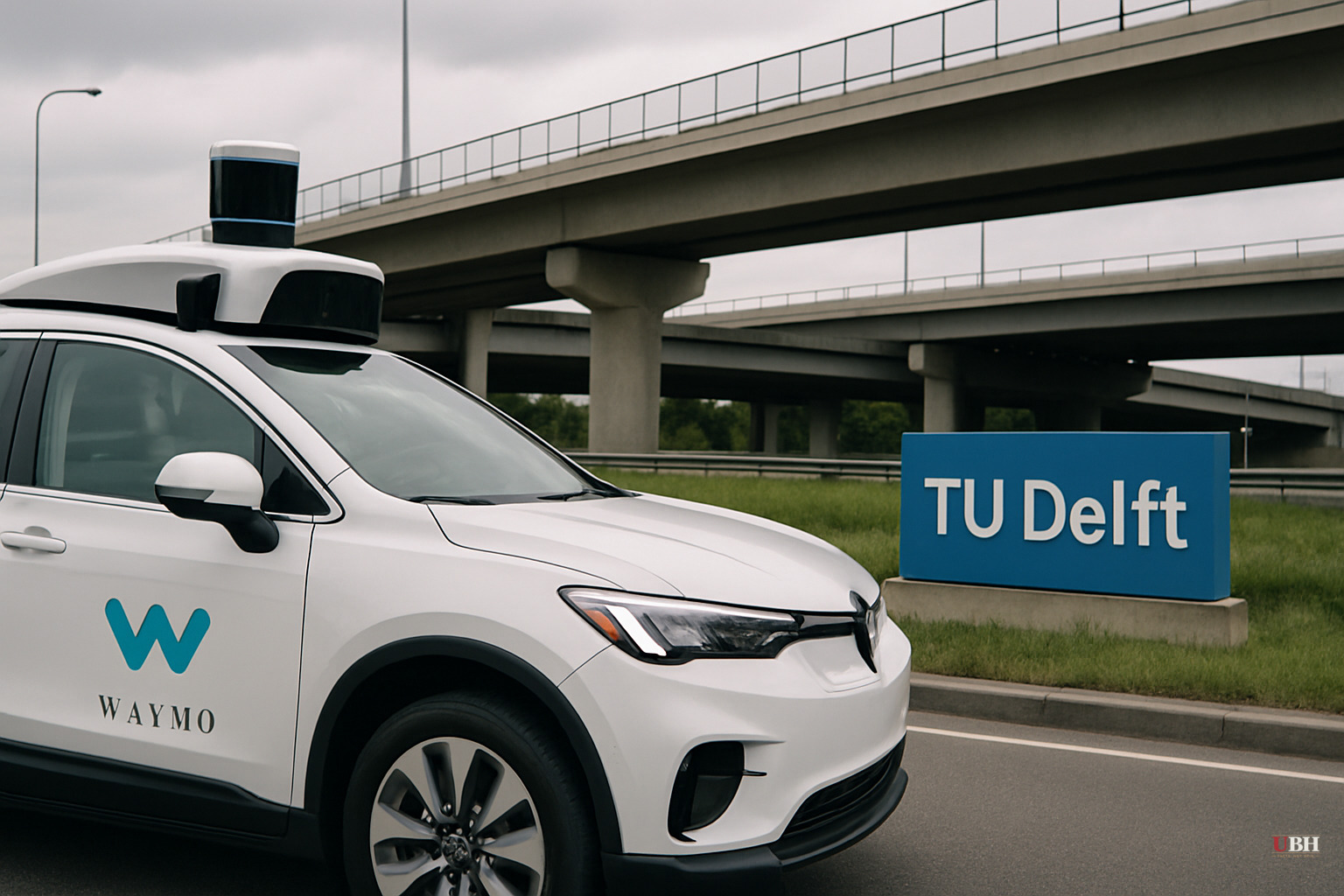
On June 10, 2026, Waymo published a research paper in Nature Communications — a peer-reviewed scientific journal — alongside a blog post. The paper describes a new computer model called the Reference Driver (ReD), built in collaboration with TU Delft (Delft University of Technology) in the Netherlands.
The model is designed to simulate how a careful, competent human driver behaves in the moments leading up to a potential crash — not just the final split-second reaction.
According to TechCrunch's reporting by Sean O'Kane, previous industry models, including Waymo's own earlier version, only replicated last-second, reactive human maneuvers. ReD models the internal cognitive state — what the researchers describe as "internal surprise" — that builds in a driver before impact.
The Science Behind It
ReD is built on a neuroscience framework called active inference. The basic idea: a driver is constantly imagining possible futures and taking actions to steer toward the safest, most predictable outcome. It's not just reaction — it's anticipation.
Assistant professor Arkady Zgonnikov of TU Delft said in a statement, per TechCrunch, that the model "can simulate the internal surprise a driver feels during a conflict, providing a more human-like benchmark for autonomous driving systems that was previously impossible to automate at scale."
Waymo's chief safety officer, Mauricio Peña, framed the goal as industry-wide: "By establishing this reference model of a competent human response, we can help the industry move toward a shared, scientifically grounded approach for evaluating collision-avoidance behavior," according to The Verge's reporting by Andrew J. Hawkins.
Why the Timing Is Significant
Waymo is publishing this research amid ongoing federal scrutiny of its vehicles. In January 2026, a Waymo robotaxi struck a child near a school in Santa Monica, California. The company said the vehicle hit the child at 6 miles per hour, after decelerating from 17 mph, and that the child sustained minor injuries.
Waymo used its previous, older model to argue that an attentive human driver would have made impact at around 14 miles per hour — framing the robotaxi's slower impact as a safety advantage.
That crash remains under active investigation by two federal agencies: the National Highway Traffic Safety Administration (NHTSA) and the National Transportation Safety Board (NTSB), according to TechCrunch.
No charges have been filed. No federal findings have been released as of June 10, 2026.
The Fair Concern Worth Taking Seriously
Critics of Waymo's research program raise a legitimate question: Can a company credibly serve as both the subject of safety scrutiny and the author of the safety benchmarks used to evaluate it?
It's a structural problem. Waymo designed ReD, selected TU Delft as its academic partner, and will now use ReD as evidence in regulatory and public arguments about its vehicles' safety. The company already used an earlier version of this type of model — favorably — in the middle of an active federal investigation into one of its crashes.
A reasonable critic would argue the benchmark itself needs independent validation before it becomes an industry standard. A company claiming its own cars are safer than humans, using a model it built, in a paper it initiated, is not the same as an independent finding.
The research was published in Nature Communications, which uses peer review. The academic co-authors are from an independent Dutch university, not Waymo's payroll. Peer-reviewed publication doesn't make findings unassailable, but it's a meaningful check that anonymous blog posts and self-published white papers don't provide.
What the Media Coverage Is Missing
Left-leaning outlets like The Verge and TechCrunch covered the research straightforwardly and noted the January 2026 incident. But neither outlet examined the conflict-of-interest architecture: Waymo funds the research direction, selects the academic partner, and then uses the output in regulatory proceedings.
There's also ZERO coverage from conservative or center-right outlets in the available sources. The broader questions — federal regulatory oversight of autonomous vehicles, whether NHTSA is adequately staffed and funded to independently validate industry safety claims, and whether self-driving companies are scaling faster than the public accountability infrastructure can keep up — are questions that cut across party lines.
What Autonomous Vehicles Mean for the Road
Waymo is operating commercial robotaxi services in San Francisco, Los Angeles, Phoenix, and Austin, and is actively expanding. The company rides on its safety record as its core value proposition.
If ReD becomes an industry-standard benchmark — which Waymo explicitly wants — it will shape how crashes are analyzed, how regulators evaluate incidents, and how liability gets assigned when autonomous vehicles hurt people.
The science may be solid. The peer review is real. But federal investigators at NHTSA and NTSB — not Waymo — should have the final word on what a fair safety benchmark looks like. Those investigations are ongoing. The public deserves the results.
Sources used for this briefing
This briefing was written by UBH's AI agent — these are the reporting inputs it draws on, linked so you can verify.


