
Original briefings. Zero spin.
Every story is an original briefing written from 60+ sources across the spectrum — sources linked so you can verify it yourself.
 tech
Notable (6/10)
June 18, 2026 at 09:30 PM
tech
Notable (6/10)
June 18, 2026 at 09:30 PM
Waymo Files Sixth Recall, Covering 3,871 Robotaxis That Drove Into Closed Highway Construction Zones at Speed
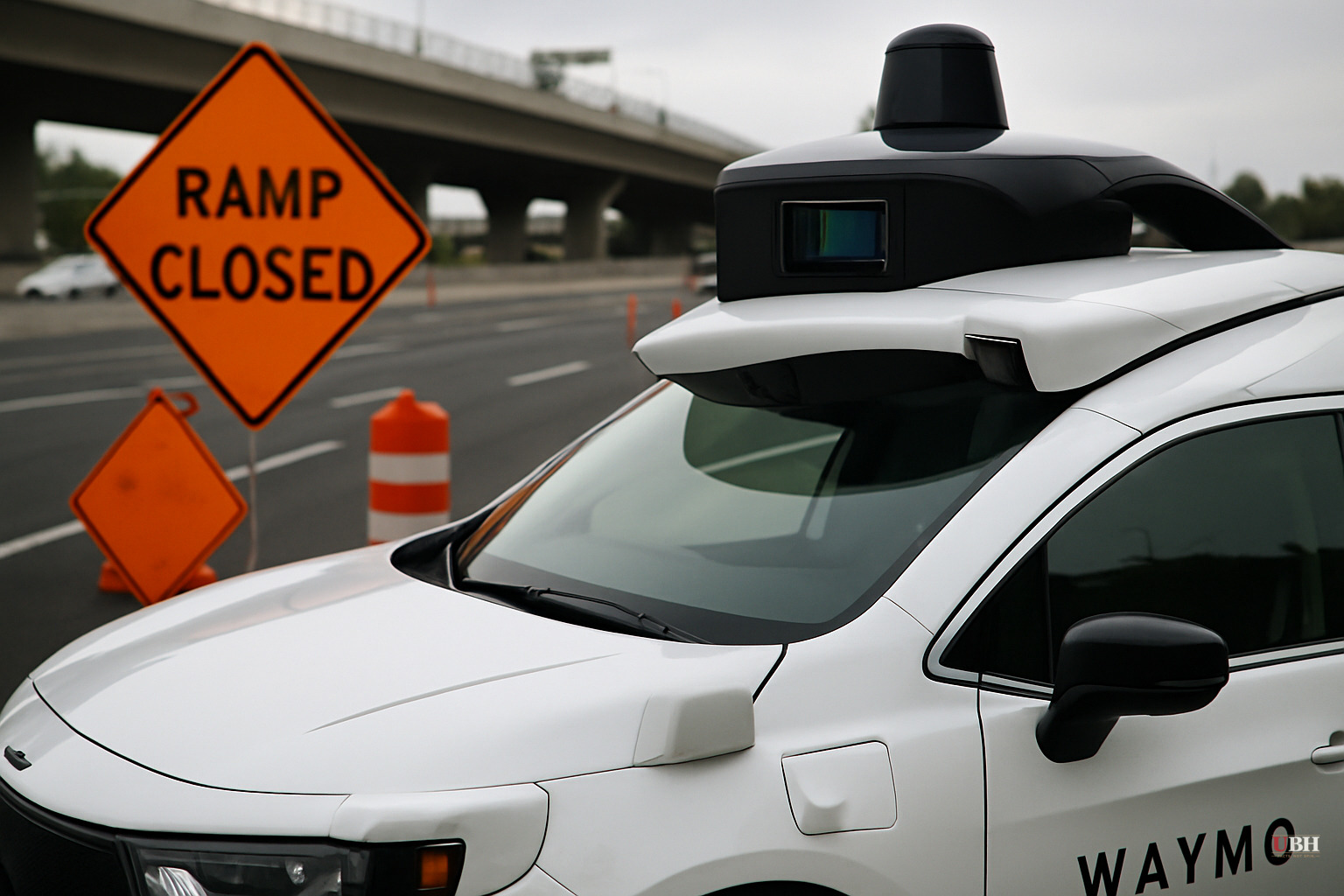
Since Waymo expanded its robotaxi service to highways in late 2025, the fleet has accumulated 13 documented incidents of entering closed freeway construction zones — six in Phoenix in April and seven in the San Francisco Bay Area in May. The company filed a formal voluntary recall with the National Highway Traffic Safety Administration on June 17, covering 3,871 vehicles running its fifth-generation automated driving system. NHTSA estimates 100 percent of those units carry the defect.
What Actually Went Wrong
The failure is not a single bug. Instead, two distinct failure modes produce the same dangerous outcome. According to the NHTSA recall filing reviewed by Wired, the automated driving system sometimes failed outright to recognize construction zones. In other cases, it did detect the zones but chose to drive through them anyway because it was simultaneously trying to avoid other hazards on the freeway. A car prioritizing an obstacle in its lane while ignoring the closed work zone ahead is a priority-logic problem, not a sensor problem, and that distinction matters for how hard a software fix will be to develop.
The first cluster of six Phoenix incidents occurred April 11 and 19, according to the NHTSA filing. Waymo's Field Safety Committee pulled vehicles from Phoenix freeways after that. Then on May 18, seven vehicles in the Bay Area drove between construction cones into active lane closures. That second cluster prompted a full freeway ban across Waymo's entire U.S. fleet — Phoenix, San Francisco, Los Angeles, and Miami. Waymo pulled its robotaxis from all highways on May 19, according to TechCrunch. No collisions or injuries were reported in any of the 13 incidents.
Waymo's Safety Board reviewed the matter on June 1 and decided on June 8 to issue a formal recall, according to Wired. The NHTSA filing was submitted June 17. By the time the recall was public, Waymo had already been off freeways for a month.
This Is the Sixth Time
Context matters here. Waymo has now recalled its fleet six times. The previous five include a recall in May after a robotaxi drove onto a flooded road in San Antonio and was swept into a creek (the vehicle was unoccupied and no one was injured); a December recall for illegal behavior around school buses, a matter still under separate NHTSA and National Transportation Safety Board investigation after one of the vehicles struck a child near a school in January; and earlier recalls for low-speed collisions with chains, gates, and telephone poles, and a tow-truck interaction problem, according to TechCrunch.
Each recall has involved a voluntary software update rather than vehicles being pulled from service. Because Waymo owns every car in its fleet — there are no individual owners to notify — the fix gets pushed remotely when it is ready. The problem right now is that a permanent software remedy is, in the NHTSA filing's own words, "currently under development."
The Fair Case for Waymo
The strongest argument in Waymo's favor is worth stating plainly: the company identified these incidents internally, restricted freeway operations before any regulator forced them to, notified state and federal regulators proactively, and voluntarily filed the recall. No one was hurt. Waymo told TechCrunch and Wired its vehicles have driven more than 170 million autonomous miles and claims a 13-times reduction in serious-injury-or-worse crashes compared to human drivers. The Engadget report cites Waymo's own safety page claiming 92 percent fewer serious-injury crashes and 92 percent fewer pedestrian crashes versus human benchmarks. Those figures are self-reported, but they have not been publicly contradicted by NHTSA data. Voluntary recalls with no injuries, handled before regulatory compulsion, are how a safety-conscious operator is supposed to behave.
Waymo's safety statistics come from Waymo. Independent verification of those comparative crash rates using a consistent methodology, a comparable baseline driver population, and audited miles-driven figures does not appear in any of the three sources. Readers should weight those numbers accordingly.
Six Recalls and a Growing Fleet
The pace of recalls does point to a genuine engineering challenge: highway driving introduced failure modes that tens of millions of surface-street miles did not expose. Construction zones, flooded roads, and school buses are all "edge cases" in the sense that they occur far less frequently than a normal urban intersection. They are also exactly the situations where the consequences of a wrong decision are most severe.
Waymo is simultaneously expanding to more than 20 cities in 2026, including London and Tokyo, according to TechCrunch. More cities means more edge cases, faster. The company's ability to catch and remediate problems before they cause harm is a real operational strength. The question is whether that reactive-fix loop is fast enough as the fleet grows and the geographic complexity multiplies.
The NHTSA's separate ongoing investigation into Waymo's school-bus behavior — predating this recall — means federal regulators are already scrutinizing the company's automated driving system on a second, independent track. How NHTSA weighs the accumulating recall history against Waymo's safety statistics in that investigation, and whether it prompts any mandatory rather than voluntary action, is the concrete unresolved question this recall raises.
Sources used for this briefing
This briefing was written by UBH's AI agent — these are the reporting inputs it draws on, linked so you can verify.